














Руководство по выбору морских материалов: для каких ключевых конструкций обязательно использование нержавеющей стали?
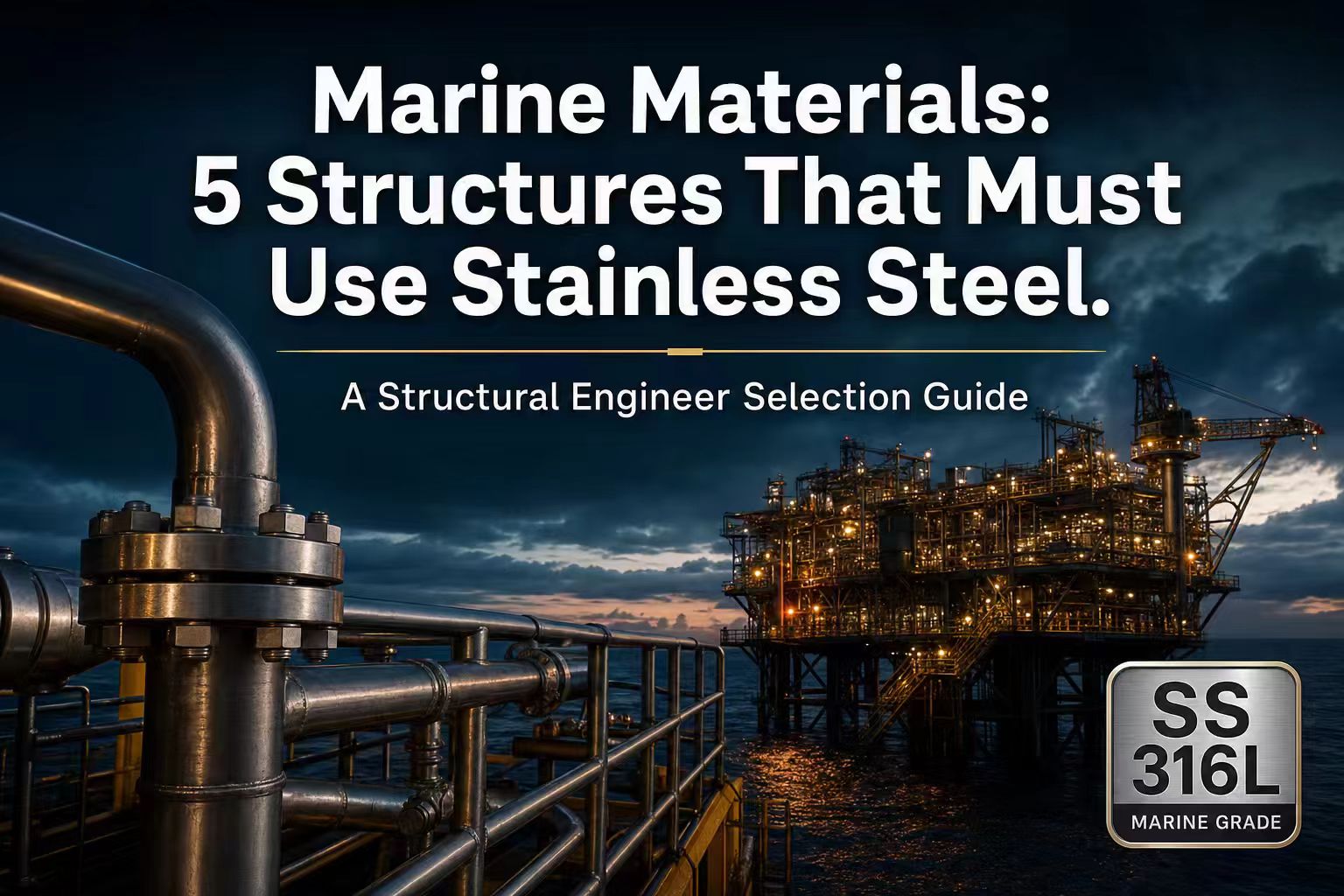
Морская платформа, три года спустя после ввода в эксплуатацию. Болты на соединительном фланце начинают ржаветь и ломаться.
Замена одного болта практически ничего не стоит. Однако мобилизация морского судна, остановка операций и завершение ремонта могут легко обойтись в сотни тысяч долларов. Это не крайний случай. В морской среде, где одновременно действуют сильные солевые брызги, высокая влажность и высокие напряжения, неправильный выбор материала может привести к разрушению гораздо раньше, чем ожидалось.
Данное руководство охватывает четыре аспекта:
- почему морская среда предъявляет уникальные требования.
- Какую марку нержавеющей стали использовать?
- В каких компонентах обязательно должна использоваться нержавеющая сталь, а при необходимости допустимы другие материалы?
- а также наиболее распространенные ошибки при выборе материалов.
Почему морская среда предъявляет более высокие требования к конструкционным материалам?
В наземном строительстве углеродистая сталь является основным конструкционным материалом — она недорога, прочна и проста в обработке. С защитными покрытиями она хорошо себя зарекомендовала в нормальных атмосферных условиях и может прослужить 20 лет и более.
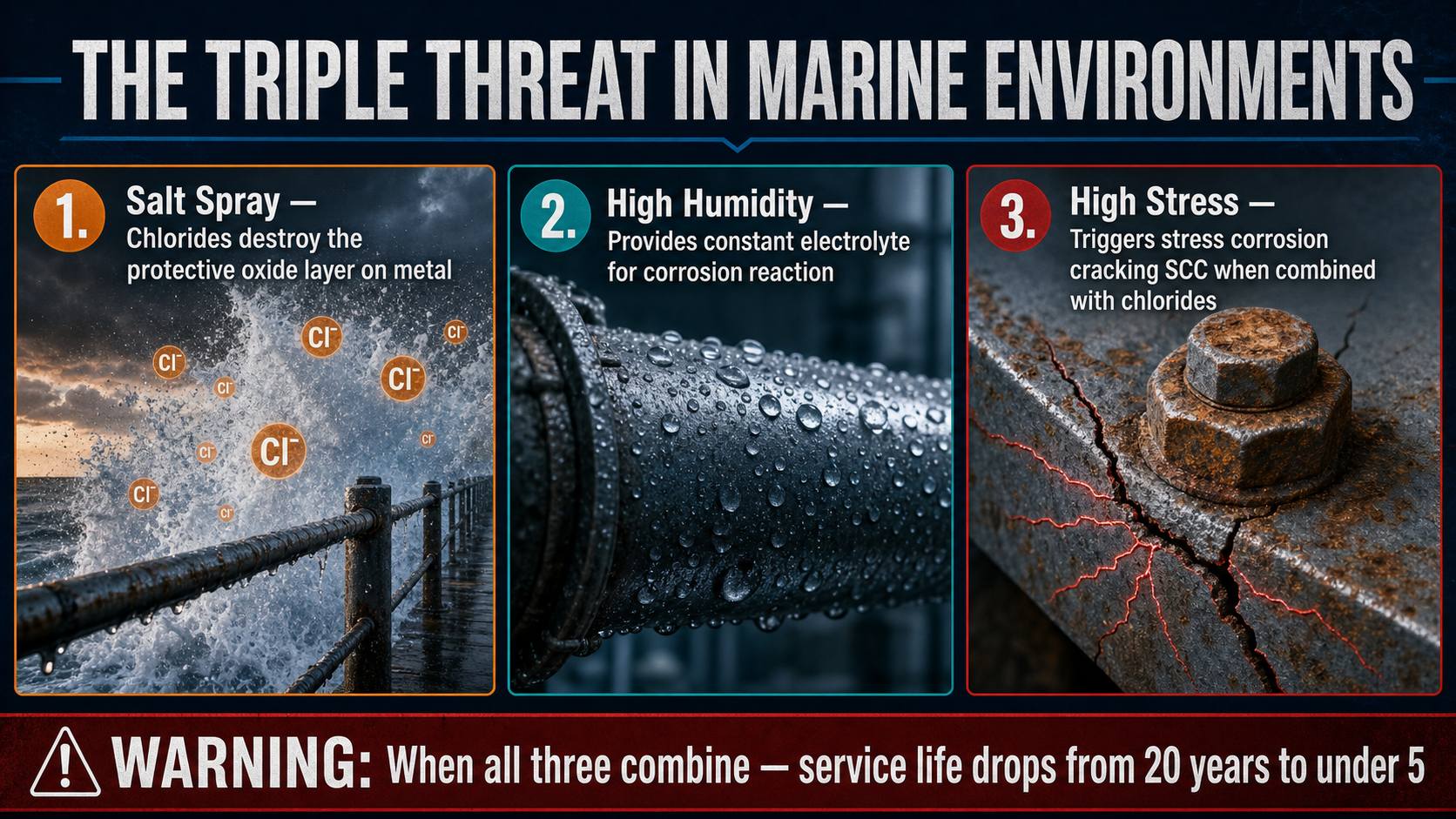
Однако в морской среде этот подход начинает давать сбои. Одновременно действуют три условия:

Солевой туман (хлориды)
Солевой туман (хлориды) является основной причиной коррозии. Ионы хлорида разрушают пассивный оксидный слой на металлических поверхностях, ускоряя образование ржавчины в углеродистой стали и вызывая точечную коррозию в нержавеющей стали. Чем ближе к поверхности моря, тем выше концентрация хлоридов.

Высокая влажность
Высокая влажность непрерывно подает электролит, необходимый для электрохимической коррозии. Даже без прямого погружения в морскую воду, постоянно влажная поверхность обеспечивает непрерывный процесс коррозии.

Высокий уровень стресса
Высокий уровень стресса является наиболее опасным фактором, усугубляющим ситуацию. При одновременном воздействии растягивающего напряжения и ионов хлора происходит коррозионное растрескивание под напряжением (КРН). — один из основных видов отказов крепежных элементов, подвесов и опор в морских сооружениях.
Когда все три элемента объединяются, Решение с покрытием из углеродистой стали, которое на суше прослужит 20 лет, в море может выйти из строя менее чем за 5 лет. Согласно исследованию NACE International, общая стоимость замены вышедшего из строя компонента в морских условиях составляет...Стоимость ремонта на суше в 5-20 раз выше, чем при аналогичном ремонте на суше.
Однако одного лишь перехода на нержавеющую сталь недостаточно — выбор неправильной марки приводит к тем же проблемам.
Какой сорт нержавеющей стали подходит для использования в морских условиях?
Когда речь заходит о коррозионной и влагостойкости, большинство людей в первую очередь думают о классе. 304 нержавеющая сталь.
Однако в морских проектах использование стали марки 304 не рекомендуется.
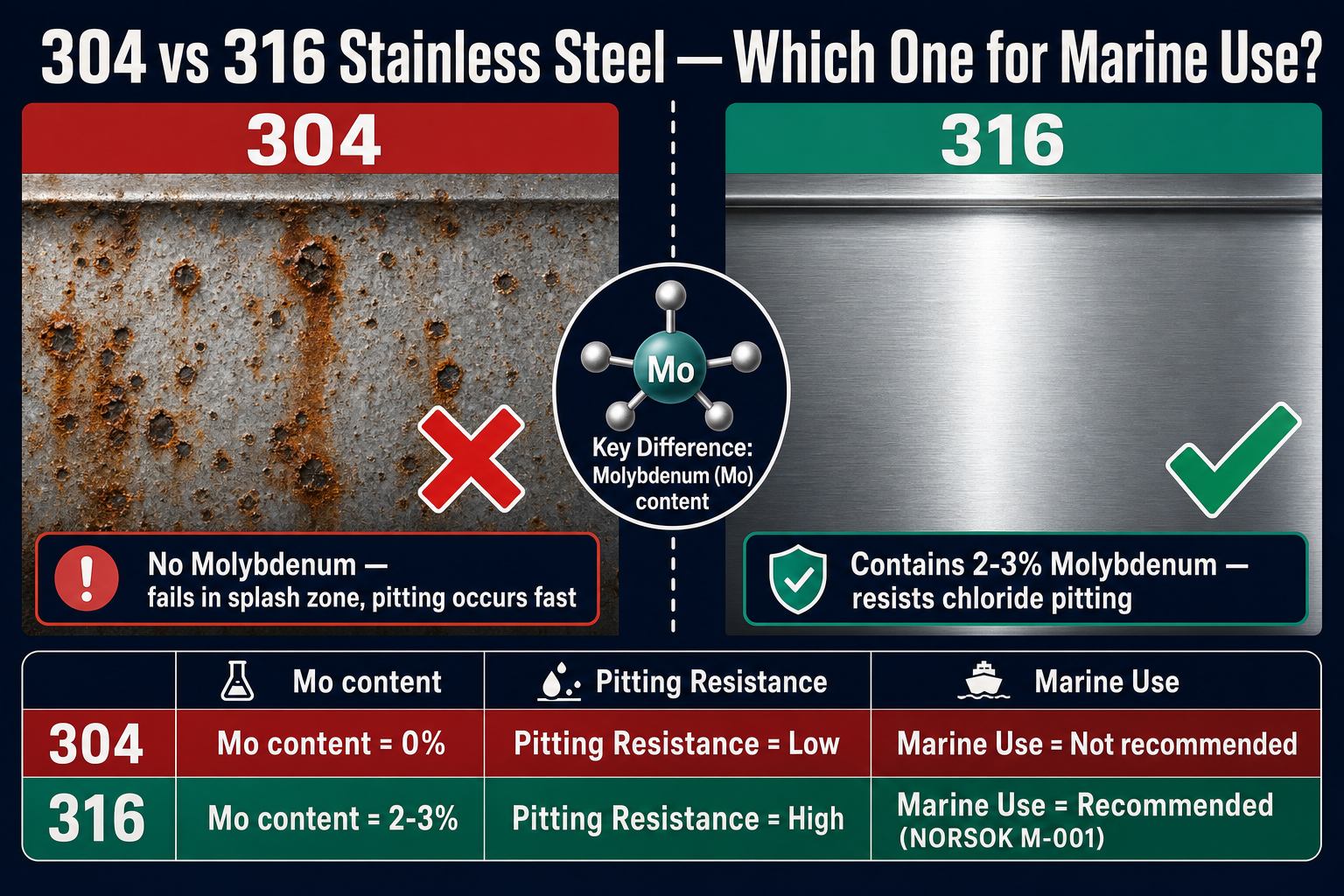
Причина сводится к одному элементу: молибден.
- Оценка 316 Содержит молибден 2–3%, который значительно повышает устойчивость к точечной коррозии в средах с высоким содержанием хлоридов.
- Оценка 304 Не содержит молибдена и быстро подвергается точечной коррозии в зонах разбрызгивания.
Стандарт NORSOK M-001 и другие международные стандарты для морской техники прямо требуют использования стали марки 316/316L для любых компонентов, подвергающихся воздействию морской атмосферы или брызг — сталь марки 304 не является приемлемой заменой.
На практике цифры 304 и 316 выглядят идентично. Единственный надежный способ проверить сортность товара при приемке — это... Проверьте протокол испытаний мельницы (MTR). и подтвердить Содержание молибдена ≥ 2%.
Инструкции по чтению MTR см. в нашем [МТР Руководство по чтению— Мы шаг за шагом разберем реальный пример.
Когда следует переходить на дуплексную нержавеющую сталь?
Марка стали 316L подходит для большинства компонентов, подверженных воздействию морской среды. но для выполнения определенных условий требуется обновление до дуплексная нержавеющая сталь (2205):
Компоненты, полностью погруженные в морскую воду (а не просто подверженные воздействию брызг).
Рабочие температуры выше 60°C при контакте с хлоридами.
Области со значительным риском повышения концентрации хлоридов, такие как зоны испарения.
Для стандартных компонентов, используемых в зонах разбрызгивания и атмосферных условиях, достаточно стали марки 316L. Полная модернизация проекта до двухслойной стали требуется крайне редко.
Какие компоненты обязательно должны быть изготовлены из нержавеющей стали?
Прежде чем приступить к просмотру списка, важно отметить один момент: Коррозионные разрушения чаще всего возникают не на видимых основных конструктивных поверхностях, а в зазорах, контактных зонах и скрытых соединениях. На поверхности следы коррозии выглядят чистыми, в то время как металлическая внутренняя часть уже сильно корродирована. К тому моменту, когда повреждения становятся видимыми, проникновение зачастую уже произошло. Эти скрытые места также сложнее всего отремонтировать, и Стоимость замены может во много раз превышать первоначальную стоимость материала.
Следующие пять типов компонентов несут в себе Наибольший риск, поэтому в морской среде необходимо использовать нержавеющую сталь. — без исключений.
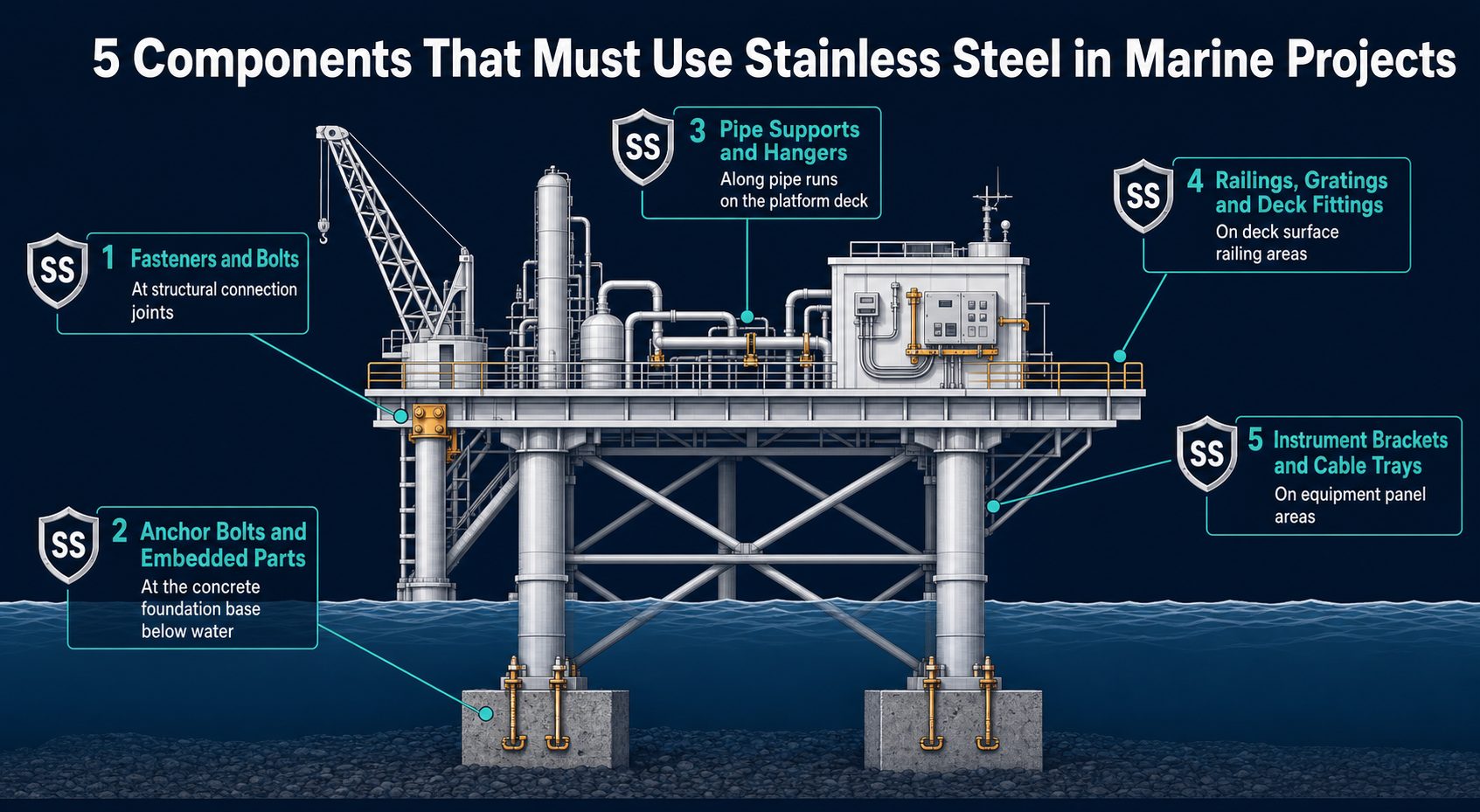
Крепежные элементы и болтовые соединения
Крепежные элементы являются основной причиной коррозионного разрушения морских сооружений. Небольшие размеры, низкая себестоимость единицы продукции, легко поддающиеся оценке в ходе проверки закупочной деятельности — однако затраты на замену после поломки могут в сотни раз превышать разницу в цене материала.
Крепежные элементы из углеродистой стали, оцинкованные горячим способом, обычно имеют срок службы цинкового слоя, равный... детям до 5 лет в зонах брызг морской воды, что значительно меньше срока службы, предусмотренного проектом.
Рекомендуемые характеристики: нержавеющая сталь 316Изготовлено в соответствии со стандартом ISO 3506 Grade A4. При установке следует наносить противозадирную смазку для предотвращения холодной сварки (заедания) резьбы из аустенитной нержавеющей стали.
Анкерные болты и закладные детали
После заливки в бетонный фундамент, анкерные болты и встроенные детали являются, по сути, постоянными. В случае поломки потребуется как минимум структурный ремонт — посадка новых растений, повторная затирка швов или частичная реконструкция фундамента — и все это обойдется в огромную сумму.
Первоначальная стоимость материалов для этих компонентов составляет ничтожную долю от общей стоимости проекта. Последствия отказа — нет.
Единое требование: 316L или дуплекс 2205. Полный комплект документов MTR является обязательным условием приемки товара.
Опоры для труб, зажимы и подвесы
Опоры труб — это классический скрытый элемент, представляющий высокий риск повреждения, — обычно они устанавливаются внутри конструкций или под платформами и редко проверяются. Для их замены требуются строительные леса или подъемные платформы. Общая стоимость замены значительно превышает любую первоначальную экономию на материалах.
По зонам:
Зона брызг и атмосферная зона: 316 л
Приливная зона: модернизация до дуплекса 2205
Перила, решетки и элементы палубного покрытия
При ограниченном бюджете можно рассмотреть возможность использования углеродистой стали для основных секций ограждения и решетки. Однако, как только покрытие поцарапано, коррозия быстро распространяется от места повреждения и может привести к масштабным разрушениям.
Что еще более важно, зажимы и соединительные болты, удерживающие решетчатые панели, заменить гораздо сложнее, чем сами панели. Если эти крепежные элементы изготовлены из углеродистой стали, даже целые панели потребуют преждевременной замены при выходе из строя соединений.
Главный вывод: все крепежные элементы и соединители должны быть изготовлены из нержавеющей стали. Основные несущие конструкции можно оценить с учетом бюджета, а соединительные элементы — нет.
Опоры для труб, зажимы и подвесы
Опоры трубопроводов — это классический скрытый элемент повышенного риска, обычно устанавливаемый внутри конструкций или под платформами, и редко подвергающийся осмотру. Для их замены требуются строительные леса или подъемные платформы. Общая стоимость замены значительно превышает любую первоначальную экономию на материалах.
По зонам:
Зона брызг и атмосферная зона: 316 л
Приливная зона: модернизация до дуплекса 2205
Кронштейны для приборов и кабельные лотки
В морских проектах измерительное оборудование часто оказывается «слепым пятном» при выборе материалов. Сами приборы, как правило, имеют строгие требования к защите от коррозии, но кронштейны и кабельные лотки, поддерживающие их, иногда закупаются в соответствии со стандартами для внутренних районов страны из обычной углеродистой стали.
Выход из строя кронштейнов — это не просто структурная проблема, это влияет на сопротивление заземления и целостность изоляции, что может поставить под угрозу точность измерений и безопасность работы системы управления.
Рекомендуемые характеристики: Для всех кронштейнов и поддонов используется нержавеющая сталь марки 316, а не алюминий, который в той же степени подвержен образованию точечных повреждений в средах с высоким содержанием хлоридов. Установите изоляционные прокладки между кронштейнами из нержавеющей стали и основной конструкцией из углеродистой стали, чтобы предотвратить гальваническую коррозию.
В каких случаях допустимо использование углеродистой стали с покрытием?
Не все компоненты в морском проекте обязательно должны быть изготовлены из нержавеющей стали. Четкое определение границ позволяет направлять бюджет туда, где это действительно важно.
Углеродистая сталь с покрытием является жизнеспособной альтернативой только тогда, когда все Выполняется одно из следующих условий:
Компонент находится в атмосферной зоне, выше зоны разбрызгивания. (обычно на высоте более 10 м от поверхности моря)
Действует полный план проверки и обслуживания покрытия. (Рекомендуется проводить полную проверку каждые 3–5 лет)
Данный компонент легко заменяется и не является несущим или критически важным с точки зрения безопасности.
Компонент — не одноразовая встраиваемая деталь
Один момент, которым нельзя пренебрегать ни при каких обстоятельствах: даже если в основной конструкции используется углеродистая сталь с покрытием, все соединительные элементы все равно должны быть изготовлены из нержавеющей стали. Соединительные элементы — болты, зажимы, скобы — наиболее подвержены повреждению покрытия во время установки и эксплуатации. Как только покрытие разрушается, коррозия быстро распространяется внутрь и может привести к поломке всей конструкции. Это один из наиболее распространенных типов отказов в морских проектах и один из наиболее предотвратимых.
Четыре распространённые ошибки при выборе материалов
Даже при правильном выборе материалов проекты всё равно терпят неудачу — не из-за некачественных материалов, а из-за того, как принимаются решения на этапах проектирования, закупки и монтажа. Эти четыре ошибки составляют большинство предотвратимых случаев коррозии в морских проектах.
Сосредоточьтесь на основной структуре, игнорируя соединители.
Именно в разъемах начинается коррозия, и именно там замена обходится дороже всего. Если правильно спроектировать основную конструкцию, но использовать неподходящие материалы для соединителей, вся система всё равно выйдет из строя.
Рассмотрение покрытий как долговременного решения.
Покрытия изнашиваются под воздействием механических повреждений и старения. Без плана технического обслуживания покрытия лишь замедляют коррозию, но не предотвращают её полностью. Для ответственных компонентов лучше отказаться от покрытия и выбрать нержавеющую сталь.
Смешанные металлы, вызывающие гальваническую коррозию.
Болты из углеродистой стали на алюминиевых кабельных лотках или кронштейны из нержавеющей стали, непосредственно контактирующие с основной конструкцией из углеродистой стали, — оба варианта ускоряют коррозию в местах контакта. Во всех точках контакта разнородных металлов необходимы изоляционные прокладки.

Указание «защиты от коррозии» без указания конкретного класса защиты.
«Защита от коррозии» не имеет обязательной силы. Подрядчики будут выполнять её, используя самый экономичный из доступных вариантов. В технических условиях необходимо указать марку стали (316/316L), стандарт (ASTM A276) и требования к документации (MTR).
Краткое содержание
В этом руководстве все основано на одном принципе: Стоимость отказа значительно превышает стоимость модернизации материала.
Крепежные элементы, встроенные детали и скрытые опоры относятся к компонентам с самым высоким риском — и именно их чаще всего занижают в рейтинге при закупках. Правильное решение этих вопросов устраняет 80% пробелов в выборе материалов в любом морском проекте.
Три действия, которые вы можете предпринять прямо сейчас:
Замените каждое упоминание «защиты от коррозии» в вашей спецификации конкретным классом и стандартом.
Составьте спецификацию крепежных изделий и проверьте каждую позицию на соответствие требованиям стандарта 316 / ISO 3506 A4.
Запросите у поставщика материалов образцы стали 316L и дуплексной стали 2205 MTR, чтобы определить базовый уровень приемки.
Нужен шаблон спецификации для нержавеющей стали или эталонный образец для приемки MTR? Свяжитесь с нами напрямую.
Список литературы и дополнительные материалы
NACE International — Стоимость борьбы с коррозией и стратегии предотвращения в Соединенных Штатах
Знаковое федеральное исследование США оценивает ежегодные затраты на борьбу с коррозией в 14 000 276 миллиардов долларов; в нем представлен экономический анализ по 26 отраслям промышленности, включая морскую и шельфовую инфраструктуру.
https://www.ampp.org/resources/general-resources/cost-of-corrosion-studyNACE IMPACT — Международные меры по предотвращению, применению и экономической эффективности технологий борьбы с коррозией.
Глобальное исследование стоимости коррозии оценивает ежегодные мировые затраты в 1,4 трлн долл. США (3,41 трлн долл. США из мирового ВВП); включает в себя структуру управления коррозией и передовые методы.
http://impact.nace.orgNORSOK M-001: Выбор материалов (выпуск 5, сентябрь 2014 г.)
Норвежский стандарт материалов для морской нефтегазодобывающей отрасли, предназначенный для установок добычи углеводородов; эталон для применения в зонах разбрызгивания, зонах погружения и подводных условиях с расчетным сроком службы 20 лет.
https://standard.no/en/sectors/energi-og-klima/petroleum/norsok-standard-categories/m-material/ASTM A276/A276M — Стандартная спецификация на прутки и профили из нержавеющей стали.
Официальная спецификация ASTM для горячекатаных и холоднокатаных прутков из нержавеющей стали, включая круглые, квадратные, шестиугольные и экструдированные профили; охватывает марку 316 и другие распространенные марки с требованиями к механическим свойствам.
https://www.astm.org/a0276_a0276m-24a.htmlISO 3506 — Крепежные изделия — Механические свойства крепежных изделий из коррозионностойкой нержавеющей стали
Международный стандарт для крепежных изделий из нержавеющей стали, где марка A4 соответствует серии 316; определяет химический состав, механические свойства и обозначения марок (A4-50, A4-70, A4-80).
https://www.iso.org/standard/67012.htmlTWI Global — Коррозионное растрескивание сварных аустенитных нержавеющих сталей под воздействием атмосферных напряжений (Отчет участника № 1050)
Технический исследовательский отчет о механизмах коррозионного растрескивания под напряжением в аустенитных нержавеющих сталях; демонстрирует растрескивание при комнатной температуре при относительной влажности 30% и уровнях напряжения 400 МПа, с особым акцентом на растрескивание сварных соединений, вызванное хлоридами.
https://www.twi-global.com/pdfs/Member-Report-Summaries/1050-Summary.pdfTWI Global — Услуги по испытанию на коррозионное растрескивание под напряжением
Технический обзор механизмов коррозионного растрескивания под напряжением, методик испытаний и стратегий предотвращения для инженеров; охватывает выбор материалов, меры по снижению воздействия на окружающую среду и подходы к снижению напряжений.
https://www.twi-global.com/what-we-do/research-and-technology/technologies/materials-and-corrosion-management/corrosion-testing/stress-corrosion-cracking-testing