





مادة عمود المضخة: 316L مقابل دوبلكس 2205
في تحلية مياه البحر وغيرها خدمات عالية الكلوريدنادراً ما يكون عطل عمود المضخة مجرد مشكلة صيانة. إنه يعني عادةً عمليات إغلاق غير مخطط لها، خسائر في الإنتاج وأسئلة صعبة من المستخدم النهائي: "لماذا فشل العمود بهذه السرعة، على الرغم من أنه مصنوع من الفولاذ المقاوم للصدأ 316L؟"
بالنسبة لمصنعي المعدات الأصلية وموردي الأعمدة، لا تُعد هذه مشكلة بحثية، بل مشكلة مشكلة في الخدمةعندما لا يعود العملاء راضين عن عمر المنتج وموثوقيته 316 لتر أعمدة المضخاتإنهم بحاجة إلى شرح تقني واضح وخيار مواد أكثر متانة، بدلاً من إصلاح قصير الأجل آخر.
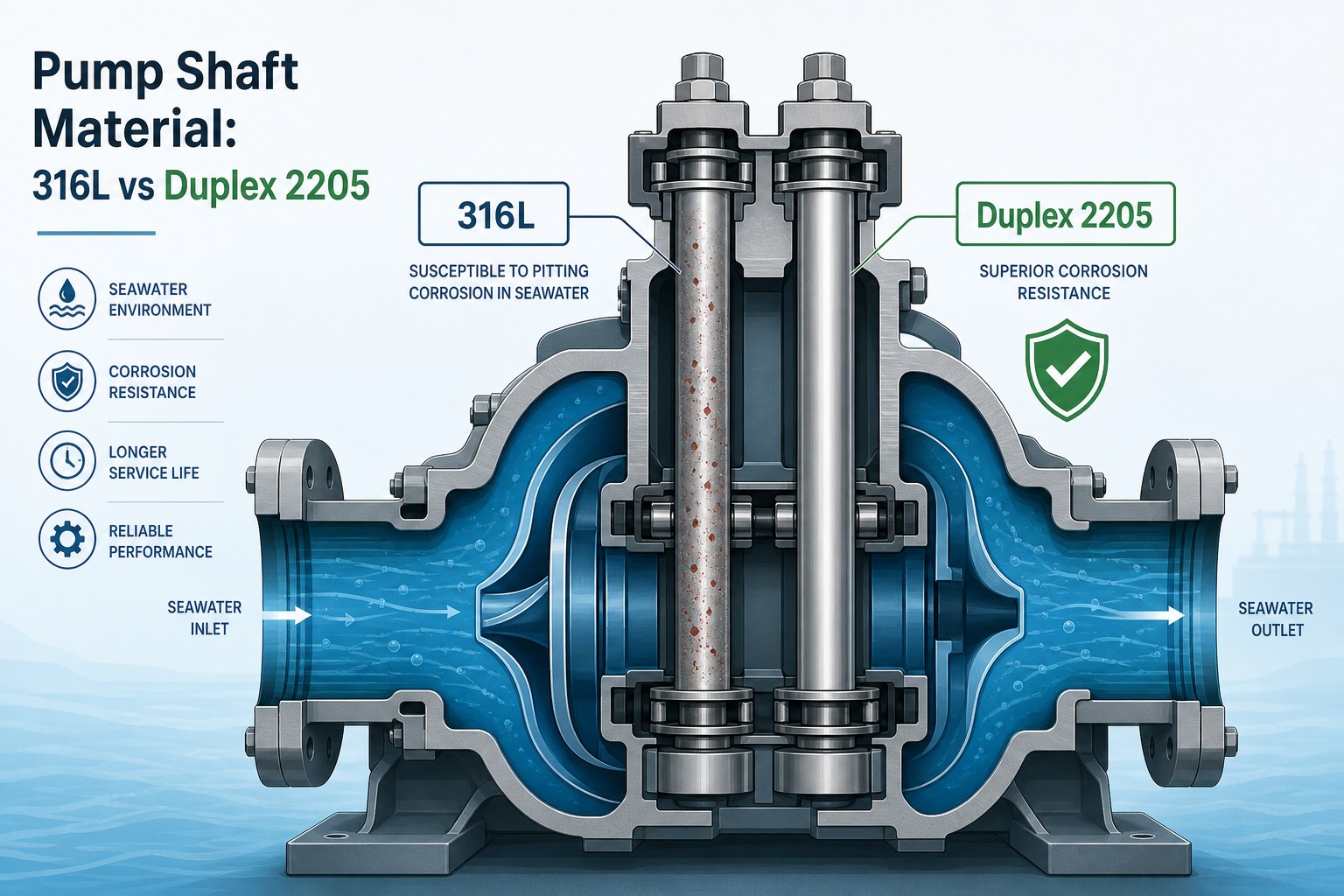
ما هي استخدامات مادة عمود المضخة 316L؟
316 لتر هو مستخدم على نطاق واسع الفولاذ المقاوم للصدأ الأوستنيتيفي العديد من تطبيقات المياه منخفضة الكلوريد ودرجات الحرارة المعتدلة، يوفر الفولاذ 316L توازنًا جيدًا بين مقاومة التآكل، وقابلية اللحام، والتوافر. بالنسبة للمضخات منخفضة المخاطر، والخدمات المساعدة، والبيئات المعتدلة، لا يزال الفولاذ 316L خيارًا معقولًا وفعالًا من حيث التكلفة. مادة عمود المضخة.
تبدأ المشكلة عندما يتعرض الفولاذ 316L لظروف مياه البحر القاسية: مستويات أعلى من الكلوريد، ودرجات حرارة مرتفعة، وتشغيل متواصل لفترات طويلة، وأحمال ميكانيكية أعلى. في هذه الحالات، يصبح هامش أمان الفولاذ 316L أقل قابلية للتنبؤ، ويبدأ المهندسون بطبيعة الحال في البحث عن حلول بديلة. خيار ذو جودة أعلى.
هل لا يزال الفولاذ المزدوج 2205 من الفولاذ المقاوم للصدأ؟
عندما يبدأ الفولاذ المقاوم للصدأ 316L في الظهور بمظهر غير مناسب في ظروف مياه البحر القاسية، فإن السؤال التالي الذي يطرحه العديد من المهندسين والمستخدمين النهائيين بسيط: "هل يجب أن ننتقل إلى 2205 وهل هو حقاً من الفولاذ المقاوم للصدأ أم من سبيكة خاصة؟
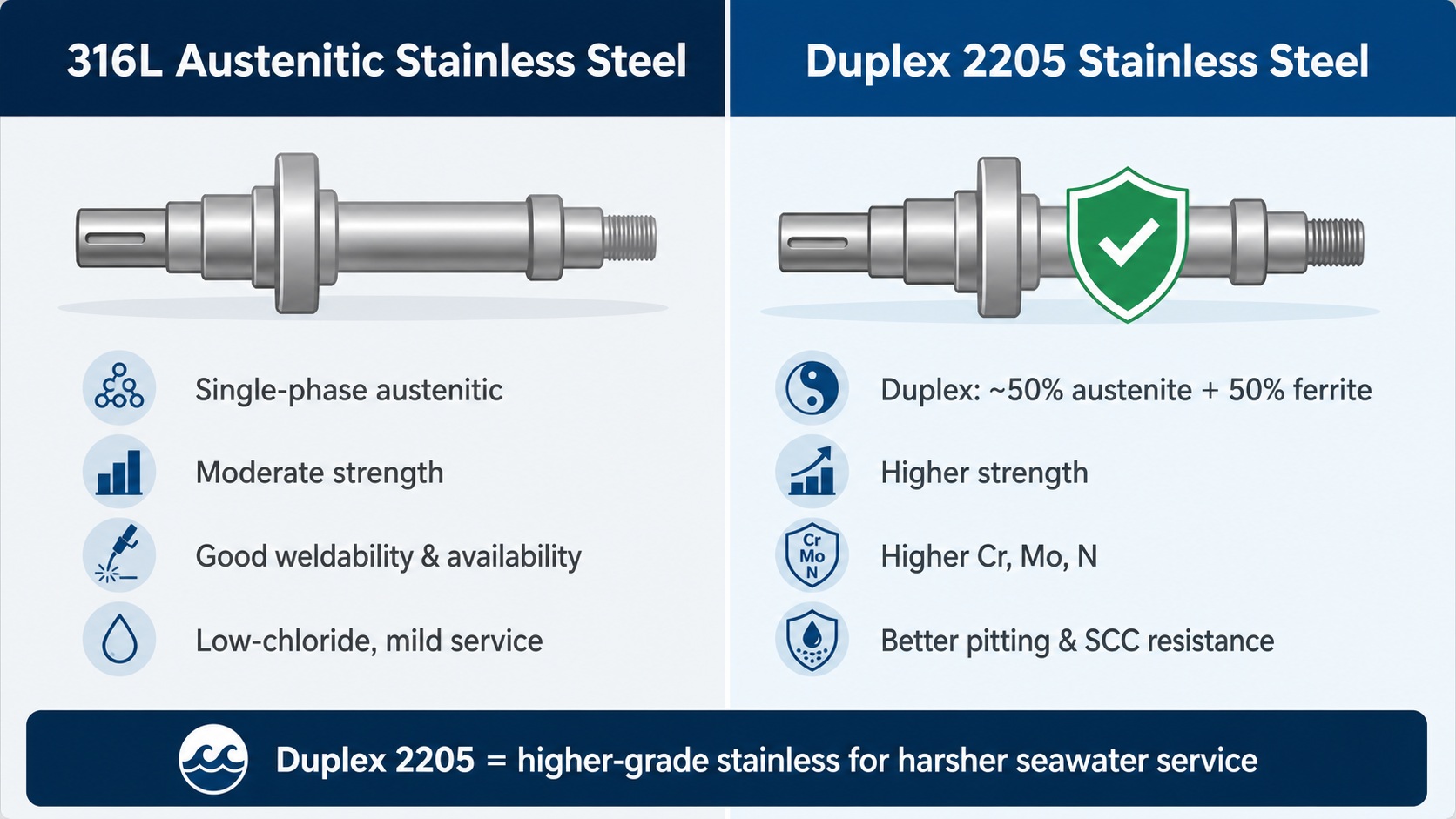
دوبلكس 2205 هو الفولاذ المقاوم للصدأ المزدوجوهذا يعني أن بنيته المجهرية تتكون تقريبًا من الأوستنيت 50% والفريت 50%. وبالمقارنة مع الفولاذ 316L، فإنه يحتوي على مستويات أعلى من الكروم والموليبدينوم والنيتروجين، وهو مصمم لتوفير كليهما. قوة أعلى ومقاومة أفضل بكثير لـ التآكل الموضعيببساطة، هو الفولاذ المقاوم للصدأ عالي الجودة، وليس عائلة مواد مختلفة تمامًا.
بالنسبة لأعمدة المضخات، يُستخدم عادةً الفولاذ المزدوج 2205 في مياه البحر, محلول ملحي وغيرها من الخدمات التي تتطلب تركيزات عالية من الكلوريد، حيث يكون كل من الحمل الميكانيكي وتكلفة التوقف عن العمل مرتفعين، وحيث يبدأ استخدام الفولاذ المقاوم للصدأ 316L في الظهور بمظهر غير آمن من حيث العمر الافتراضي. وهذا يثير بطبيعة الحال السؤال التالي: ما هي المشكلة تحديدًا في الفولاذ المقاوم للصدأ 316L في هذه الخدمات؟
316L في مياه البحر: هل هو تآكل أم تشقق ناتج عن تآكل الإجهاد؟
في البيئات ذات نسبة الكلوريد العالية، معظم أعطال عمود 316L إنها ليست مجرد تآكل منتظم وبسيط. بل هي عادةً مزيج من حفر أو تآكل الشقوق زائد تشقق التآكل الإجهادي (SCC).
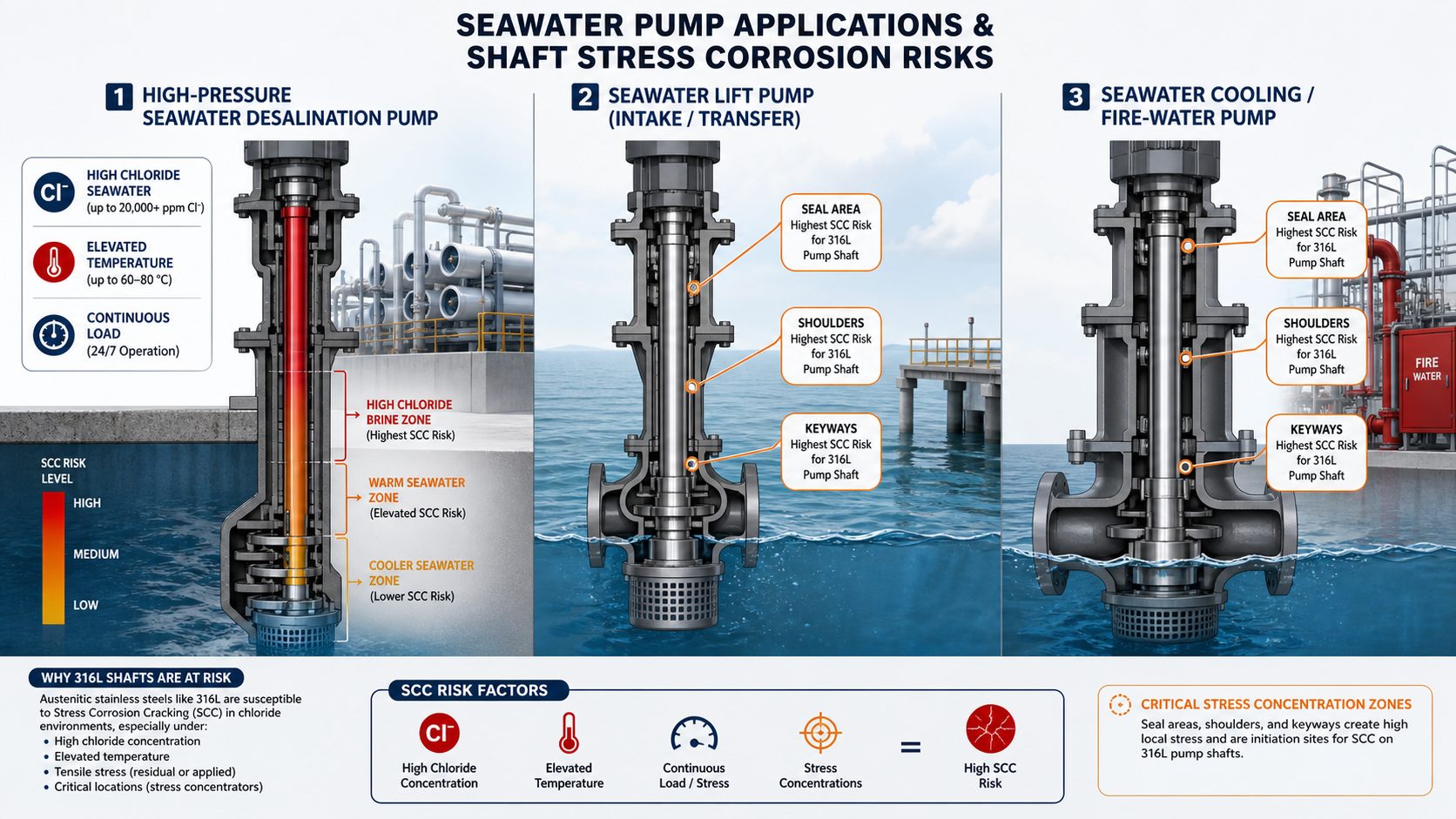
عمليًا، يبدو هذا كعمود "لا يبدو متآكلًا بشدة" ولكنه مع ذلك يُصاب بتشقق أو حتى كسر بالقرب من منطقة مانع التسرب أو الكتف أو مجرى المفتاح. تعمل الحفر الموضعية كـ أجهزة تركيز التوتربينما تُحفز إجهادات الالتواء والانحناء بدء التصدع ونموه في ظل ظروف تحتوي على الكلوريد. ولهذا السبب، قد يبدو الفولاذ 316L مقبولاً أثناء الفحص البصري، ولكنه قد يفشل بشكل غير متوقع في ظروف الخدمة القاسية في مياه البحر.
أين تكون مادة عمود المضخة 316L الأكثر عرضة للخطر؟
مرة واحدة SCC عندما يُعترف بأن هذه هي المشكلة الحقيقية، يصبح من الأسهل تحديد مواطن ضعف الفولاذ المقاوم للصدأ 316L. ويكون الخطر في أعلى مستوياته عندما تتداخل عدة عوامل:
- محتوى عالٍ من الكلوريد، مثل مياه البحر أو المحاليل الملحية المركزة.
- درجة الحرارةمياه البحر أو محلول ملحي دافئ.
- التحميل الميكانيكي المستمرعلى عمود طويل أو رفيع.
- نقاط تركيز الإجهاد والشقوق، بما في ذلك مناطق الختم والأكتاف ومجاري المفاتيح.
في النباتات الحقيقية، هذا يعني غالبًا مضخات الضغط العالي لتحلية مياه البحرمضخات رفع مياه البحر، ومضخات تبريد مياه البحر أو مضخات مياه مكافحة الحرائق. في هذه التطبيقات، قد يؤدي تعطل عمود واحد إلى خسارة فادحة تفوق أي توفير في التكاليف ناتج عن استخدام مواد أرخص قليلاً. هذه هي تحديدًا الحالات التي يبدأ فيها مصنّعو المعدات الأصلية بالتفكير في هذا الأمر. دوبلكس 2205 بدلاً من 316L.
لماذا يختار المزيد من مصنعي المعدات الأصلية مادة Duplex 2205 لأعمدة مضخات مياه البحر؟
دوبلكس 2205 طُوِّر هذا الفولاذ لمعالجة نقاط ضعف الفولاذ المقاوم للصدأ الأوستنيتي، مثل 316L، في البيئات القاسية، لذا تتوافق مزاياه تمامًا مع مشاكل أعمدة المضخات في مياه البحر. وبالمقارنة مع 316L، فإنه يوفر ثلاث مزايا رئيسية لأعمدة المضخات:
- قوة أعلى— قوة الخضوع تبلغ ضعف قوة الخضوع لـ 316L تقريبًا، وهو أمر ذو قيمة خاصة للأعمدة الطويلة ذات الأحمال العالية.
- مقاومة أفضل للتنقر والتآكل الشقوقي— قيمة PREN الأعلى تعني عددًا أقل من الحفر وأقل حدة، مما يقلل من مواقع بدء التآكل الإجهادي.
- انخفاض قابلية الإصابة بتشققات الخلايا الحرشفية الناتجة عن الكلوريد- تُظهر الفولاذات المقاومة للصدأ المزدوجة مقاومة أفضل بكثير لتشقق التآكل الإجهادي في العديد من ظروف مياه البحر
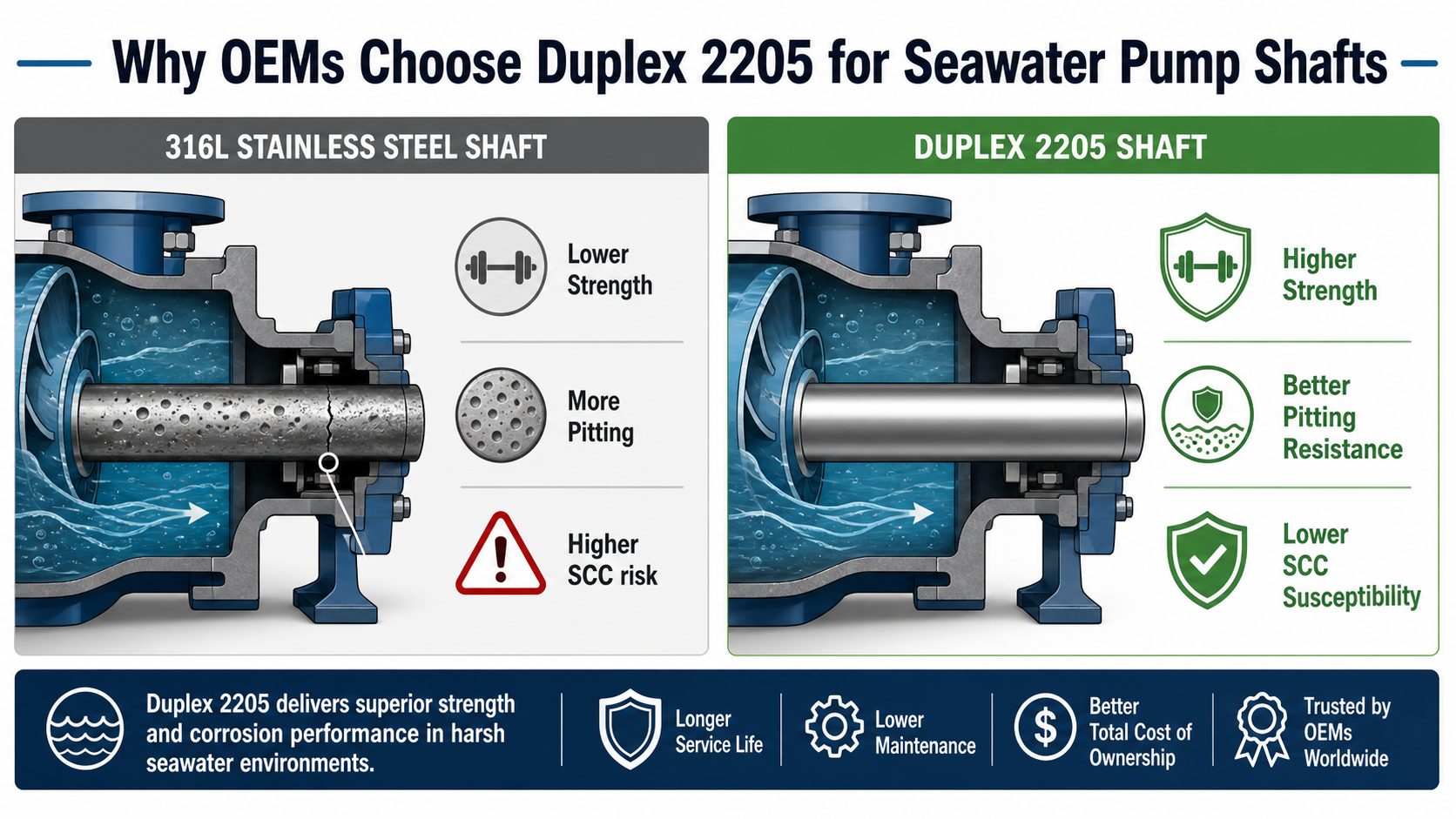
وبسبب هذا المزيج، توصي العديد من إرشادات مضخات مياه البحر وتحلية المياه الآن دوبلكس أو الفولاذ المقاوم للصدأ فائق الجودة بالنسبة للمواقع عالية الخطورة مثل أعمدة مضخات الضغط العالي، بدلاً من الاعتماد على الفولاذ 316L. هذا لا يعني أن الفولاذ 316L قد عفا عليه الزمن، ولكنه يعني أن الفولاذ 2205 أصبح الخيار الأكثر أمانًا في مجموعة متنامية من خدمات مياه البحر.
هل ينبغي استبدال الفولاذ المزدوج 2205 بالفولاذ 316L في كل مكان؟
على الرغم من أن الفولاذ المزدوج 2205 أقوى وأكثر مقاومة للتآكل، إلا أنه ليس مصممًا ليحل محل الفولاذ 316L بشكل كامل. خيار ذو جودة أعلى للخدمات ذات المخاطر العالية.
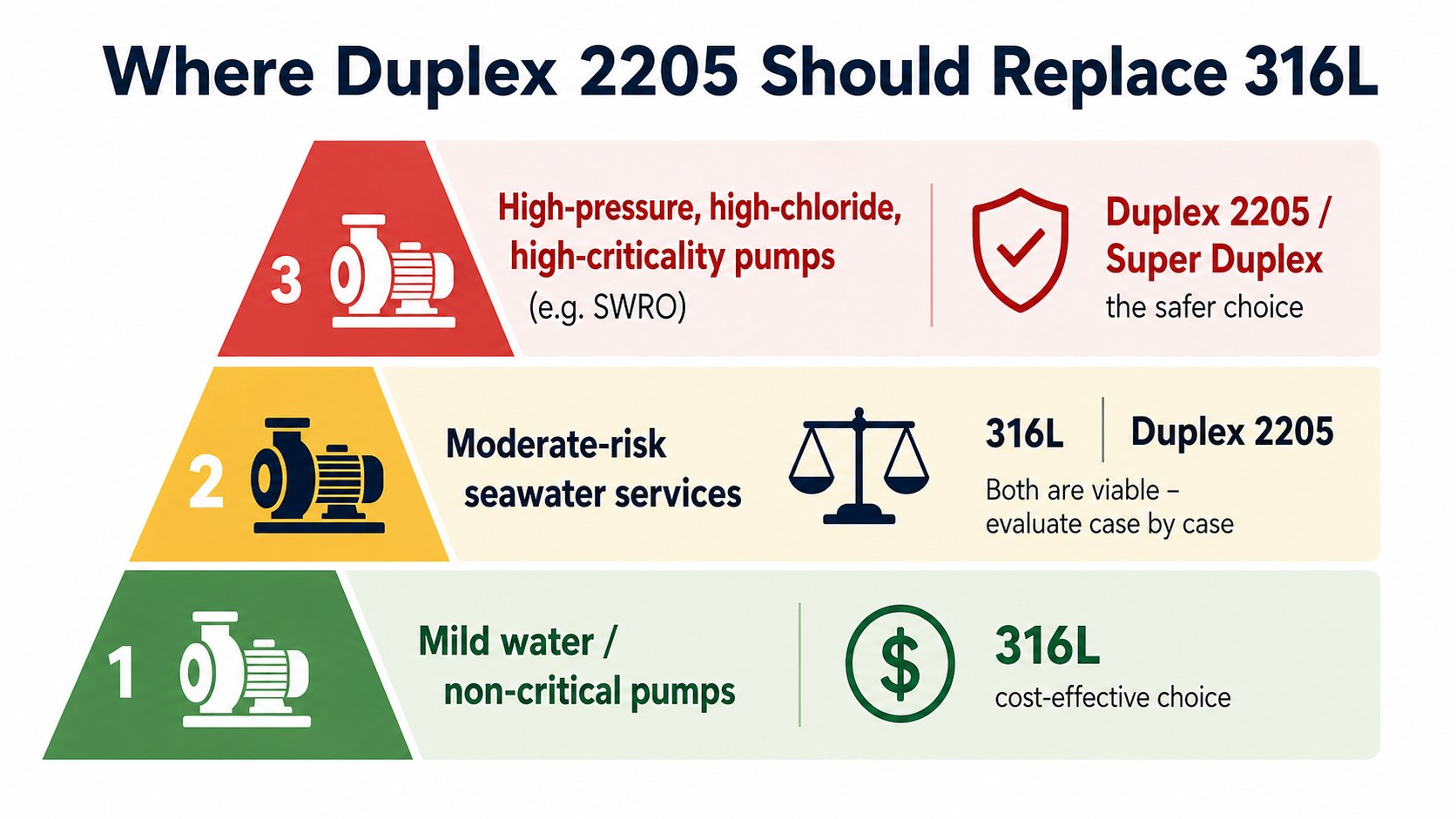
يتمثل أحد الأساليب العملية في تقسيم المضخات حسب الأهمية و بيئة:
- بالنسبة لـ مضخات عالية الضغط، عالية الكلوريد، عالية الأهمية(على سبيل المثال مضخات SWRO عالية الضغط)، عادةً ما يكون Duplex 2205 أو super duplex هو الخيار الأكثر أمانًا للأعمدة.
- بالنسبة لـ خدمات مياه البحر متوسطة المخاطرقد يكون 316L مقبولاً، ولكن يجب تقييمه بعناية من حيث درجة الحرارة ومستوى الكلوريد والعمر الافتراضي المطلوب.
- بالنسبة لـ خدمات المياه المعتدلةوبالنسبة للمهام غير الحرجة، يظل الفولاذ 316L مادة فعالة من حيث التكلفة للأعمدة.
وبهذه الطريقة، يتم استخدام Duplex 2205 حيث يحمي وقت تشغيل العميل حقًا، دون زيادة التكلفة بلا داع على المعدات منخفضة المخاطر.
كيفية التعامل مع عملية الترقية من الفولاذ المقاوم للصدأ 316L إلى الفولاذ المزدوج 2205
بمجرد اتخاذ قرار بنقل بعض الأعمدة من 316L إلى دوبلكس 2205يجب التعامل مع الترقية على أنها التغيير الهندسيليس مجرد إضافة بند جديد إلى قائمة المواد. على الأقل، يجب على مصنعي المعدات الأصلية وموردي الأعمدة ما يلي:
- أعد الفحص قطر العمود, صلابةو انتقادات، باستخدام قوة 2205 الأعلى بشكل معقول بدلاً من تقليل الأبعاد بشكل مفرط.
- تأكد من أن عمليات التشكيل والمعالجة الحرارية والتشغيل الآلي تتم بواسطة شركاء ذوي خبرة في الفولاذ المقاوم للصدأ المزدوج، لتجنب مشاكل مثل عدم توازن الطور أو طور سيجما.
- حدد متطلبات الفحص المناسبة: كيمياء, البنية المجهرية, الخواص الميكانيكيةو يو تي، مع إجراء اختبارات إضافية للتآكل حيث يكون خطر الفشل أعلى ما يمكن.
عند اختيار مورد لمواد عمود Duplex 2205، من الأفضل التركيز أولاً على الموردين ذوي الخبرة المثبتة تجربة السكن المزدوج، التحكم في البنية المجهرية والسجل الحافل في مشاريع ضخ مياه البحر أو تحلية المياه، بدلاً من الاعتماد على السعر فقط.
خطوة عملية تالية
بصفتنا موردًا متخصصًا في مواد عمود مضخة من الفولاذ المقاوم للصدأ المزدوج, لقد قمنا منذ فترة طويلة بتوفير قضبان ومطروقات دوبلكس 2205 لمشاريع تحلية مياه البحر ورفع مياه البحر وتبريدها، ونحن على دراية تامة بكيفية فشل 316L وكيفية ترقيته في هذه الخدمات.
إذا كنت تشعر بالفعل أن الفولاذ المقاوم للصدأ 316L "يواجه صعوبة" في بعض ظروف مياه البحر، فابدأ باختيار مشروع أو مشروعين نموذجيين، واجمع بيانات التشغيل الرئيسية مثل الضغط ودرجة الحرارة وتركيز الكلوريد والعمر الافتراضي المستهدف، ثم قم بمناقشة متعمقة حول عمود مضخة من الفولاذ المزدوج 2205 حل بالتعاون معنا أو مع مورد مواد آخر ذي خبرة في الفولاذ المقاوم للصدأ المزدوج، يمكنكم تحديد أفضل المواقع لتطبيقات 2205 التجريبية الأولية، ثم استخدام مواد أكثر متانة تدريجيًا لتقليل معدل الأعطال لدى عملائكم وفترات التوقف غير المخطط لها.
المصادر ومصادر القراءة الإضافية
اختيار المواد لمضخات مياه البحر - برنامج تعليمي من مختبر توربولاب بجامعة تكساس إيه آند إم
دليل عملي حول كيفية اختيار مواد المضخات لظروف مياه البحر المختلفة.
https://turbolab.tamu.edu/wp-content/uploads/2018/08/Tutorial-05.pdfاختيار المواد لمضخات مياه البحر – نيو نيكل
نظرة عامة أخرى سهلة الفهم حول اختيار المواد الفعالة من حيث التكلفة لمضخات مياه البحر.
https://www.911metallurgist.com/wp-content/uploads/2016/01/Materials-Selection-For-Seawater-Pumps.pdfإرشادات عملية لتصنيع الفولاذ المقاوم للصدأ المزدوج - IMOA
إرشادات تفصيلية حول التصنيع ومراقبة الجودة للدرجات المزدوجة بما في ذلك 2205.
https://www.imoa.info/download_files/stainless-steel/Duplex_Stainless_Steel_3rd_Edition.pdfاختيار الفولاذ المزدوج 2205 بدلاً من الفولاذ المقاوم للصدأ 316L – LJ Star
ورقة بحثية قصيرة تشرح متى ولماذا يتم اختيار Duplex 2205 بدلاً من 316L.
https://www.ljstar.com/wp-content/uploads/2019/11/duplex-2205-over-316L.pdfالفولاذ المزدوج 2205 مقابل الفولاذ المقاوم للصدأ 316 – كايسونز
مقارنة الأداء والتكلفة بين الفولاذ المزدوج 2205 والفولاذ المقاوم للصدأ 316/316L.
https://www.kaysuns.com/blog/duplex-2205-vs-316-stainles-steel/الفولاذ المقاوم للصدأ المزدوج – شركة كونتيننتال للصلب والأنابيب
نظرة عامة على الفولاذ المقاوم للصدأ المزدوج وتطبيقاته بما في ذلك خدمة مياه البحر.
https://continentalsteel.com/blog/duplex-stainless-steel/تشقق التآكل الإجهادي للفولاذ المقاوم للصدأ 316L
ورقة بحثية متاحة للجميع توضح سلوك التآكل الإجهادي للفولاذ 316L في بيئات الكلوريد.
https://pmc.ncbi.nlm.nih.gov/articles/PMC10254149/