← Санаттарға оралу

Application · Industrial

Тот баспайтын болаттан жасалған өнеркәсіптік қолданбалар

Industrial stainless steel is an iron alloy with at least 10.5% chromium (EN 10088-1), which forms a thin, self-repairing chromium oxide film that protects it from corrosion and heat. It is used for tanks, piping, heat exchangers, furnace parts and wear components in chemical, power, food and mining plants.

Sanmei Metal supplies 304, 316L, 309S, 310S, 321, duplex 2205 and 2507, 410 and 420 as coil, sheet and strip, with a Mill Test Report for every batch.

Өнеркәсіптік тот баспайтын болаттан не ерекшеленеді?

“Industrial environment” means more than just machinery. It refers to harsh conditions like extreme temperature, high pressure, humidity, acid and alkaline exposure, and mechanical wear. In such scenarios, the wrong material means risk, downtime and costly replacements.
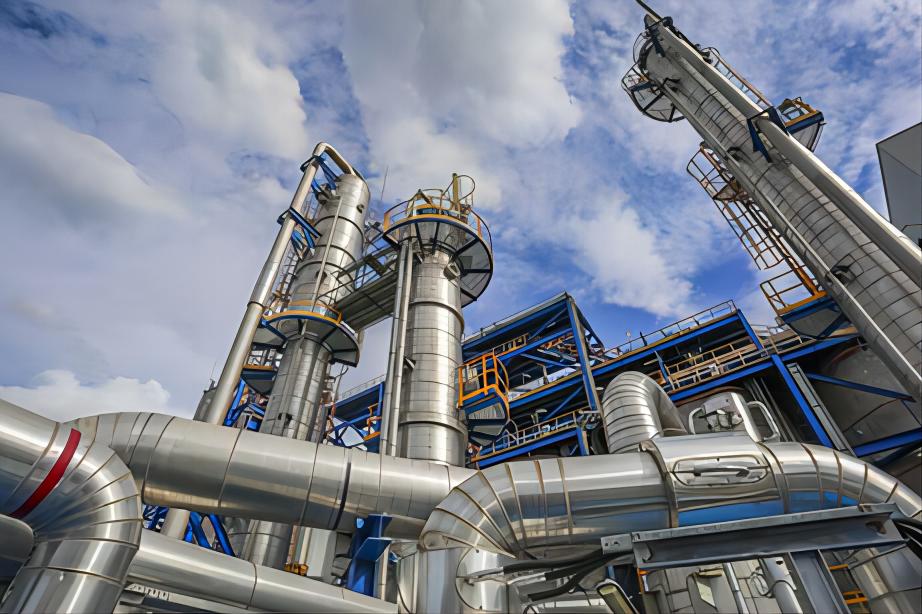
Мұнай-химия зауытындағы тот баспайтын болаттан жасалған мұнаралар мен құбырлар

Acids, Chlorides and Cleaning Chemicals

Process media, seawater and daily washdowns attack ordinary steel. Stainless steel resists acids, chlorides, solvents and cleaning chemicals, so equipment does not leak, contaminate the product or fail early.

Heat and Thermal Cycling

Furnaces, boilers, heat exchangers and exhaust systems heat up and cool down every day. Stainless steel keeps its strength and resists oxidation and scaling.

Pressure, Abrasion and Constant Load

Pumps, screens, shafts and tools face pressure, abrasion, cavitation and constant mechanical stress. Stainless steel stands up to them without a protective coating.

Hygiene and Cleanability

Smooth, non-porous surfaces are easy to clean and disinfect, which matters in food, beverage and pharmaceutical plants.

Төмен техникалық қызмет көрсету

No coating to renew, fewer shutdowns and a longer service life, especially in plants that are hard to access.

Easy to Fabricate

Can be cut, formed, welded and finished into tanks, pipework and parts, and keeps its value as scrap at end of life.
At Sanmei Metal, we have spent over a decade working closely with manufacturers across China’s industrial supply chain. What you read here is not generic: it is a practical guide based on real applications and real sourcing experiences, and these mills and material sources are in our network.

Industrial Stainless Steel Grades by Performance Need

Industrial stainless steel must be corrosion-resistant, heat-resistant, or strong and wear-resistant. Let’s break it down by key performance needs.
Industrial stainless steel is used across power generation, chemical processing, food production, mining and electrical engineering, wherever equipment has to resist corrosion, heat and wear for years. More than 30% of all stainless steel produced goes into food and beverage applications alone, according to worldstainless.
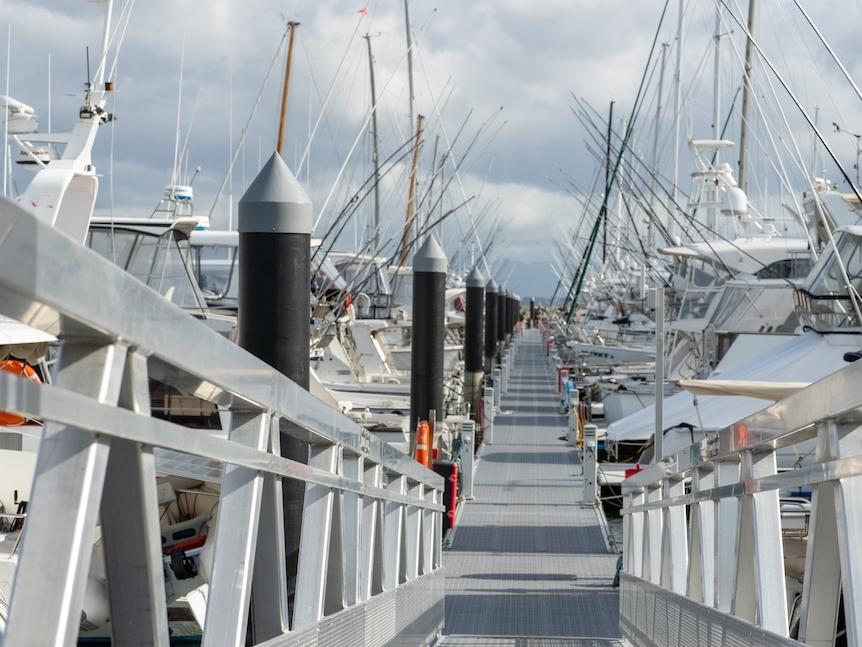
тот баспайтын болаттан жасалған теңіз құрылымы
01

Коррозияға төзімділік – химия, тамақ және теңіз өнеркәсібі

Many industries, from food processing to chemical plants, deal with acids, chlorides, and solvents daily. Using corrosion-prone materials can lead to contamination, leakage, or dangerous failures. Typical uses include storage tanks, pipelines, process vessels and heat exchangers in chemical, fertiliser, oil and gas, refining, and pulp and paper plants, pressure vessels and reactors for chloride-bearing media, and dairy, brewing and meat processing equipment. In electrical engineering, 304 and 430 are used for heating elements, enclosures, mesh and wire.
Ұсынылатын бағалар:
304 / 304л (Austenitic): General-purpose corrosion resistance. 304L is ideal for welded structures. Best for food processing tanks, dairy and brewery vessels, process piping, worktops and electrical enclosures.
316 / 316л (Austenitic, molybdenum): Enhanced resistance to chlorides and marine environments. Best for chemical process piping, heat exchangers, pump and valve bodies, marine fittings and pharmaceutical equipment.
2205 Duplex: Excellent strength and corrosion resistance in chlorinated and acidic conditions. Best for pressure vessels, storage tanks for chloride-bearing media, pulp and paper digesters and desalination equipment.
2207 Super Duplex: Engineered for high-performance applications like offshore platforms and chemical reactors. Best for seawater cooling systems, high-pressure piping, flue gas scrubbers and heat exchangers in seawater service.
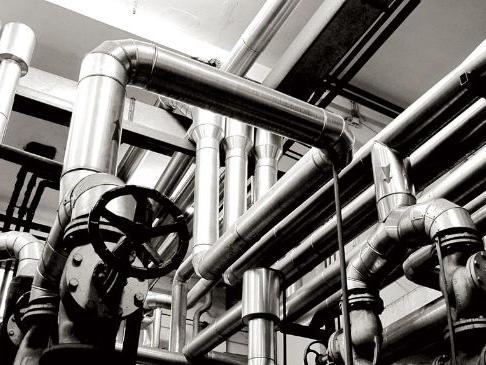
тот баспайтын болаттан жасалған құбырдың тірек құрылымы
02

Жоғары температураға төзімділік – мұнай өңдеу зауыттары, электр станциялары және жылу алмасу жүйелері

High-temperature operations, such as chemical vapor deposition, furnaces, or boilers, require materials that retain strength and structure under thermal stress. In power generation and energy, heat-resisting grades are used for boiler and furnace parts, heat exchangers, condenser tubing, hot-water and thermal storage tanks, biogas digesters and hydrogen equipment.
Ұсынылатын бағалар:
310S (Heat-resisting austenitic): High chromium and nickel content offers superior oxidation and creep resistance. Best for furnace parts, burners, radiant tubes and heat-treatment fixtures above 800°C.
309S (Heat-resisting austenitic): Suitable for medium-high temperatures, cost-effective alternative to 310S. Best for kiln and furnace linings, exhaust ducts, boiler baffles and oven parts.
321 (Stabilized austenitic): Titanium-stabilized alloy that resists intergranular corrosion during welding and heat cycling. Best for exhaust systems, expansion bellows, heat exchanger tubing and welded parts that go through repeated heating.
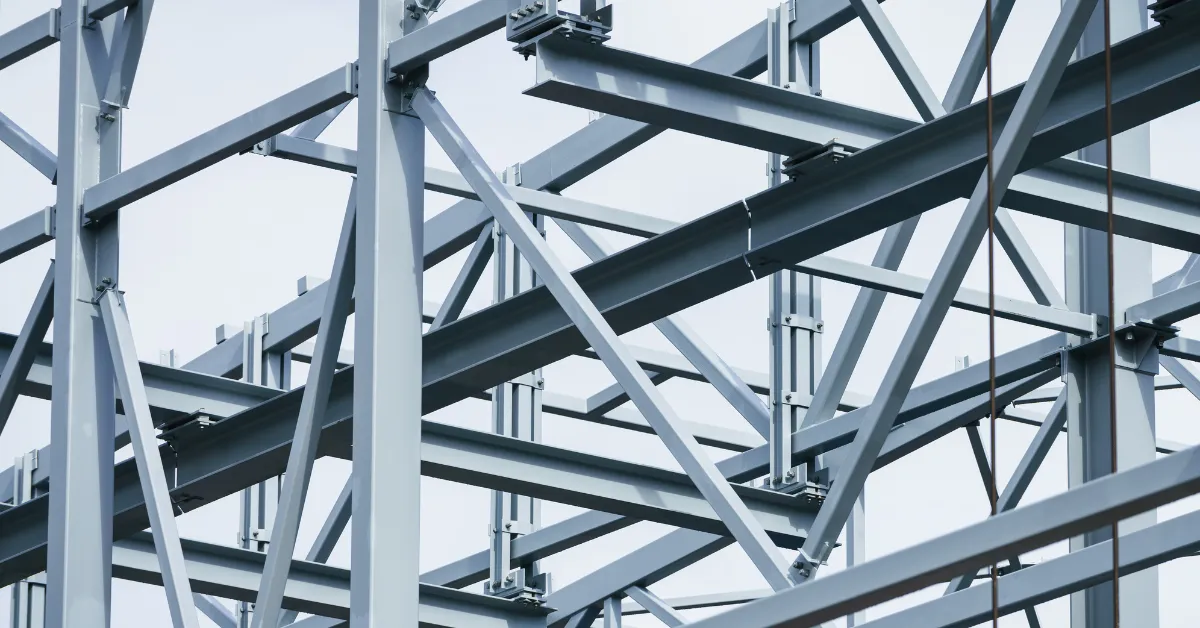
болат құрылым
03

High Strength & Wear Resistance – Mining, Machinery, and Structural Equipment

In environments with constant mechanical stress and friction, like conveyors, blades, or rotating tools, wear resistance and tensile strength are just as critical as corrosion resistance. In mining, quarrying and machinery, wear-resistant grades are used for pumps, screens and filters for ore processing, wear parts, mesh guards, valves, shafts, blades and gears.
Ұсынылатын бағалар:
410 / 410S: 410 is a martensitic steel ideal for high-load parts like valves, shafts, and tools; 410S is its low-carbon version, softer and easier to weld. Best for pump and valve stems, bolts, fasteners and steam turbine blades; 410S for welded parts and annealing boxes.
420J1 / 420J2 (Martensitic): Higher carbon content, used in cutting tools, gears, and wear-resistant components. Best for industrial knives and blades, scissors, valve seats and pump wear rings.
Sanmei Metal's Industrial Stainless Steel
Төмендегі әрбір баға катушка, парақ немесе дәлдік жолағы ретінде жеткізіледі.
Біз ұсынатын бағалар
Not sure which grade fits your plant?
Біздің инженерлерден сұраңыз
All these are part of our existing sourcing ecosystem in China. You don’t need to start from scratch: we have already mapped out reliable supply routes.
Note: These recommendations are based on the chemical composition and physical properties of stainless steel, ensuring optimal performance and longevity in corresponding environments. For specific situations, detailed analysis is required. Please contact our stainless steel experts for more information.
Grade selector

Which Industrial Stainless Steel for Your Operating Conditions?

Pick the condition closest to yours. Corrosive media, temperature and wear decide the grade more than anything else.
1
General service, no chlorides
Water, steam, air, food contact
2
Chlorides, seawater or coastal air
Brine, cooling water, de-icing salt
3
Acids, high chlorides or pressure
Chemical reactors, offshore, pulp and paper
4
Heat 300–800°C, heat cycling
Exhausts, heat exchangers, ovens
5
Above 800°C, oxidizing
Furnaces, burners, kilns
6
Abrasion, cutting or hardness
Blades, shafts, valves, wear parts
Severity
Төмен

304 / 304л

жан-жақты стандарт
For clean water, steam, mild chemicals and food contact, 304 is enough. Use 304L for heavily welded tanks and frames.
Tanks
Frames
Food equipment
Severity
Жоғары

316 / 316л

молибден қорытпасынан жасалған
Chlorides pit and stain 304. The 2–3% molybdenum in 316L resists them much better and is the standard for chemical and marine service.
Piping
Heat exchangers
Marine fittings
Severity
Қатты

2205 / 2507

duplex · about twice the yield strength of 316L
Duplex resists pitting and chloride stress corrosion cracking where 316L fails, and its higher strength allows thinner, lighter sections.
Pressure vessels
Reactors
Offshore
Severity
Орташа

321 / 309S

stabilized and heat-resisting grades
321 is titanium-stabilized, so welded parts resist intergranular corrosion after heat cycles. 309S takes higher temperatures at lower cost than 310S.
Exhaust parts
Oven linings
Expansion joints
Severity
Жоғары

310S / 309S

high chromium and nickel
310S keeps its strength and resists scaling and creep at the highest temperatures of the common grades. 309S is the cost-effective step down.
Furnace parts
Burners
Heat treatment fixtures
Severity
Wear

410 / 420J2

martensitic · can be hardened
410 and 420J2 can be heat treated to high hardness for wear and cutting edges. Their corrosion resistance is lower than 304, so use them where hardness matters most.
Пышақтар
Shafts
Valve trim
General guidance. Send us the medium, temperature and load, and our engineers confirm the grade before you order.
Инженерден сұраңыз

Common Mistakes When Choosing Industrial Stainless Steel

Five grade choices that cause early failure in industrial equipment, and what to use instead.

Common mistakes

304 in chloride water or coastal air: it pits and tea-stains.
316 in long-term furnace service: it scales; it is not a heat-resisting grade.
Duplex above about 300°C: it becomes brittle over time.
410 or 420 to save cost where corrosion matters: they rust much sooner than 304.
Standard-carbon grades in thick welded sections: risk of corrosion along the weld.

What to use instead

Use 316L, or duplex 2205 for higher chloride levels.
Use 310S above 800°C, or 309S as a lower-cost option.
Use 316L or a heat-resisting grade for hot service.
Keep martensitic grades for wear and cutting parts only.
Use 304L, 316L or titanium-stabilized 321.

Industrial Stainless Steel Grades Compared

Designations, pitting resistance and minimum strength from the ASTM, EN, JIS and ISO standards. PREN shows pitting resistance in chlorides: the higher, the better.
Баға
БҰҰ
ASTM A240
KK
EN 10088-2
JIS
JIS G4305
Отбасы
PREN
ISO 15156 formula
Беріктік беріктігі
MPa, min, ASTM A240
Қатайтылатын
Салыстырмалы құны
Quote
S30400
1.4301
SUS304
Аустениттік
17.5–21.1
205
Жоқ
$$
S30403
1.4307
SUS304L
Аустениттік
17.5–21.1
170
Жоқ
$$
S31603
1.4404
SUS316L
Austenitic, Mo
22.6–29.5
170
Жоқ
$$$
S32100
1.4541
SUS321
Austenitic, Ti-stabilized
17.0–20.6
205
Жоқ
$$$
S30908
1.4833*
SUS309S
Austenitic, heat-resisting
22.0–24.0
205
Жоқ
$$$
S31008
1.4845*
SUS310S
Austenitic, heat-resisting
24.0–26.0
205
Жоқ
$$$$
S32205
1.4462
SUS329J3L
Дуплекс
34.1–37.8
450
Жоқ
$$$
S32750
1.4410
—
Супер дуплекс
37.7–47.6
550
Жоқ
$$$$
S41000
1.4006
SUS410
Мартенсит
11.5–13.5
205
Иә
$
—
≈ 1.4028
SUS420J2
Мартенсит
12.0–14.0
225 †
Иә
$

How is PREN calculated?

PREN = %Cr + 3.3 × (%Mo + 0.5 × %W) + 16 × %N, the formula used in ISO 15156 / NACE MR0175. None of these grades contain tungsten. The range shown is calculated from the minimum and maximum Cr, Mo and N in the ASTM A240 composition limits, so you can check it against the standard yourself.

Where do the designations and strength values come from?

UNS designations and minimum 0.2% yield strength per ASTM A240/A240M (annealed plate, sheet and strip). EN numbers per EN 10088-2; * 1.4833 and 1.4845 are heat-resisting grades listed in EN 10095. † 420J2 is not in ASTM A240: its designation and 0.2% proof stress are per JIS G4305, and 1.4028 is the nearest EN grade, not an exact equivalent.

What about maximum service temperature and cost?

Maximum service temperature is not fixed by these standards: it depends on the atmosphere, temperature cycling and load, so use the grade selector above or send us your operating conditions. Relative cost is indicative, based on alloy content; ask us for current prices. The Mill Test Report for your batch is always the reference.
How PREN decides the grade near the coast:
What stainless steel grade is best for coastal projects →

Sizes and Processing for Industrial Stainless Steel

Standard widths from stock, cut-to-length sheet, and custom slitting and fabrication for your production line or project.

Орам

Ені
1000, 1219, 1240, 1500 мм немесе еніңізге сәйкес тесік жасаңыз
Қалыңдығы
0,15–3,0 мм
Катушка салмағы
3–10 т

Парақ

Ені
1000, 1219, 1240, 1500 мм немесе өлшеміне қарай кесілген
Ұзындығы
2000, 2438, 2500, 3000, 3048 мм
Қалыңдығы
0,3–3,0 мм
Processing in-house
Дәл кесу
Ұзындықты арнайы кесу
Қырқу
Жиектерді кесу
Бос өндіріс
Беттік жылтырату
Кернеуді теңестіру
Fabrication to drawing

Why Choose Sanmei Metal's industrial stainless steel?

Unlike broad marketplaces, Sanmei Metal curates industrial-grade stainless steel mills, and our value does not stop at supply: we help you evaluate, compare and secure the best-fit materials for each project, be it industrial-grade coils, pressure vessels or fabricated components.

Verified Performance

Mill-certified product to ISO, ASTM and EN standards, with a Mill Test Report for every batch.

Transparent Grade Matching

We match the grade to your temperature, media and load, and explain why, before you order.

SGS on Request

Third-party testing when your quality team or inspector needs an independent report.

Production and Logistics

We coordinate production, processing and export shipping for global buyers.

Industrial Stainless Steel FAQ

What plant engineers and buyers ask before ordering.

What is industrial stainless steel?

Industrial stainless steel is an iron alloy with at least 10.5% chromium (EN 10088-1) that forms a self-repairing chromium oxide film against corrosion and heat. The main industrial grades are 304/304L, 316/316L, heat-resisting 321, 309S and 310S, duplex 2205 and 2507, martensitic 410 and 420J2, and ferritic 430 and 439. They are used for tanks, piping, heat exchangers, furnace parts and wear components.

Which stainless steel grade is best for industrial use?

It depends on the environment. 304 or 304L covers general corrosion resistance, 316L handles chlorides and marine conditions, duplex 2205 and super duplex 2507 add strength in acidic and chloride-rich service, 309S, 310S and 321 are for high temperature, and 410 or 420 are for wear and cutting parts.

304 және 304L арасындағы айырмашылық неде?

304L has a maximum of 0.03% carbon, compared with 0.08% for 304 (ASTM A240). The lower carbon reduces chromium carbide formation next to welds and the risk of intergranular corrosion, so 304L is the choice for heavily welded or thick sections. 304 has slightly higher minimum yield strength: 205 MPa against 170 MPa.

Does stainless steel need pickling and passivation after welding?

For corrosive service, yes. Welding leaves heat tint and a chromium-depleted surface layer that can rust first. Pickling removes the heat tint and passivation restores the protective chromium oxide film (see ASTM A380 and A967). It is standard practice for chemical, food and marine equipment.

Do you supply small quantities for industrial projects?

Yes. We accept samples and small batches, then repeat orders as your project scales, and can slit, cut to length or fabricate to your drawing.

Which documents come with industrial stainless steel orders?

Every batch ships with a Mill Test Report showing chemistry and mechanical properties. SGS and other third-party testing is available on request.

Өнеркәсіптік тот баспайтын болатты Қытайдан алуға дайынсыз ба?

Get matched with the right material and manufacturer in days, not weeks. Sanmei is your sourcing partner on the ground, combining technical insight with local execution.
Send us these details for an exact quote
Medium and concentration, and whether it contains chlorides
Operating temperature and pressure
Load, wear or hardness requirements
How it will be made: cutting, bending, welding, machining
Form, thickness, width and quantity
Get my material recommendation →
Үлгілер мен шағын партиялар қабылданады. Әр партиямен бірге MTR.

Неліктен жоба сатып алушылар Sanmei Metal компаниясымен жұмыс істейді

Материалға негізделген, инженерлік қолдауға ие, орындауға дайын. Зауыттан сіздің алаңыңызға дейін бір жеткізуші.

Фошаньдағы интеграцияланған өндіріс желісі.

Материал, бетті өңдеу және өндіріс желілері бір-біріне қол жетімді жерде, бір тапсырыс бойынша үйлестірілген.
Материалдық сызық
Материалдық сызық
Материалдық сызық
Беттік өңдеу желісі
Беттік өңдеу желісі
Беттік өңдеу желісі
Өндіріс желісі
Өндіріс желісі
Өндіріс желісі

Ұзақ уақытқа шыдайтын, бір-біріне сәйкес келетін және таза болып қалатын жабын.

Біз өз өндірісімізде өлшейтін үш нәрсе, олардың әрқайсысын типтік нарықтық өніммен салыстырамыз.
PVD жабыны

Қалың PVD жабыны

0.30мкм
Нарықтағы типтік катушка: 0,21–0,27 мкм. Біздікі 28% дейін қалыңырақ.
Қарапайым тілмен айтқанда: жабынның тозуы ұзағырақ уақыт алады, сондықтан түсі ұзағырақ сақталады.
Түсті басқару

Біркелкі түс

ΔE ≤ 2
Көптеген жеткізушілер түстерге төзімділік танытпайды. Біздің әрбір катушкамыз ΔE 2 немесе одан аз температурада ұсталады.
Қарапайым тілмен айтқанда: келесі жылы қайта тапсырыс беріңіз немесе бір қабырғадағы партияларды араластырыңыз, сонда панельдер әлі де сәйкес келеді.
Саусақ ізіне қарсы

Саусақ ізіне төзімді

215еріткішпен сүртіледі
Стандарт бойынша 100 еріткішпен сүрту қажет. Әдеттегі нарықтағы саусақ ізіне қарсы жабын 70 градуста істен шықты; біздікі 215 градуста істен шықты.
Қарапайым тілмен айтқанда: саусақ іздері сүртіліп кетеді, ал жабын күнделікті тазалауға шыдайды.
GB/T және ISO стандарттарына сәйкес тексерілген, сұраныс бойынша MTR және SGS есептері берілген.
Біздің барлық сапа бақылауымызды қараңыз.

Тексере алатын құжаттар.

Әрбір тапсырыс диірмен сынақ есебімен бірге жеткізіледі, оның жылу нөміріне сәйкес келеді және SGS сынағы сұраныс бойынша қолжетімді. Бұл біздің диірмен серіктестерімізден және жобалық жұмысымыздан алынған нақты құжаттар.
Көрсетілген сертификаттар Sanmei және оның өндірістік серіктестеріне тиесілі. Құжатты толық өлшемде көру үшін оны басыңыз.

Жобаңыз туралы айтып беріңізші.

Сурет, анықтамалық фотосурет немесе тек сұрыпы мен өлшемін жіберіңіз. Біздің команда материал бойынша кеңес, әрлеу нұсқалары, үлгілер және баға ұсынысымен жауап береді.
Бізге тез жауап беруге не көмектеседі
Сурет, эскиз немесе анықтамалық фотосурет
Егер сіз оларды білсеңіз, дәрежесі мен қалыңдығы
Ойыңыздағы әрлеу немесе түс
Саны және жеткізу орны
Жобаңыз туралы айтып беріңіз →
Үлгілер мен шағын партиялар қабылданады.

Бізбен хабарласыңы

Қытай, Гуандун провинциясы, Фошань қаласы, Шундэ ауданы, Креатинг орталығы

    Файлдарыңызды немесе суреттеріңізді осы жерге сүйреп апарыңыз (міндетті емес)

    немесе Шолу

    JPG/PNG/DWG / PDF / DOCX / ZIP (ең көбі 20 МБ)

    Штаб-пәтері:
    Жасау орталығы, №142, Юхэ жолы, Леконг қаласы, Шунде ауданы, Фошан қаласы, Гуандун провинциясы, Қытай. 528315

    Зауыт: Лиюань логистикалық қаласы, Ченчунь қаласы, Шунде ауданы, Фошан қаласы, Гуандун провинциясы, Қытай. 528313

    Бағасын алыңыз

    Қажетті әрбір өлшемді тізімдеңіз, әрқайсысының өзіндік өңделуі мен саны көрсетілген. Шағын партиялар қабылданады. Біз жақын арада электрондық пошта арқылы жауап береміз. Сондай-ақ, бізге marketing@sanmeimetal.com мекенжайына хат жаза аласыз.

    Sanmei Metal - Қытайдың Фошань қаласында орналасқан тот баспайтын болат жеткізушісі. Біз бүкіл әлем бойынша тұтынушыларға жеткіземіз.
    Өлшемдері, әрлеуі және саны әр элемент үшін бір жол

      крест

      Тіл