








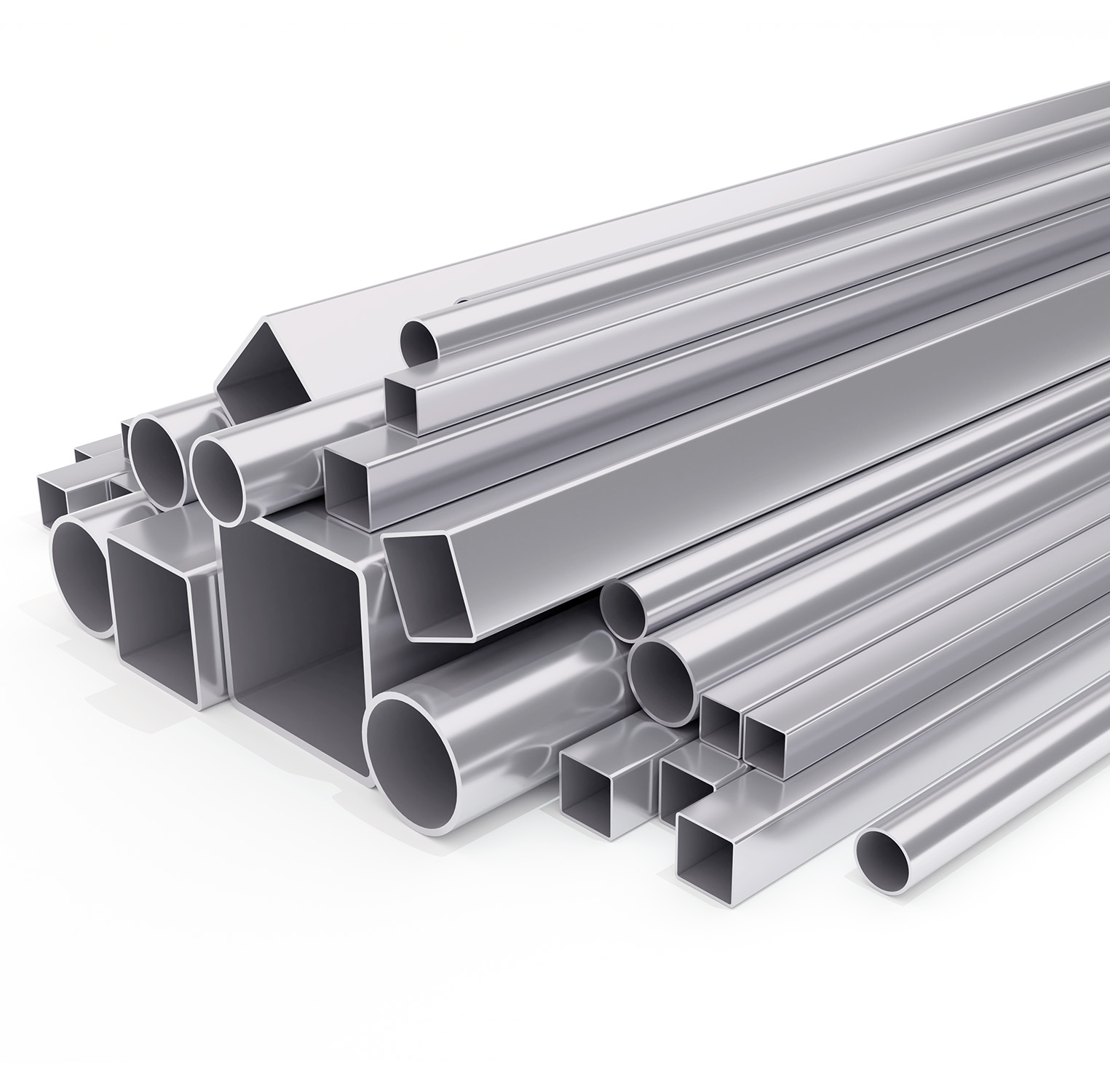
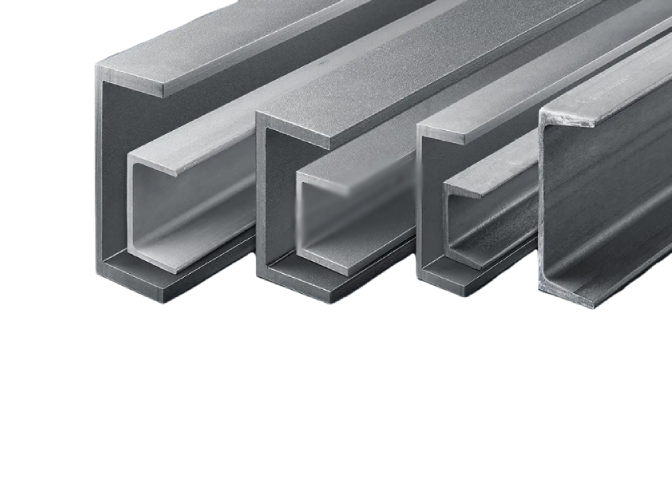


As maiores siderúrgicas do mundo em 2025: um ranking global por receita.
Quando as pessoas pesquisam por "siderúrgicas", geralmente estão tentando responder a uma de duas perguntas: o que é, de fato, uma siderúrgica ou quais delas realmente importam. Este artigo aborda a segunda questão — uma análise das maiores siderúrgicas do mundo, classificadas de duas maneiras diferentes: por receita (dados da Fortune Global 500 e relatórios do setor) e por produção de aço bruto (dados da World Steel Association). Ambas as classificações refletem o desempenho do ano completo de 2025 — os números de produção de aço bruto vêm do relatório "World Steel in Figures 2026" da World Steel Association, que é publicado um ano após o período que abrange; portanto, o "2026" no título desse relatório se refere à data de publicação, e não ao ano descrito pelos dados. As duas classificações nem sempre coincidem, e a discrepância entre elas revela muito sobre o funcionamento da indústria siderúrgica global.
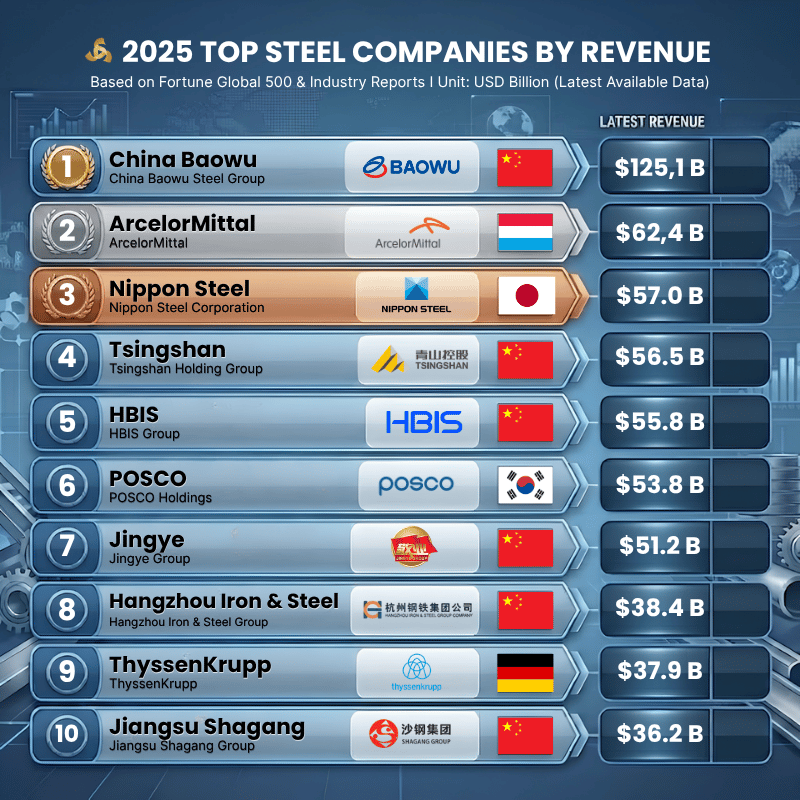
Principais siderúrgicas por receita em 2025
| Classificação | Empresa | País | Receita (USD) |
|---|---|---|---|
| 1 | Grupo Siderúrgico Baowu da China | China | $125.1B |
| 2 | ArcelorMittal | Luxemburgo | $62.4B |
| 3 | Corporação Nippon Steel | Japão | $57.0B |
| 4 | Grupo Tsingshan Holding | China | $56.5B |
| 5 | Grupo HBIS | China | $55.8B |
| 6 | POSCO Holdings | Coréia do Sul | $53.8B |
| 7 | Grupo Jingye | China | $51.2B |
| 8 | Grupo de Ferro e Aço de Hangzhou | China | $38.4B |
| 9 | ThyssenKrupp | Alemanha | $37.9B |
| 10 | Grupo Jiangsu Shagang | China | $36.2B |
Duas coisas chamam a atenção imediatamente. Primeiro, a diferença entre #1 e #10 é enorme — a receita da China Baowu é mais de três vezes maior que a da Jiangsu Shagang em #10. Segundo, das 10 maiores siderúrgicas desta lista, sete são chinesas, uma é japonesa, uma é sul-coreana e uma é europeia. Isso não é coincidência — reflete uma mudança estrutural na distribuição da capacidade de produção de aço atualmente.
Classificação por Receita vs. Classificação por Produção: Um Panorama Diferente
A receita é apenas uma das maneiras de classificar uma siderúrgica. Os dados da própria Associação Mundial do Aço, referentes a 2025, classificam as mesmas empresas por aço bruto. saída — quantas toneladas eles realmente produziram — e o cenário muda de maneiras reveladoras.
| Classificação | Empresa | País | Produção de aço bruto (Mt) |
|---|---|---|---|
| 1 | China Baowu | China | 124.76 |
| 2 | ArcelorMittal | Luxemburgo | 63.43 |
| 3 | Nippon Steel | Japão | 57.78 |
| 4 | Grupo Ansteel | China | 57.61 |
| 5 | Grupo HBIS | China | 42.49 |
| 6 | Grupo Shagang | China | 39.10 |
| 7 | Grupo Jianlong | China | 38.02 |
| 8 | POSCO Holdings | Coréia do Sul | 37.36 |
| 9 | Grupo Delong | China | 32.03 |
| 10 | Tata Steel | Índia | 30.46 |
Fonte: Associação Mundial do Aço, "Aço Mundial em Números 2026— a edição de 2026 do relatório, que abrange os dados de produção do ano completo de 2025. A Worldsteel publica cada edição um ano após o período de referência, portanto, "2026" refere-se à data de publicação, não ao ano dos dados.
Baowu, ArcelorMittal, Nippon Steel, HBIS e POSCO ocupam posições semelhantes em ambas as listas — para essas empresas, receita e escala de produção acompanham-se de perto. Mas alguns nomes mudam drasticamente dependendo da métrica utilizada:
- Tsingshan A empresa ocupa a #4 em receita ($56,5B), mas está apenas em torno da #25 em produção de aço bruto (16,00 Mt), segundo dados da Associação Mundial do Aço. Sua receita inclui uma grande atividade de mineração e processamento de níquel, além da produção de aço, portanto, a receita superestima sua posição como produtora de aço pura.
- ThyssenKrupp Ocupa a posição #9 em termos de receita ($37,9B), mas está apenas em torno da posição #47 em termos de produção (9,41 Mt) — uma usina que produz uma tonelagem comparativamente modesta, mas gera uma receita significativamente maior por tonelada, o que condiz com seu foco em aços especiais de maior valor agregado e aços para a indústria automotiva.
- Ansteel e Tata SteelEm contrapartida, algumas usinas produzem tonelagem suficiente para figurar entre as 10 maiores do mundo, mas não aparecem entre as 10 maiores em faturamento — um sinal de que o preço e a variedade de produtos, e não apenas o volume, determinam a posição de uma usina em um ranking baseado em receita.
Conclusão: uma "siderúrgica de ponta" em termos de receita e uma "siderúrgica de ponta" em termos de produção nem sempre são a mesma empresa. Os rankings de receita tendem a premiar conglomerados diversificados e portfólios de produtos de alto valor agregado; os rankings de produção premiam a escala bruta de fabricação.
Por que a China domina o ranking das siderúrgicas?
As siderúrgicas chinesas representam a grande maioria das empresas desta lista, e o padrão se mantém além do top 10 — os produtores chineses compõem cerca de 12 das 14 siderúrgicas que figuram na lista Fortune Global 500, representando mais da metade da produção mundial de aço. Alguns fatores contribuem para isso:
- Escala e consolidação. Nos últimos anos, a indústria siderúrgica chinesa consolidou sua capacidade produtiva em um número menor de empresas maiores, com políticas que incentivam ativamente a produção em usinas de primeira linha e melhor regulamentadas.
- Cadeias de suprimentos integradas. Empresas como a Tsingshan controlam o acesso à matéria-prima, bem como a produção — a posição da Tsingshan como a maior produtora mundial de aço inoxidável é sustentada por suas próprias operações de minério de níquel na Indonésia, o que reduz significativamente os custos de produção.
- Demanda interna mais capacidade de exportação. Mesmo com as crescentes dificuldades enfrentadas pelas exportações de aço da China no exterior, a enorme dimensão do mercado interno mantém as siderúrgicas operando em uma escala que a maioria dos outros países não consegue igualar.
O que o resto da lista nos diz
As fábricas fora da China merecem atenção por um motivo diferente: elas representam estratégias competitivas muito distintas.
Japão e Coreia do Sul estão apostando na tecnologia. Tanto a Nippon Steel quanto a POSCO estão investindo fortemente na produção de aço a partir de hidrogênio, visando reduzir as emissões de carbono já no processo produtivo, em vez de compensá-las posteriormente. Ambas as empresas têm como meta a produção de aço a hidrogênio em escala comercial até o início da década de 2030. Essa é uma aposta de longo prazo, mas também permite que essas siderúrgicas concorram com base em suas credenciais de emissões em mercados que cada vez mais incorporam o carbono em suas decisões de compras.
A Europa está sob forte pressão de custos. A ThyssenKrupp é a única empresa europeia que permanece entre as 10 maiores, e opera sob um conjunto de restrições muito diferente do de suas contrapartes chinesas ou asiáticas — as tarifas de carbono nas fronteiras e os altos custos de energia doméstica têm comprimido as margens em todo o setor siderúrgico europeu, e vários produtores europeus registraram prejuízos nos últimos dois anos.
O atrito comercial está remodelando o fluxo de aço., independentemente de quem produza a maior parte. As taxas antidumping sobre tubos soldados de aço inoxidável que entram em alguns mercados sul-americanos e as investigações de salvaguardas sobre as importações de aço em partes do sul da Ásia são exemplos de como os compradores estão cada vez mais lidando com tarifas e barreiras comerciais, além dos custos de produção.
O que isso significa se você estiver importando aço internacionalmente?
Um ranking como esse é interessante por si só, mas para um comprador que realmente busca fornecedores, a conclusão mais útil é a seguinte: escala no nível da fábrica e uma boa experiência de fornecimento são duas coisas diferentes.
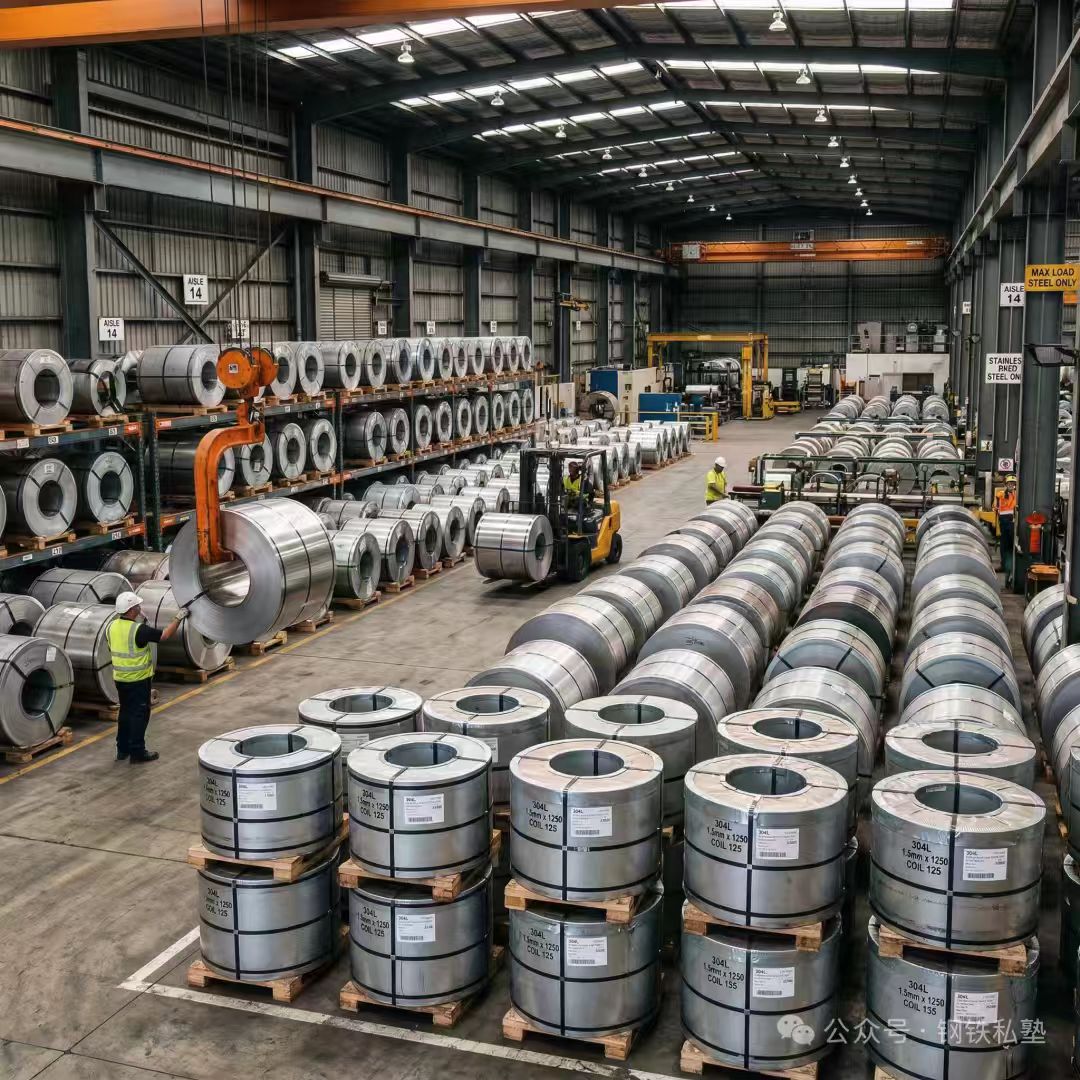
As maiores siderúrgicas do mundo são construídas para produção em larga escala — longos ciclos de produção, grandes quantidades mínimas de encomenda e especificações padronizadas. Isso funciona bem para compras em escala industrial. Mas não funciona tão bem para quem compra para um projeto específico e precisa de uma determinada qualidade, espessura ou acabamento superficial em um lote que não faça diferença para uma empresa que produz dezenas de milhões de toneladas por ano.
É essa lacuna que um fornecedor de materiais deve preencher — não substituindo a fábrica, mas atuando como intermediário entre a escala de produção da fábrica e as necessidades reais de um projeto: obtendo a qualidade e o acabamento corretos de fábricas que os produzem bem, lidando com lotes menores e fornecendo a documentação (relatórios de testes da fábrica, certificação) que um comprador de projeto precisa, independentemente do tamanho do pedido.
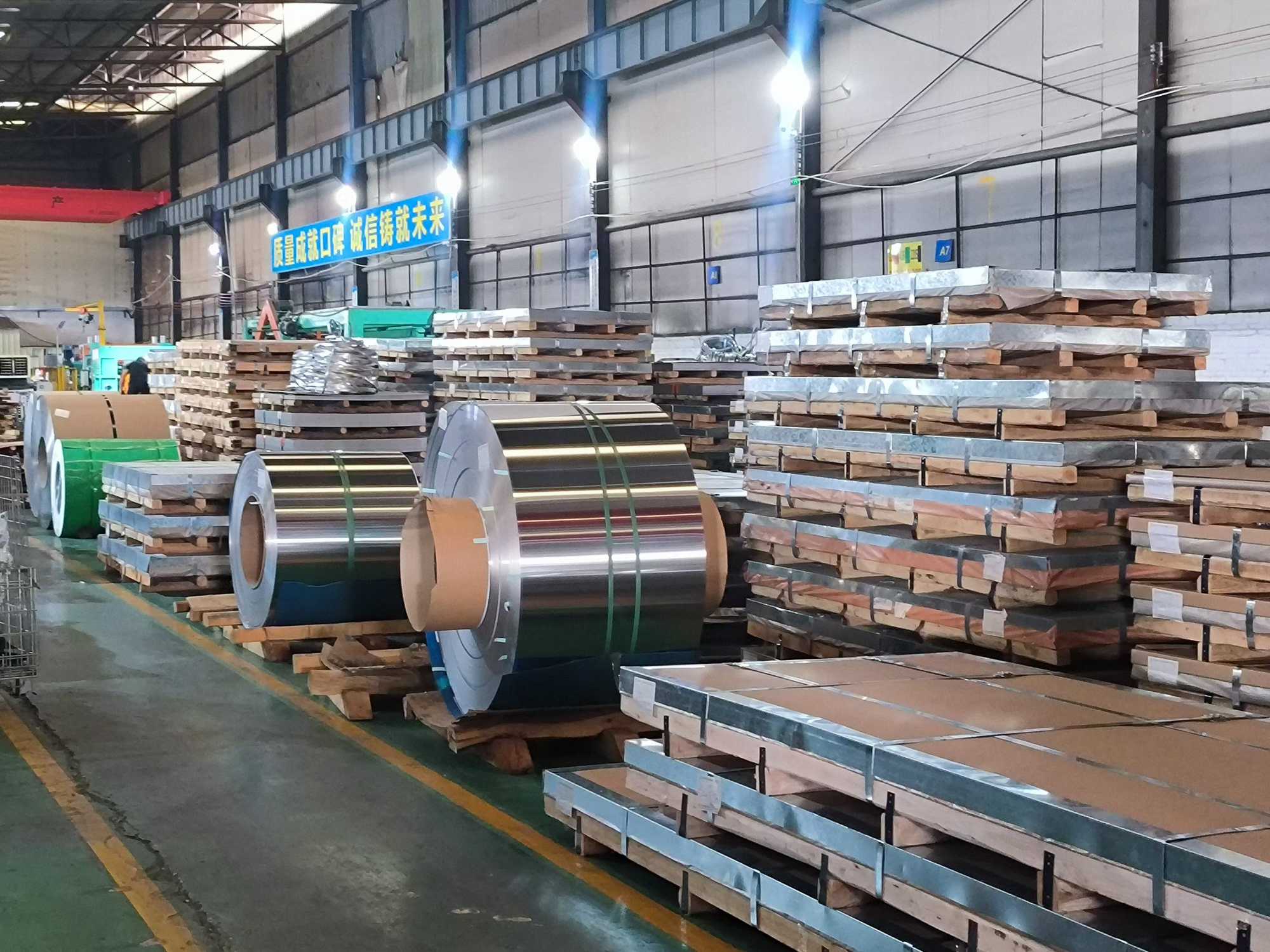
O domínio da China no ranking das siderúrgicas não é apenas uma manchete — é também o motivo pelo qual a aquisição de aço inoxidável e aço estrutural da China, feita por meio do parceiro certo, oferece aos compradores internacionais acesso à qualidade e aos preços das usinas sem a necessidade de fazer pedidos diretamente às usinas.
Por que escolher aço inoxidável preto para seus produtos
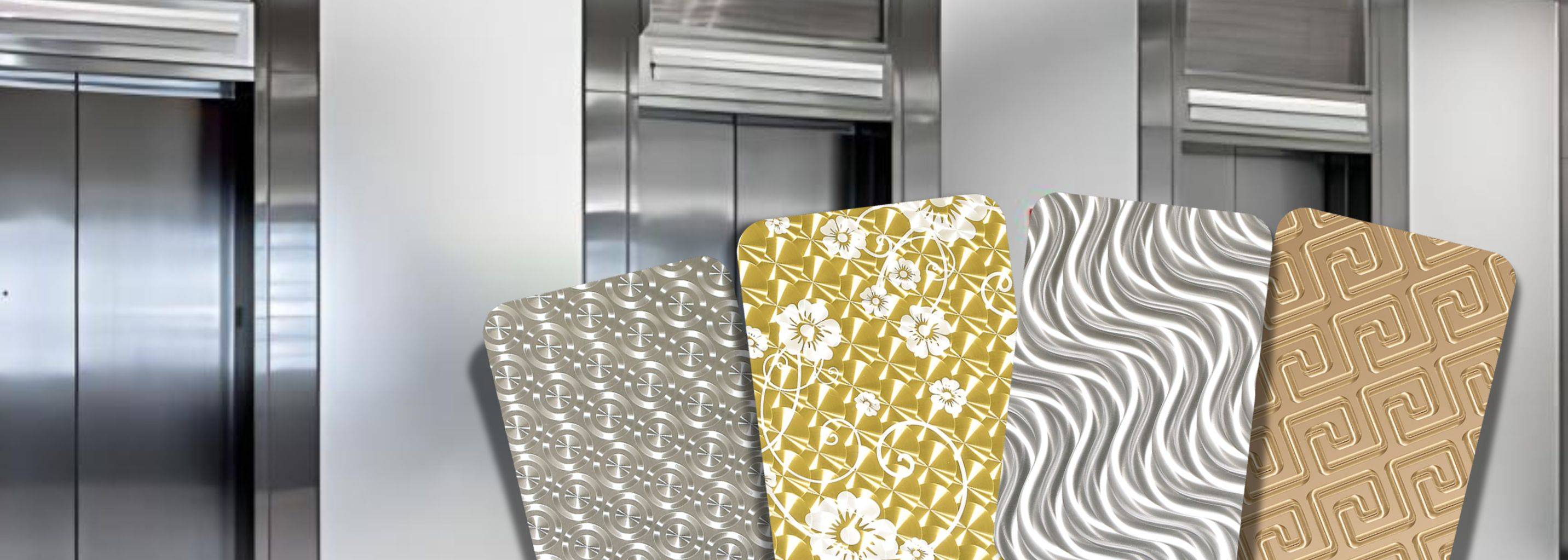
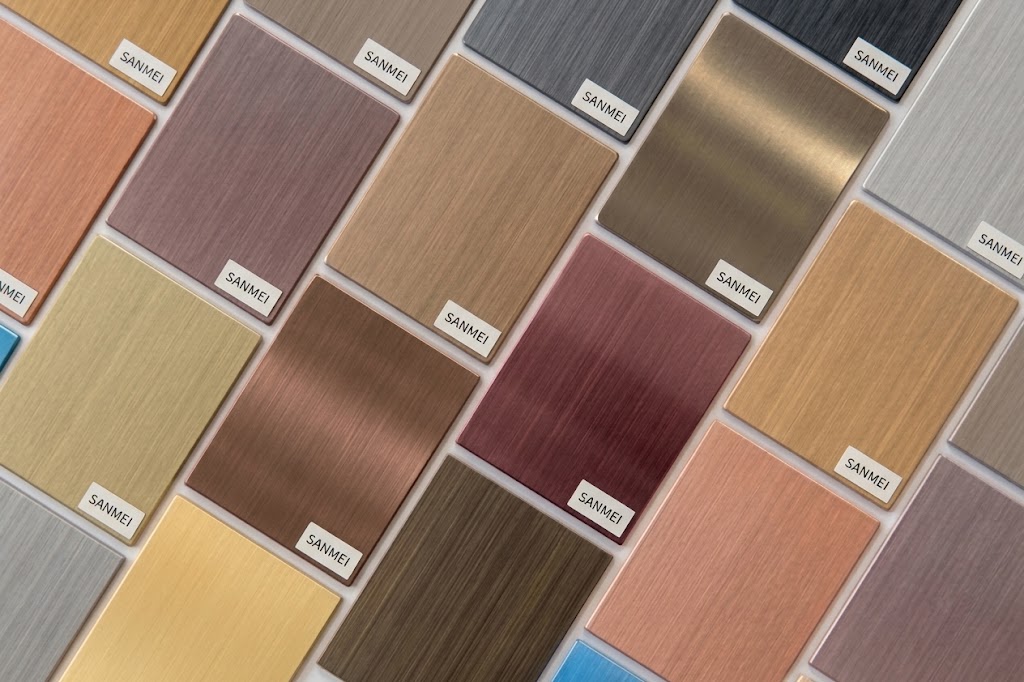
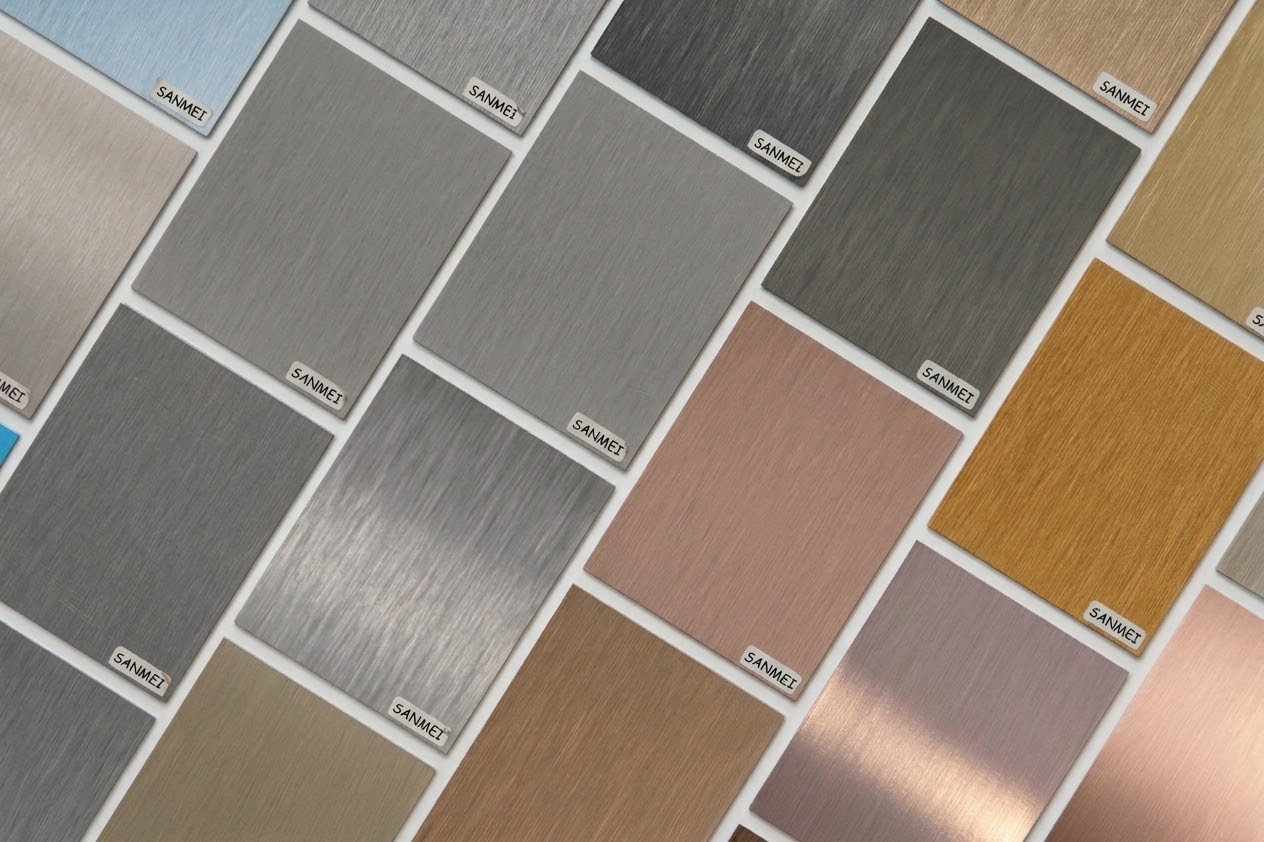
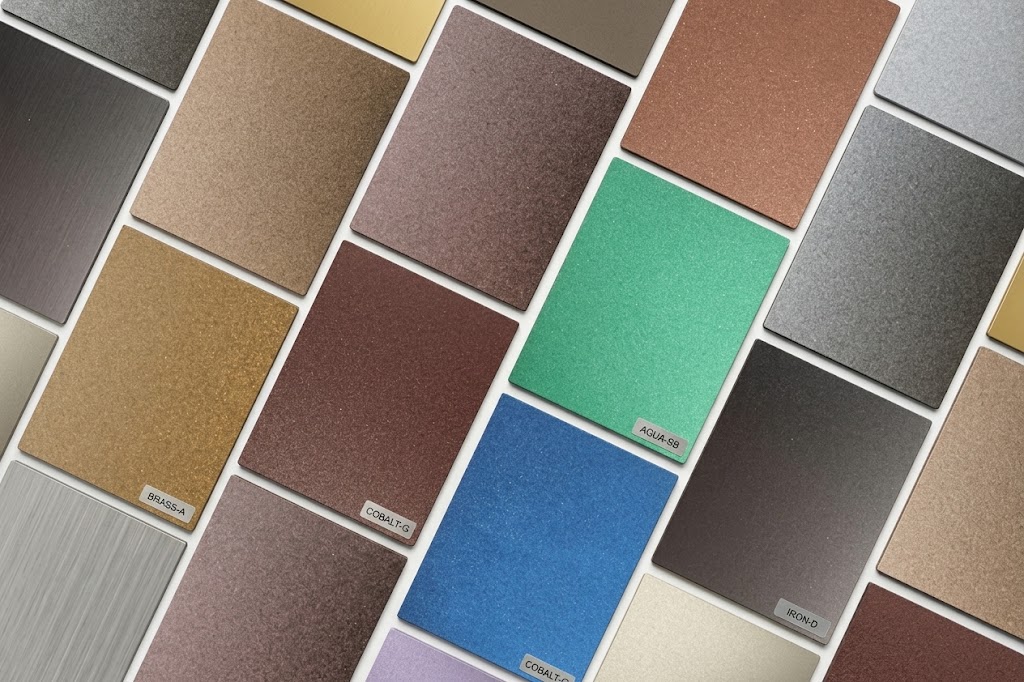
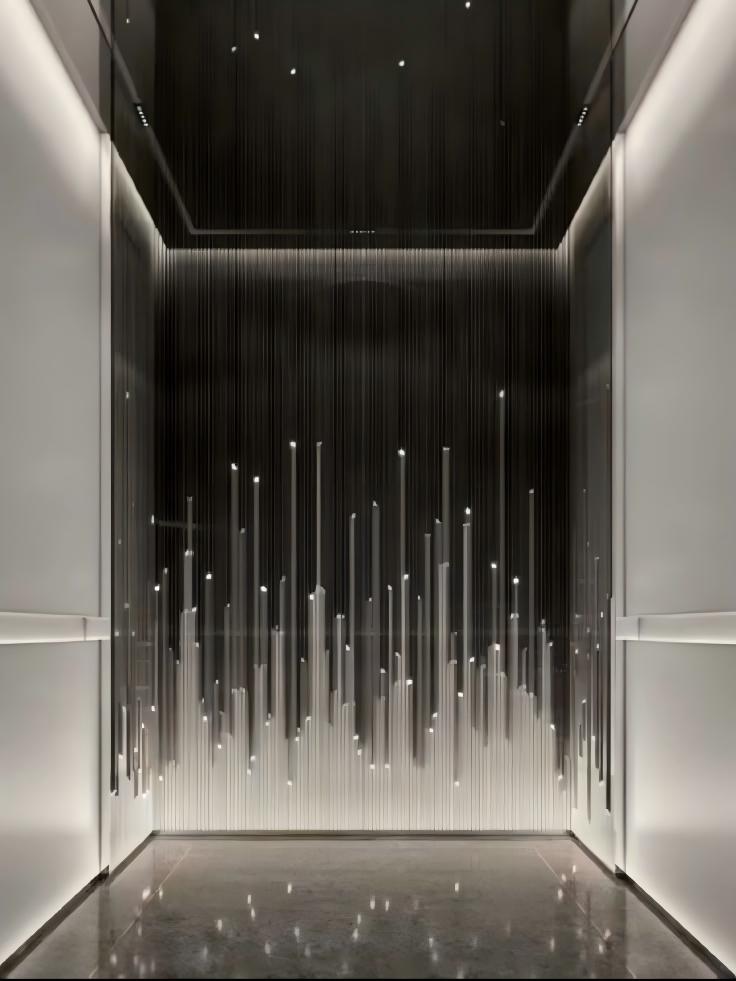
Resolve um problema real de manutenção – incluindo preocupações com durabilidade. Escovadas e acetinadas — as texturas de base mais comuns para aço inoxidável preto — são inerentemente melhores em ocultar impressões digitais e manchas do que acabamentos polidos ou espelhados, pois o grão direcional espalha a luz e disfarça marcas de contato. Sobre a pergunta que os compradores mais fazem — o aço inoxidável preto risca? — os acabamentos modernos resistem muito melhor do que as pessoas esperam: revestimentos de cromo PVD e tratamentos de nanorevestimento criam uma camada superficial densa e dura que resiste ao desgaste diário, incluindo chaves, moedas e batidas cotidianas, sem que o revestimento levante ou se desgaste até o metal base. Combinado com os revestimentos anti-impressão digital frequentemente aplicados juntamente com o PVD, isso se traduz em menos reclamações de limpeza pós-venda e redução de custo de manutenção em superfícies de alto contato — painéis de elevador, maçanetas e carcaças de equipamentos entre eles.
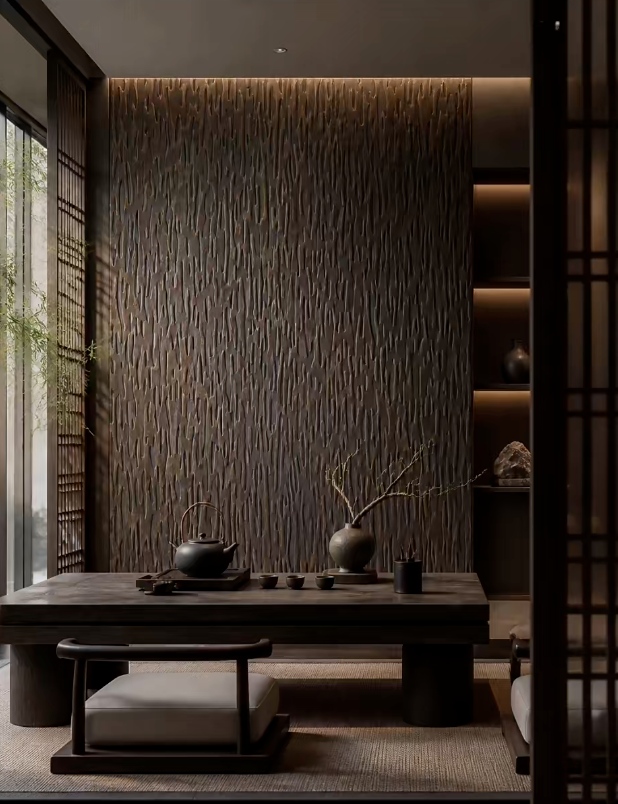
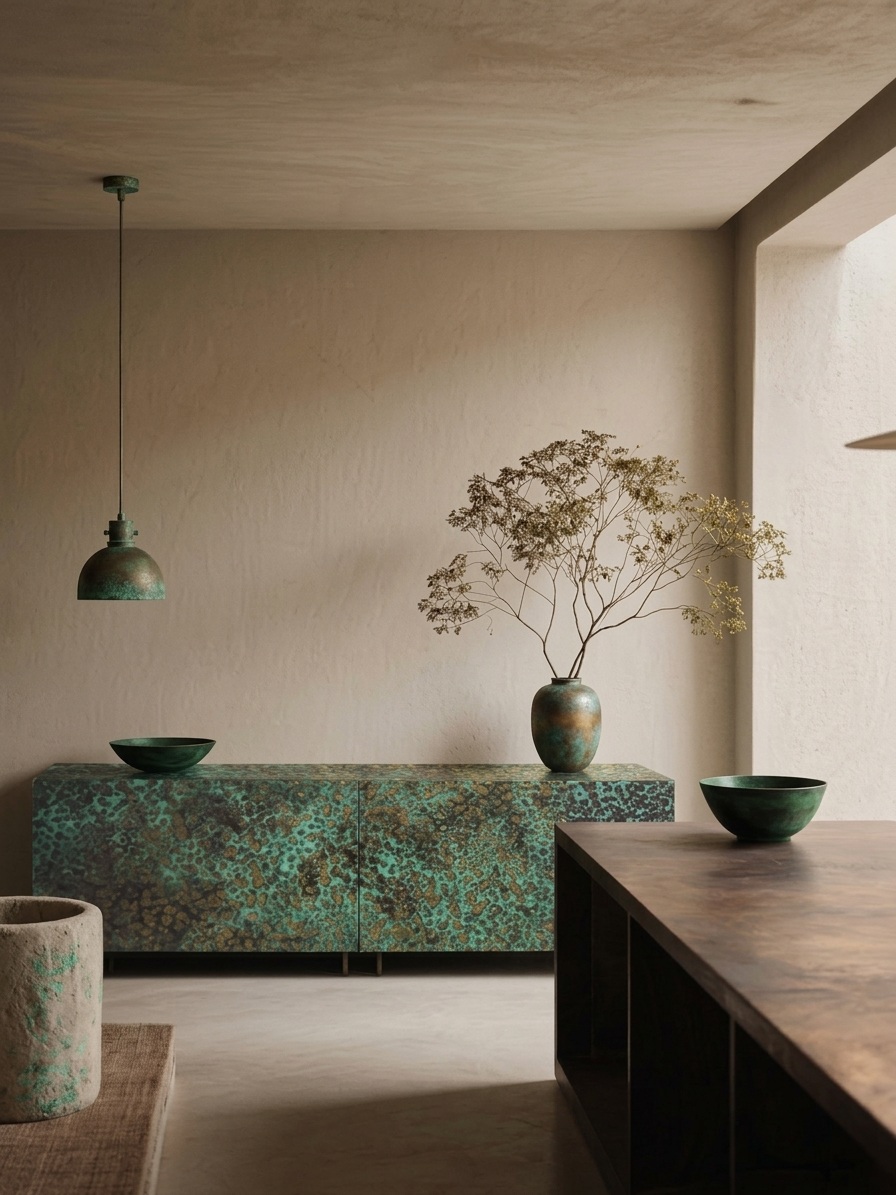
Ele se encaixa onde o design minimalista já existe — e onde tons mais quentes estão ganhando espaço. Em interiores comerciais e arquitetônicos, paletas em preto e branco e monocromáticas são uma linguagem de design básica, não uma tendência passageira, e o aço inoxidável preto oferece aos designers um material durável e resistente à corrosão que se encaixa nessa paleta sem sacrificar a resistência e a vida útil do aço inoxidável. E o preto em si não é mais uma única opção: ao lado do familiar preto fosco frio, o preto de tom quente e envelhecido coberto acima está ganhando força — ser capaz de oferecer ambos é em si um ponto de diferenciação.
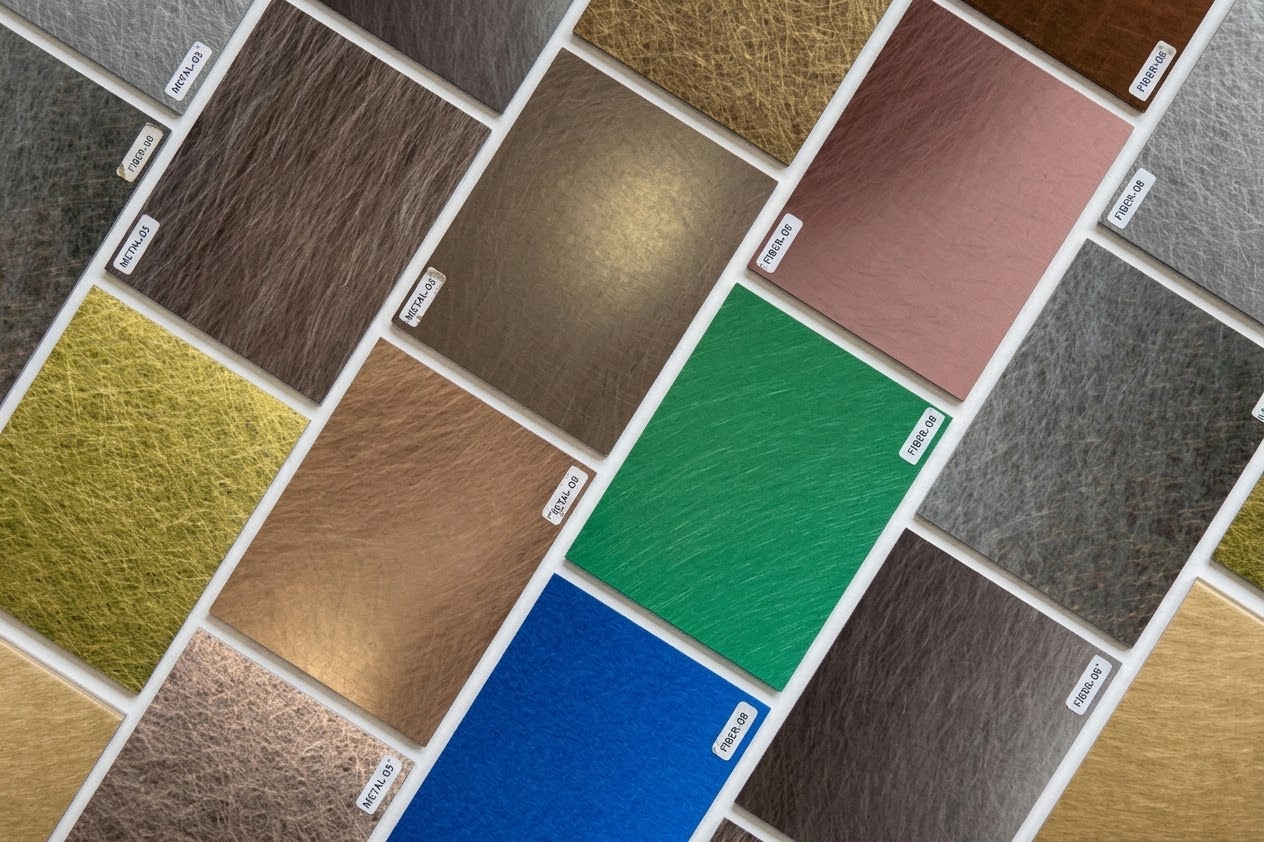
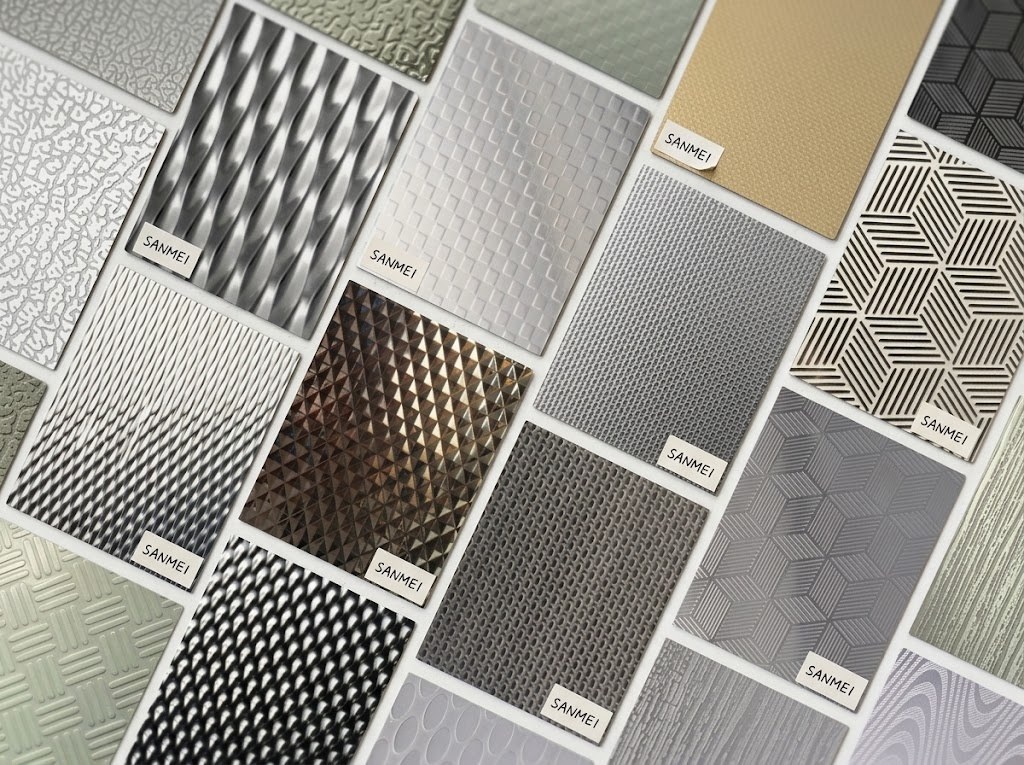
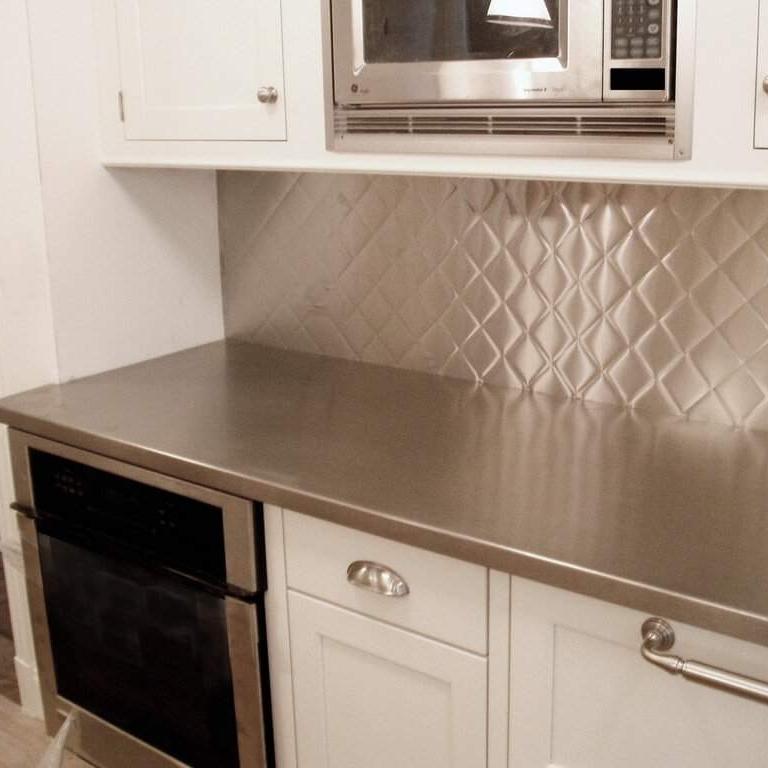
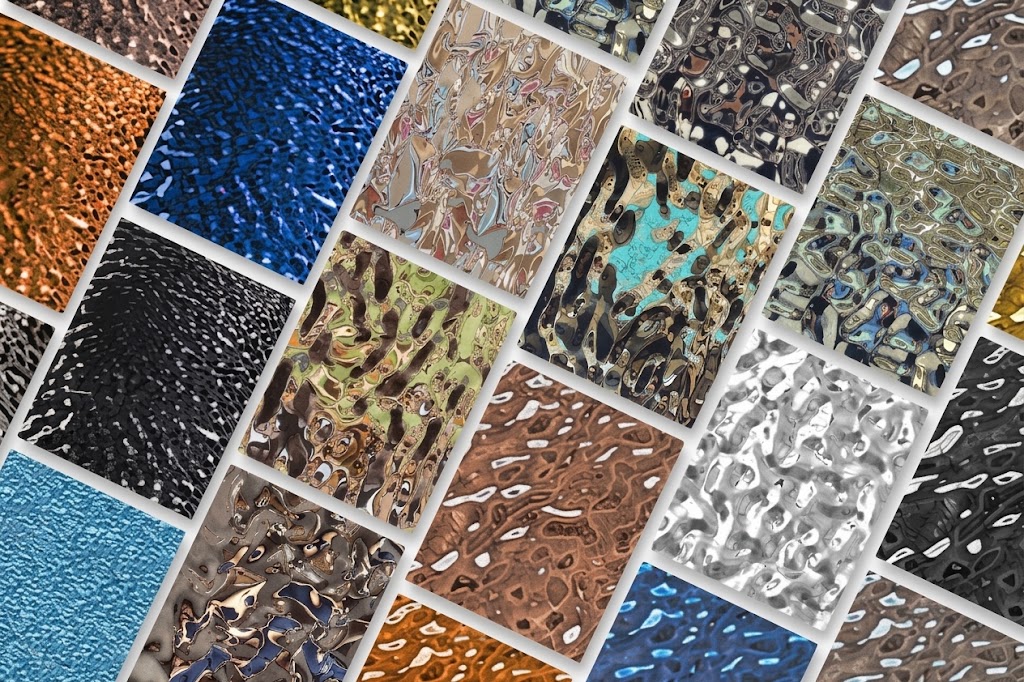
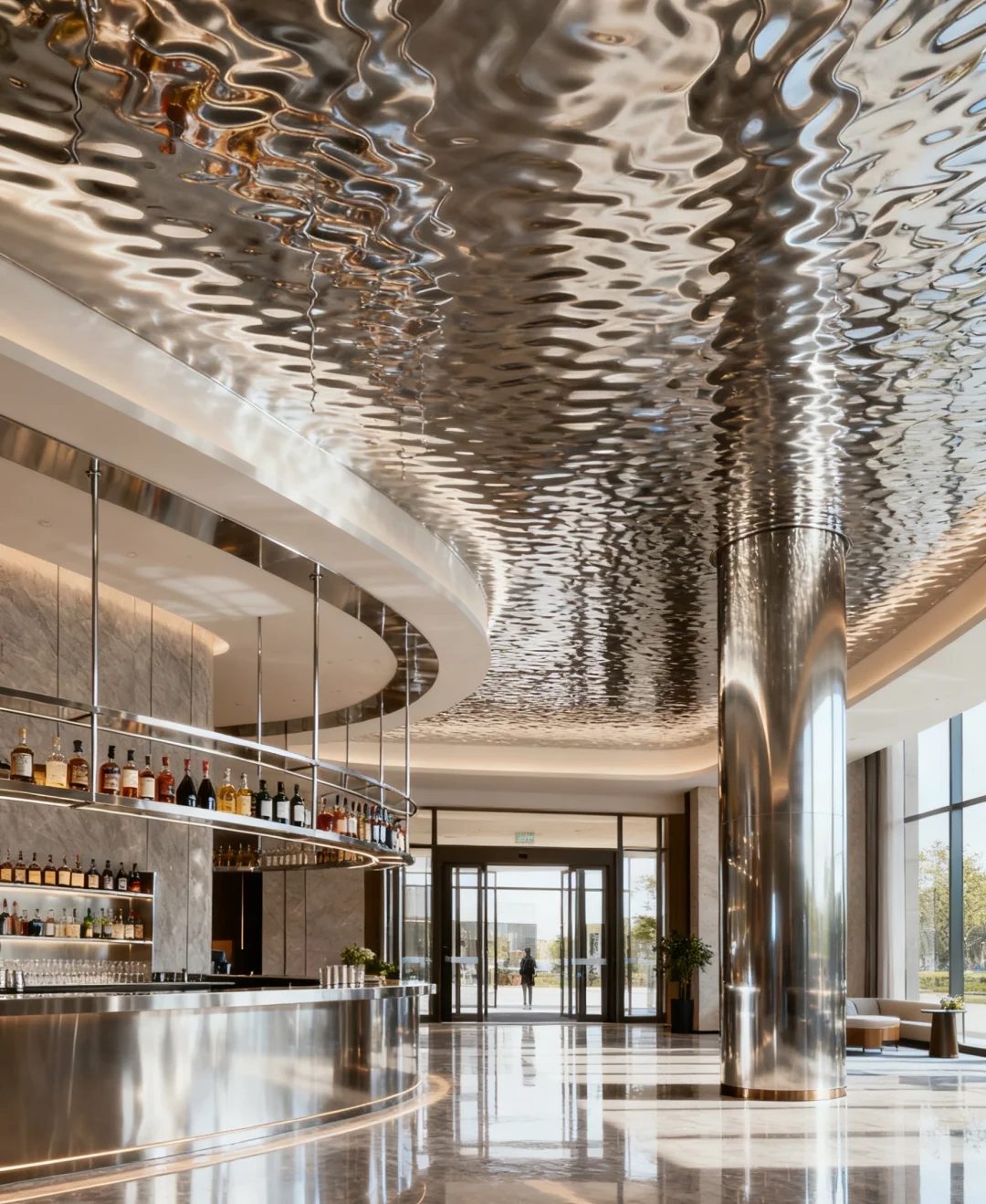
É comprovado, não experimental. Múltiplas rotas de revestimento (banho de água, PVD, verniz de pintura), múltiplos tons de preto (titânio preto com banho de água, preto cromo, preto titânio-alumínio, preto titânio puro, preto pintado), opções de textura que podem ser aplicadas por cima (em relevo, martelado, onda d'águae um processo controlável de óxido preto e polimento para um preto antiquado de tom quente — cada camada disso tem uma base técnica clara. O aço inoxidável preto amadureceu em uma categoria de material com flexibilidade real de design, não um acabamento único com uma aparência e um processo.
SANMEI METAL
A Sanmei Metal fornece bobinas, chapas e perfis estruturais de aço inoxidável provenientes de usinas consolidadas na China, com suporte à fabricação sob encomenda e certificação completa dos materiais. Entre em contato Para discutirmos os seus requisitos de material e projeto.