



Pabrik Baja Terbaik Dunia pada Tahun 2025: Peringkat Global Berdasarkan Pendapatan
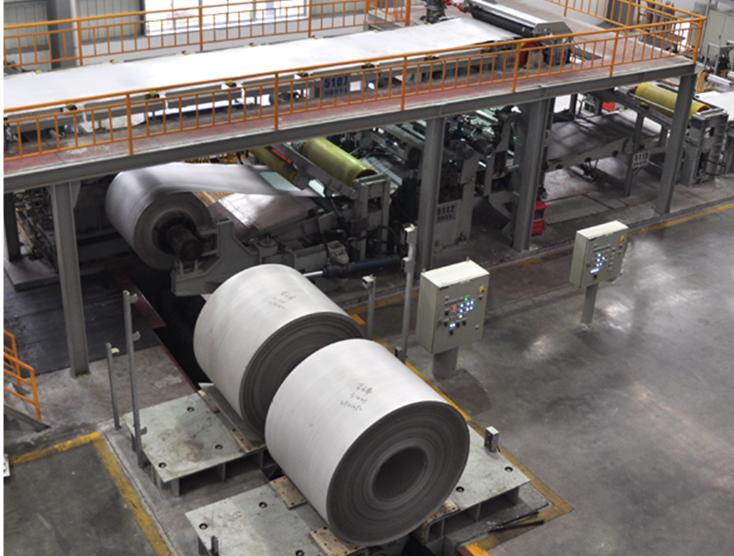
Ketika orang mencari "pabrik baja," mereka biasanya mencoba menjawab salah satu dari dua pertanyaan: apa sebenarnya pabrik baja itu, atau pabrik baja mana yang benar-benar penting. Artikel ini membahas pertanyaan kedua — sebuah tinjauan terhadap pabrik baja terbesar di dunia, yang diurutkan dengan dua cara berbeda: berdasarkan pendapatan (data Fortune Global 500 dan pelaporan industri) dan berdasarkan produksi baja mentah (angka Asosiasi Baja Dunia). Kedua peringkat tersebut mencerminkan kinerja tahun penuh 2025 — angka produksi baja mentah berasal dari laporan "World Steel in Figures 2026" dari Asosiasi Baja Dunia, yang diterbitkan setahun setelah periode yang dicakupnya, sehingga "2026" dalam judul laporan tersebut mengacu pada kapan laporan itu diterbitkan, bukan tahun yang dijelaskan oleh data tersebut. Kedua peringkat tersebut tidak selalu sama, dan kesenjangan di antara keduanya banyak menjelaskan tentang bagaimana industri baja global sebenarnya beroperasi.
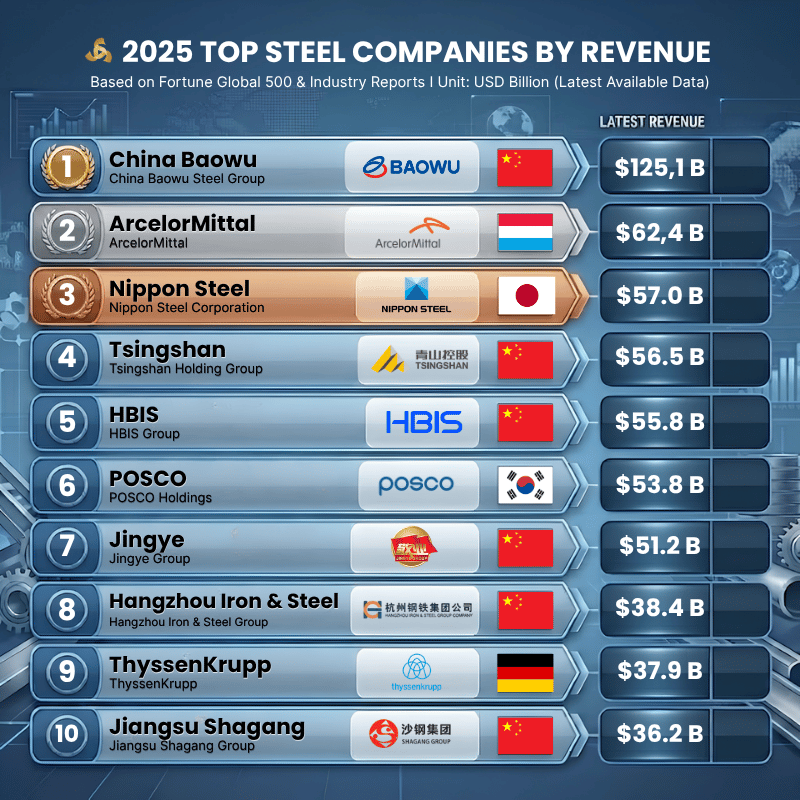
Pabrik Baja Teratas Berdasarkan Pendapatan Tahun 2025
| Pangkat | Perusahaan | Negara | Pendapatan (USD) |
|---|---|---|---|
| 1 | Grup Baja Baowu Tiongkok | Cina | $125.1B |
| 2 | ArcelorMittal | Luksemburg | $62.4B |
| 3 | Perusahaan Baja Nippon | Jepang | $57.0B |
| 4 | Grup Holding Tsingshan | Cina | $56.5B |
| 5 | Grup HBIS | Cina | $55.8B |
| 6 | POSCO Holdings | Korea Selatan | $53.8B |
| 7 | Grup Jingye | Cina | $51.2B |
| 8 | Grup Besi dan Baja Hangzhou | Cina | $38.4B |
| 9 | ThyssenKrupp | Jerman | $37.9B |
| 10 | Grup Jiangsu Shagang | Cina | $36.2B |
Dua hal langsung terlihat. Pertama, kesenjangan antara #1 dan #10 sangat besar — pendapatan China Baowu lebih dari tiga kali lipat pendapatan Jiangsu Shagang pada #10. Kedua, dari 10 pabrik baja teratas dalam daftar ini, tujuh adalah milik Tiongkok, satu milik Jepang, satu milik Korea Selatan, dan satu milik Eropa. Ini bukan kebetulan — hal ini mencerminkan pergeseran struktural dalam hal kapasitas produksi baja saat ini.
Peringkat Pendapatan vs. Peringkat Produksi: Gambaran yang Berbeda
Pendapatan hanyalah salah satu cara untuk memberi peringkat pabrik baja. Data Asosiasi Baja Dunia tahun 2025 sendiri memberi peringkat perusahaan yang sama berdasarkan baja mentah. keluaran — berapa ton yang sebenarnya mereka produksi — dan gambaran tersebut berubah dengan cara yang cukup signifikan.
| Pangkat | Perusahaan | Negara | Produksi Baja Mentah (Mt) |
|---|---|---|---|
| 1 | China Baowu | Cina | 124.76 |
| 2 | ArcelorMittal | Luksemburg | 63.43 |
| 3 | Baja Nippon | Jepang | 57.78 |
| 4 | Grup Ansteel | Cina | 57.61 |
| 5 | Grup HBIS | Cina | 42.49 |
| 6 | Grup Shagang | Cina | 39.10 |
| 7 | Grup Jianlong | Cina | 38.02 |
| 8 | POSCO Holdings | Korea Selatan | 37.36 |
| 9 | Grup Delong | Cina | 32.03 |
| 10 | Tata Steel | India | 30.46 |
Sumber: Asosiasi Baja Dunia, "Industri Baja Dunia dalam Angka 2026"— edisi laporan tahun 2026, yang mencakup data produksi setahun penuh 2025. Worldsteel menerbitkan setiap edisi satu tahun setelah periode pelaporan, jadi "2026" mengacu pada tanggal publikasi, bukan tahun data."
Baowu, ArcelorMittal, Nippon Steel, HBIS, dan POSCO menempati posisi yang kurang lebih sama di kedua daftar — bagi perusahaan-perusahaan ini, pendapatan dan skala produksi sebagian besar saling terkait. Namun, beberapa nama mengalami perubahan tajam tergantung pada metrik mana yang digunakan:
- Tsingshan Berdasarkan pendapatan ($56,5B), perusahaan ini berada di peringkat #4, tetapi hanya sekitar #25 berdasarkan produksi baja mentah (16,00 Mt) dalam angka Asosiasi Baja Dunia. Pendapatannya mencakup bisnis penambangan dan pengolahan nikel yang besar di samping pembuatan baja, sehingga pendapatan tersebut melebih-lebihkan posisinya sebagai produsen baja murni.
- ThyssenKrupp Pabrik ini menempati peringkat #9 berdasarkan pendapatan ($37,9 miliar) tetapi hanya sekitar #47 berdasarkan output (9,41 juta ton) — sebuah pabrik yang menghasilkan tonase yang relatif sederhana tetapi menghasilkan pendapatan per ton yang jauh lebih besar, sesuai dengan fokusnya pada baja khusus dan baja kelas otomotif yang bernilai lebih tinggi.
- Ansteel dan Tata SteelSebaliknya, beberapa pabrik menghasilkan tonase yang cukup untuk masuk dalam 10 besar global, tetapi tidak muncul dalam 10 besar pendapatan — sebuah tanda bahwa penetapan harga dan bauran produk, bukan hanya volume, yang menentukan posisi sebuah pabrik dalam peringkat berdasarkan pendapatan.
Kesimpulannya: "pabrik baja terkemuka" berdasarkan pendapatan dan "pabrik baja terkemuka" berdasarkan tonase tidak selalu merupakan perusahaan yang sama. Peringkat pendapatan cenderung memberikan penghargaan kepada konglomerat yang terdiversifikasi dan campuran produk bernilai tinggi; peringkat produksi memberikan penghargaan kepada skala manufaktur mentah.
Mengapa China Mendominasi Peringkat Pabrik Baja?
Pabrik baja Tiongkok mencakup sebagian besar perusahaan dalam daftar ini, dan pola ini berlaku di luar 10 besar — produsen Tiongkok mencakup sekitar 12 dari 14 perusahaan baja yang muncul dalam daftar Fortune Global 500 yang lebih luas, mewakili lebih dari setengah produksi baja global. Beberapa faktor mendorong hal ini:
- Skala dan konsolidasi. Industri baja China telah menghabiskan beberapa tahun terakhir untuk mengkonsolidasikan kapasitas ke dalam jumlah pemain yang lebih sedikit dan lebih besar, dengan kebijakan yang secara aktif mendorong produksi ke arah pabrik-pabrik kelas atas yang diatur dengan lebih baik.
- Rantai pasokan terintegrasi. Perusahaan seperti Tsingshan mengendalikan akses bahan baku serta produksi — posisi Tsingshan sebagai produsen baja tahan karat terbesar di dunia didukung oleh operasi bijih nikelnya sendiri di Indonesia, yang secara signifikan menurunkan biaya input.
- Permintaan domestik ditambah kapasitas ekspor. Meskipun ekspor baja China menghadapi semakin banyak hambatan di luar negeri, besarnya pasar domestik membuat pabrik-pabrik tetap beroperasi dalam skala yang tidak dapat ditandingi oleh sebagian besar negara lain.
Apa yang Diberitahukan oleh Bagian Lain dari Daftar Tersebut
Pabrik-pabrik di luar China patut diperhatikan karena alasan yang berbeda — mereka mewakili strategi kompetitif yang sangat berbeda.
Jepang dan Korea Selatan bertaruh pada teknologi. Nippon Steel dan POSCO sama-sama berinvestasi besar-besaran dalam pembuatan baja berbasis hidrogen, dengan tujuan mengurangi emisi karbon dari proses produksi itu sendiri daripada mengimbanginya setelah proses tersebut selesai. Keduanya menargetkan pembuatan baja hidrogen skala komersial pada awal tahun 2030-an. Ini adalah taruhan jangka panjang, tetapi juga memungkinkan pabrik-pabrik ini untuk bersaing dalam hal kredibilitas emisi di pasar yang semakin mempertimbangkan harga karbon dalam keputusan pengadaan.
Eropa sedang menghadapi tekanan biaya yang nyata. ThyssenKrupp adalah satu-satunya nama Eropa yang tersisa di 10 besar, dan perusahaan ini beroperasi di bawah serangkaian kendala yang sangat berbeda dibandingkan dengan pesaingnya dari Tiongkok atau Asia — tarif perbatasan karbon dan biaya energi domestik yang tinggi telah menekan margin di seluruh sektor baja Eropa, dan beberapa produsen Eropa telah melaporkan kerugian dalam dua tahun terakhir.
Gesekan perdagangan mengubah arah pergerakan baja sebenarnya.Terlepas dari siapa yang memproduksinya paling banyak. Bea masuk anti-dumping pada pipa las baja tahan karat yang memasuki beberapa pasar Amerika Selatan, dan investigasi pengamanan terhadap impor baja di beberapa bagian Asia Selatan, adalah contoh bagaimana pembeli semakin menavigasi tarif dan hambatan perdagangan di samping biaya produksi.
Apa Artinya Ini Jika Anda Membeli Baja Secara Internasional?
Peringkat seperti ini menarik dengan sendirinya, tetapi bagi pembeli yang benar-benar mencari bahan baku, kesimpulan yang lebih bermanfaat adalah: skala di tingkat pabrik dan pengalaman pengadaan yang baik adalah dua hal yang berbeda.
Pabrik baja terbesar di dunia dibangun untuk volume produksi yang besar — produksi dalam jumlah besar, jumlah pesanan minimum yang tinggi, dan spesifikasi standar. Hal itu berjalan baik jika Anda membeli dalam skala industri. Namun, kurang efektif jika Anda adalah pembeli proyek yang membutuhkan jenis, ketebalan, atau hasil akhir permukaan tertentu dalam jumlah kecil yang tidak terlalu signifikan bagi perusahaan yang memproduksi puluhan juta ton per tahun.
Inilah celah yang seharusnya ditutup oleh pemasok material — bukan dengan mengganti pabrik, tetapi dengan berada di antara skala produksi pabrik dan kebutuhan aktual suatu proyek: mendapatkan kualitas dan hasil akhir yang tepat dari pabrik yang memproduksinya dengan baik, menangani ukuran batch yang lebih kecil, dan menyediakan dokumentasi (laporan uji pabrik, sertifikasi) yang dibutuhkan pembeli proyek terlepas dari ukuran pesanan.
Dominasi China dalam peringkat pabrik baja bukan hanya sekadar berita utama — tetapi juga alasan mengapa pengadaan baja tahan karat dan baja struktural dari China, melalui mitra yang tepat, memberi pembeli internasional akses ke kualitas dan harga tingkat pabrik tanpa perlu melakukan pemesanan langsung dari pabrik.
Mengapa Memilih Baja Tahan Karat Hitam untuk Produk Anda
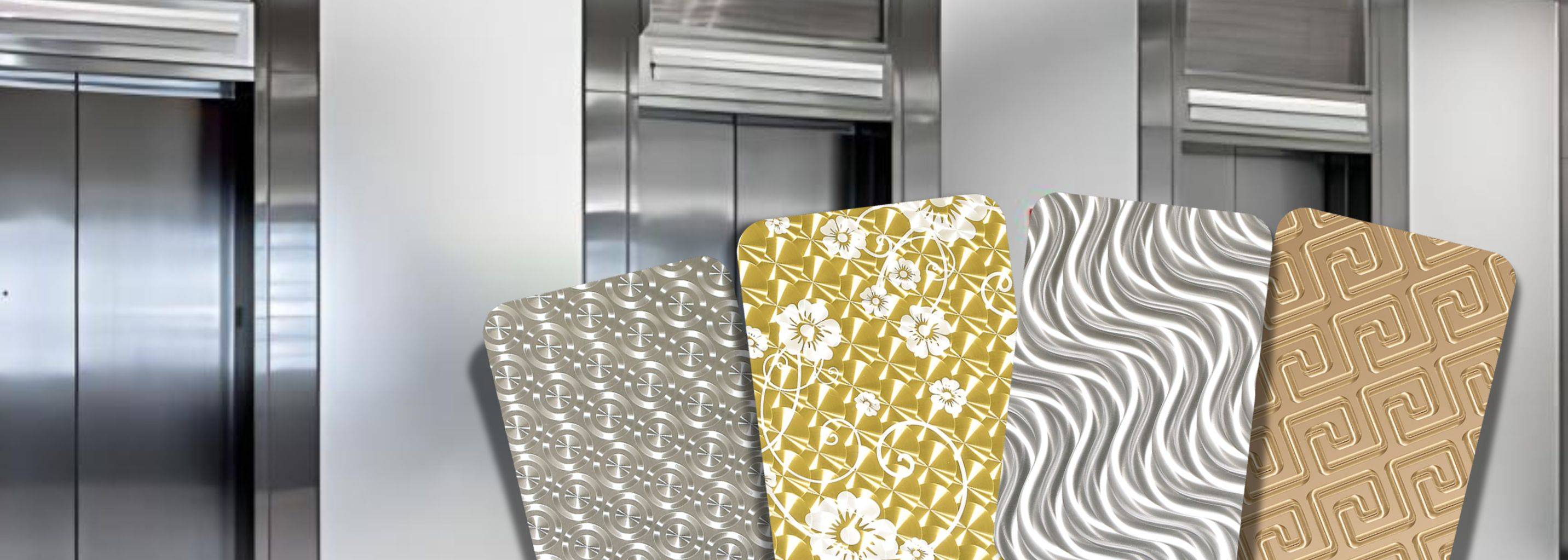
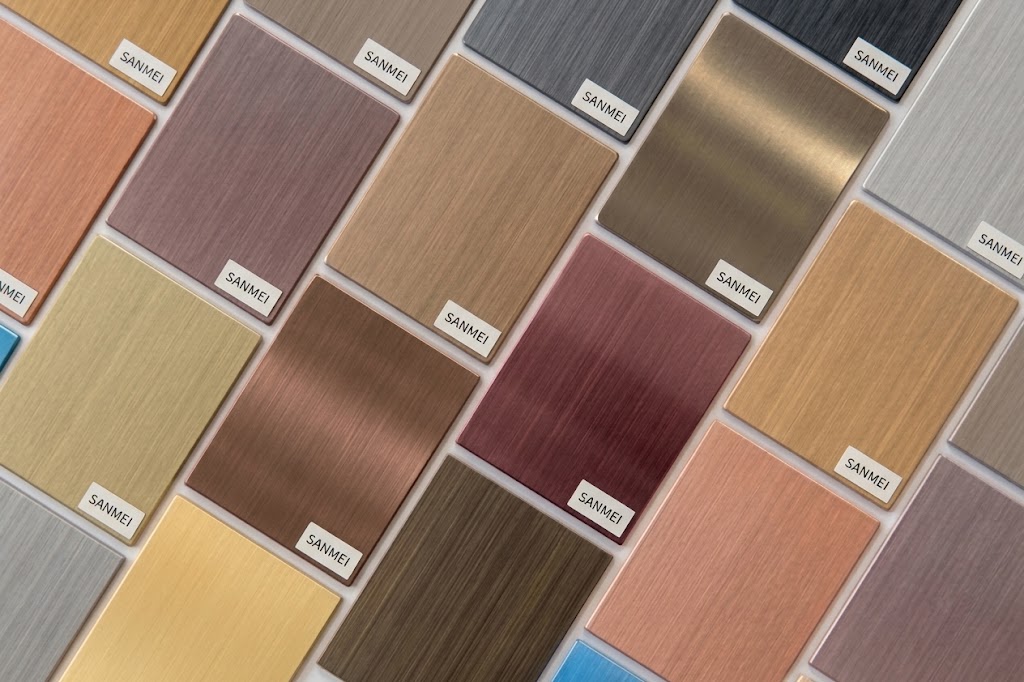
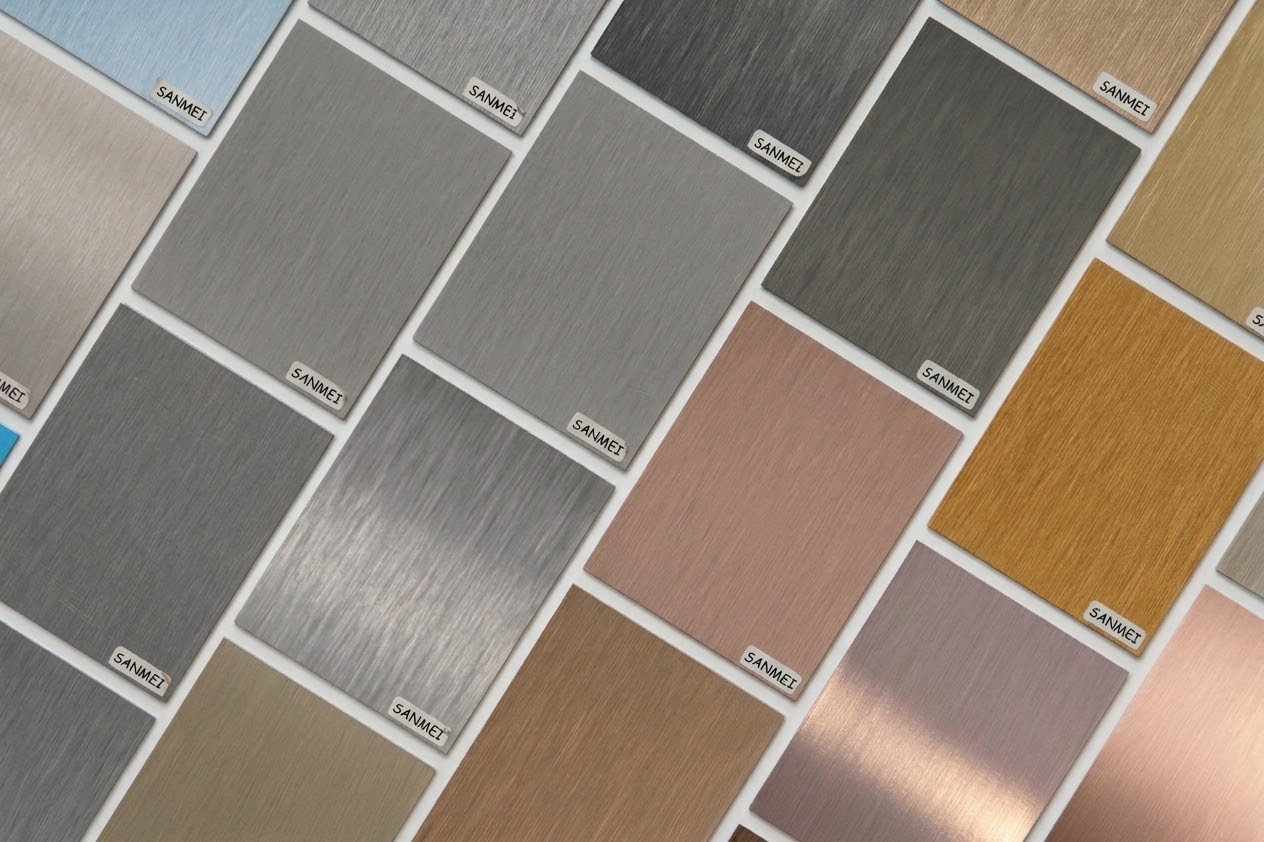
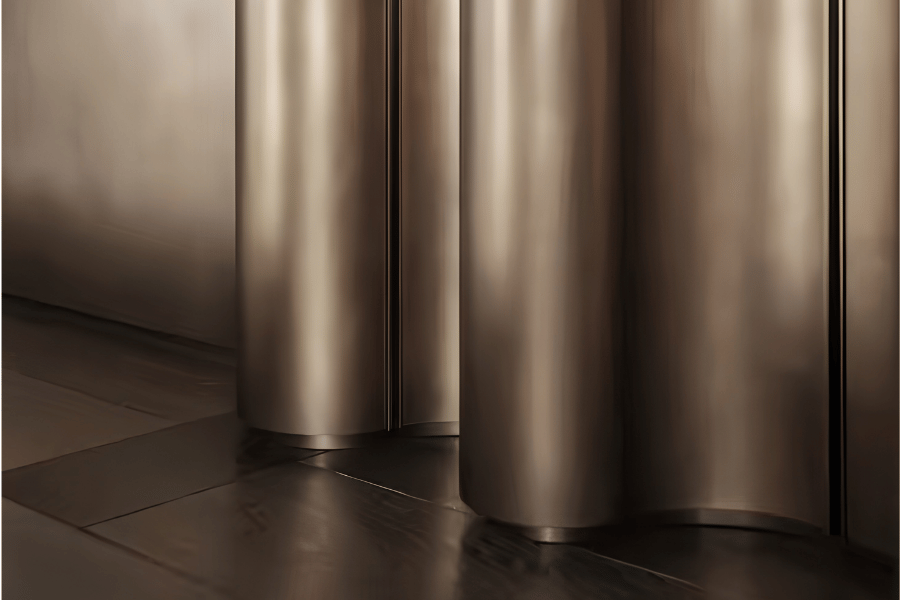
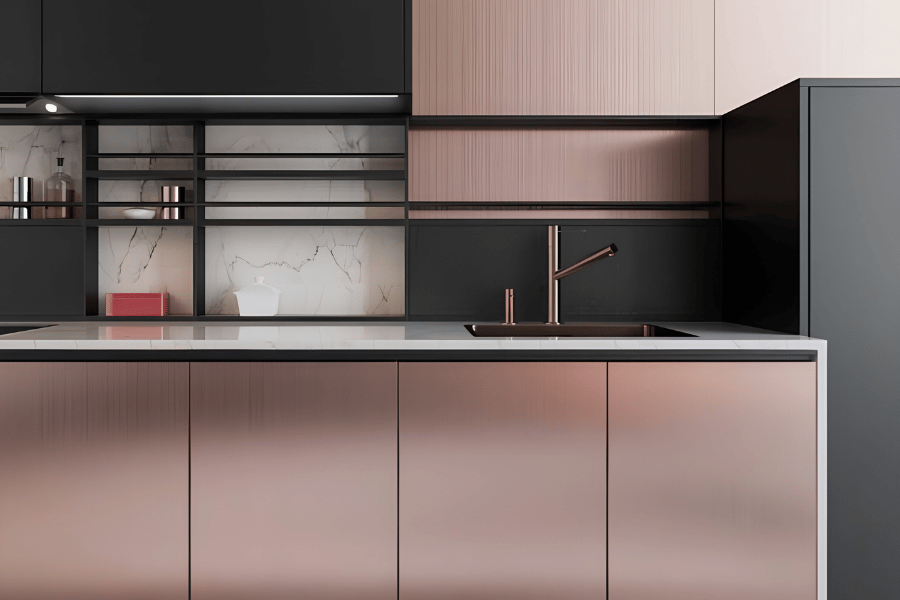
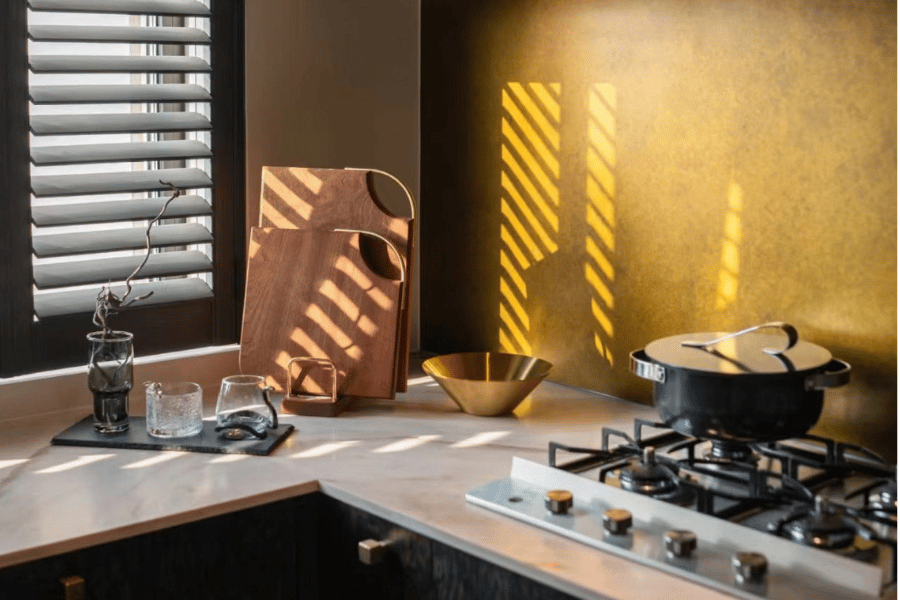
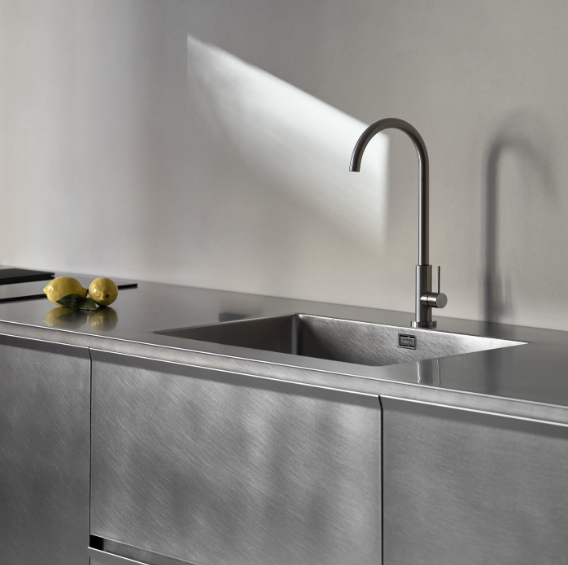
Ini memecahkan masalah perawatan yang nyata — termasuk kekhawatiran tentang daya tahan. Tekstur "brushed" dan "satin" — tekstur dasar yang paling umum pada baja tahan karat hitam — secara alami lebih baik dalam menyamarkan sidik jari dan noda dibandingkan dengan finishing yang dipoles atau berkilau seperti cermin, karena serat berarah pada permukaannya memantulkan cahaya dan menyamarkan bekas sentuhan. Mengenai pertanyaan yang paling sering diajukan pembeli — apakah baja tahan karat hitam mudah tergores — lapisan modern ternyata jauh lebih tahan lama daripada yang diperkirakan orang: Lapisan krom PVD dan perawatan lapisan nano membentuk lapisan permukaan yang padat dan keras yang tahan terhadap keausan sehari-hari, termasuk goresan dari kunci, koin, dan benturan ringan, tanpa menyebabkan lapisan terkelupas atau aus hingga menampakkan logam mentah. Dipadukan dengan lapisan anti-sidik jari yang sering diaplikasikan bersamaan dengan PVD, hal ini berarti berkurangnya keluhan pembersihan pasca-penjualan dan penurunan biaya perawatan pada permukaan yang sering disentuh — panel lift, di antaranya adalah pegangan pintu dan wadah peralatan.
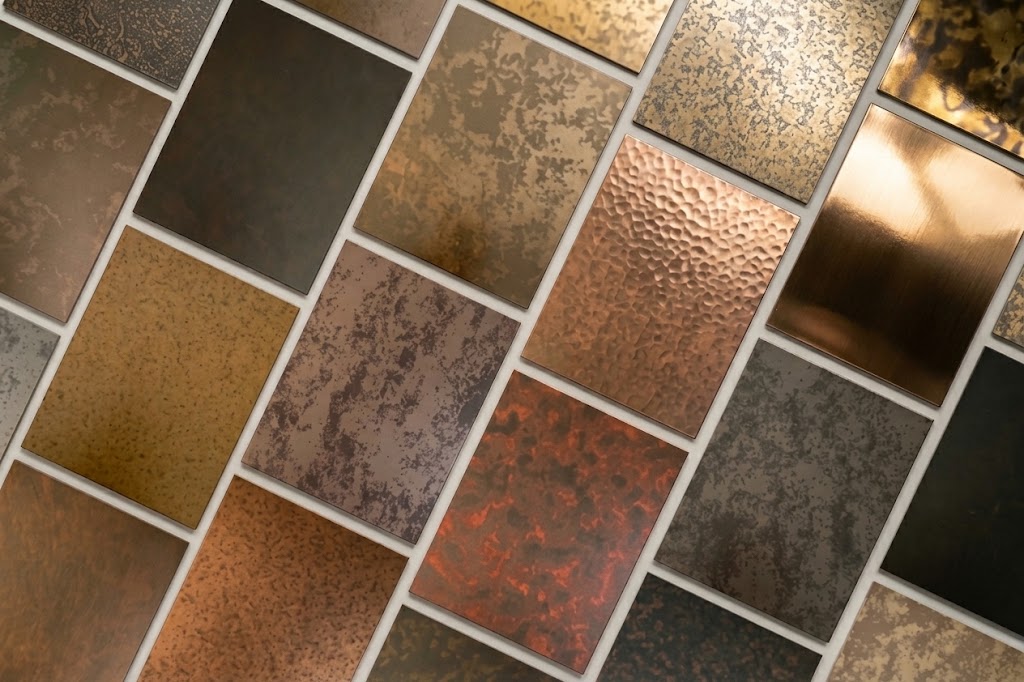
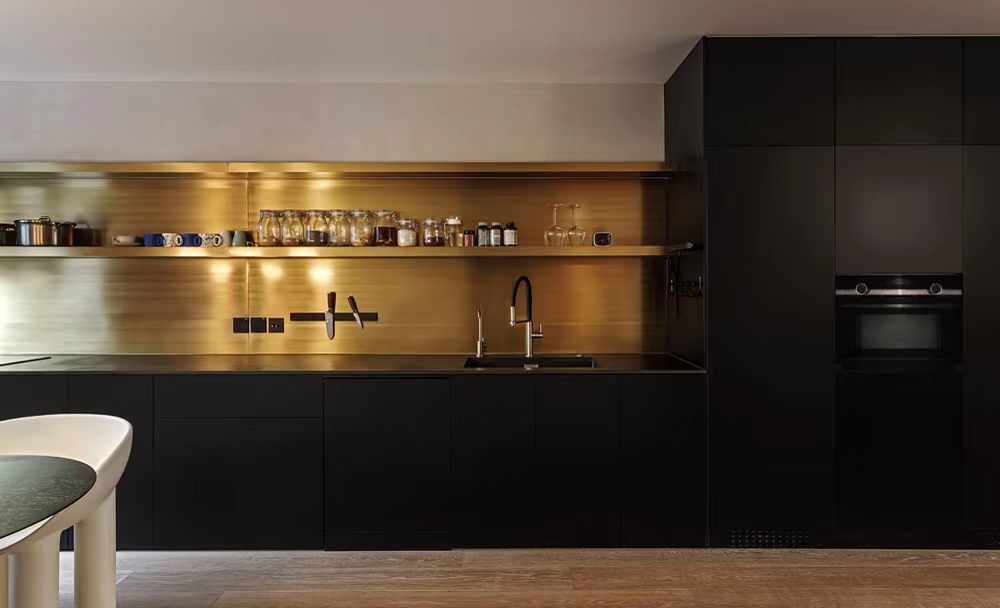
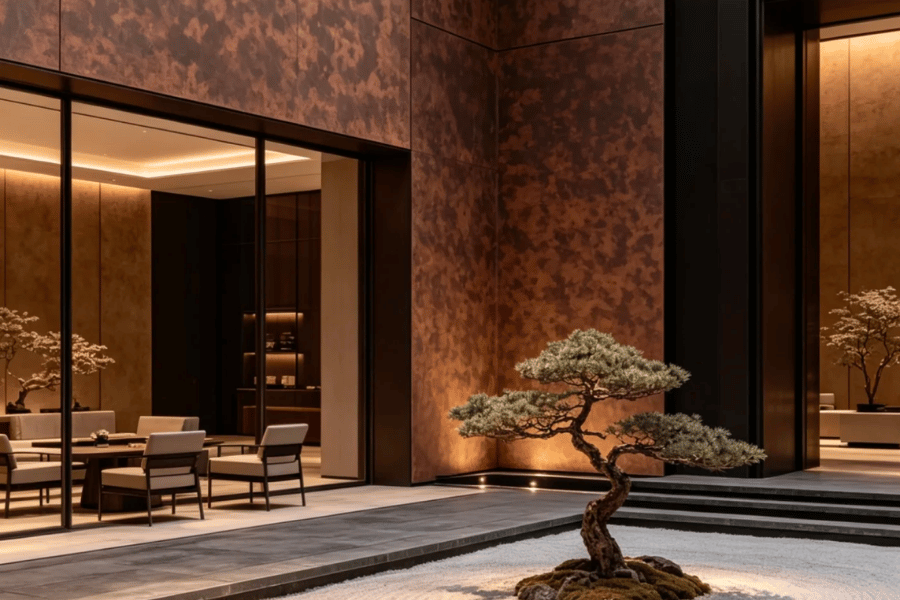
Desain ini cocok untuk ruang yang sudah mengusung gaya minimalis — dan di mana nuansa warna yang lebih hangat semakin populer. Dalam desain interior komersial dan arsitektural, palet warna hitam-putih dan monokrom merupakan bahasa desain dasar, bukan sekadar tren sesaat, dan baja tahan karat hitam memberikan para desainer bahan yang tahan lama serta tahan korosi yang sesuai dengan palet tersebut tanpa mengorbankan kekuatan dan masa pakai baja tahan karat. Selain itu, warna hitam sendiri kini bukan lagi satu-satunya pilihan: di samping warna hitam matte yang dingin dan sudah dikenal, warna hitam antik bernuansa hangat yang dibahas di atas semakin populer — kemampuan untuk menawarkan keduanya merupakan nilai keunggulan tersendiri.
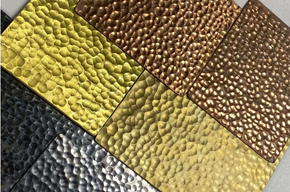
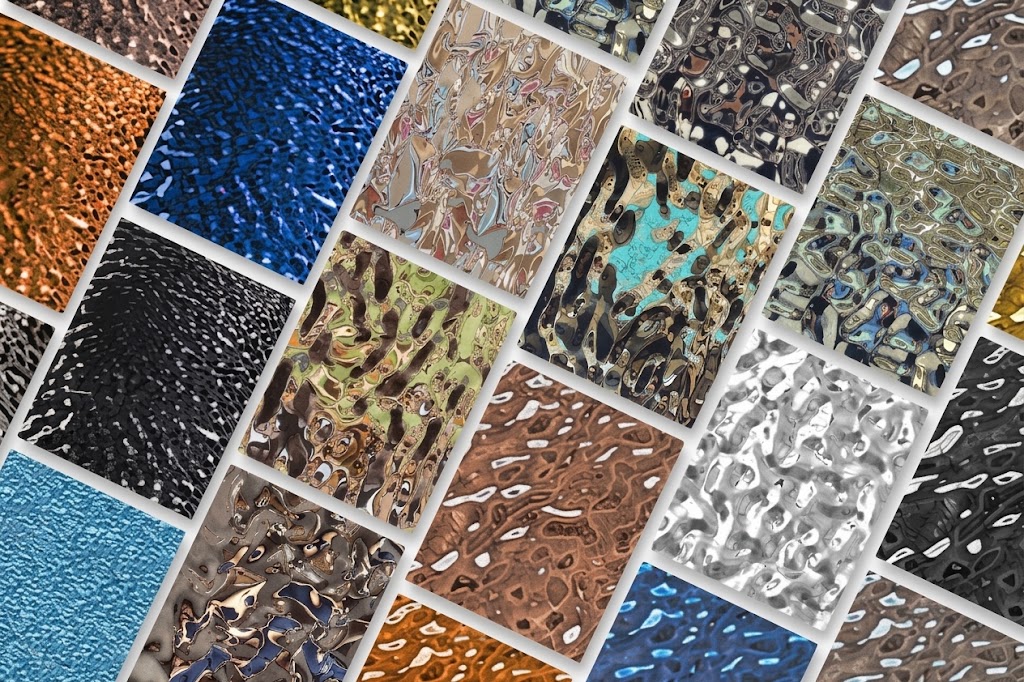
Terbukti, bukan eksperimental. Berbagai rute pelapisan (pelapisan air, PVD, lapisan atas cat), berbagai nada hitam (titanium hitam pelapis air, krom hitam, titanium-aluminium hitam, titanium hitam murni, hitam bercat), opsi tekstur yang dapat ditumpangkan (bertekstur timbul, terpukul, riak air), dan proses pengendalian *black oxide plus polishing* untuk tampilan hitam antik bernuansa hangat — setiap lapisan dari ini memiliki dasar teknis yang jelas. Baja tahan karat hitam telah matang menjadi kategori material dengan fleksibilitas desain nyata, bukan satu *finish* tunggal dengan satu tampilan dan satu proses.
SANMEI METAL
Sanmei Metal memasok gulungan, lembaran, dan profil struktural baja tahan karat yang bersumber dari pabrik-pabrik terkemuka di Tiongkok, dengan dukungan fabrikasi berbasis proyek dan sertifikasi material lengkap. Hubungi kami untuk mendiskusikan kebutuhan materi dan proyek Anda.