


Acabados de Acero Inoxidable Negro: 6 Procesos, Múltiples Tonos de Negro
Acero inoxidable negro El acero inoxidable negro ha pasado de ser un acabado arquitectónico de nicho a una de las opciones de superficie más solicitadas en paneles metálicos decorativos y productos industriales. Pero el acero inoxidable negro no es una sola cosa, sino una categoría. El acabado ennegrecido, el proceso de recubrimiento y el sustrato metálico subyacente determinan el color final, la durabilidad y las posibilidades de diseño. Esta guía explica qué es realmente el acero inoxidable negro, cómo los fabricantes producen un acabado negro en acero inoxidable, dos términos que a menudo se confunden con los procesos reales, por qué el mismo "negro" puede verse completamente diferente según el proceso y cómo un estilo más reciente —el negro envejecido de tonos cálidos— encaja en este panorama.
¿Qué es el acero inoxidable negro?
Algunas personas se preguntan qué es realmente el acero inoxidable negro: ¿puede el acero inoxidable pasar de su color natural a negro? La respuesta es sí. El acero inoxidable negro se fabrica mediante el acabado superficial de bobinas o láminas de acero inoxidable laminado en frío hasta que se vuelven negras. No hay un límite estricto sobre qué grado debe tener el metal base, pero 201, 304, y 316 son los más comunes, con 430 También se observa un uso cada vez mayor. Los diferentes procesos producen diferentes negros: negro mate, negro espejo — cada uno con su propio brillo y profundidad. Por eso, dos paneles pueden llevar la misma etiqueta de "acabado en acero inoxidable negro" y aun así diferir mucho en su rendimiento real y apariencia, ya que lo que realmente determina la durabilidad y el aspecto es el proceso de acabado en sí, no solo el material.
¿Cómo se fabrica el acero inoxidable negro? Los diferentes procesos de ennegrecimiento
El acero inoxidable negro se obtiene mediante tres procesos principales. El recubrimiento electrolítico (galvanoplastia) es la opción más económica con una estabilidad de color moderada; es la forma más accesible de producir acero inoxidable negro, ideal para proyectos estándar de alto volumen y con una buena relación calidad-precio. El recubrimiento PVD, un proceso de recubrimiento al vacío, tiene un costo medio a alto según el material, pero ofrece la mayor durabilidad y estabilidad de color, lo que lo convierte en la opción ideal para proyectos arquitectónicos o de alta gama con estrictos requisitos de tono, resistencia a la intemperie o consistencia entre lotes. La pintura horneada se aplica directamente sobre la superficie del acero inoxidable y se cura a alta temperatura, sin una base de recubrimiento metálico; tiene un costo bajo a medio con la mayor coincidencia de color entre lotes, pero es más adecuada para uso en interiores o con baja abrasión que para exposición prolongada en exteriores, por lo que es ideal para proyectos a corto plazo o temporales.
| Proceso | Costo | Durabilidad / Estabilidad del Color | El Mejor Para |
|---|---|---|---|
| Galvanoplastia de agua galvanoplastia | Bajo | Moderado | Proyectos estándar de alto volumen y orientados al valor |
| Degradación fotovoltaica (PVD) recubrimiento por vacío | Medio a alto, dependiendo del material de destino | Alta | Proyectos arquitectónicos o de alta gama con requisitos estrictos de tono, desgaste o consistencia de lote |
| Pintura para hornear (Acabado al horno) | Bajo a medio | Fuerte consistencia de color entre lotes; más adecuado para aplicaciones interiores o de baja abrasión en lugar de exposición prolongada al aire libre. | Proyectos a corto plazo o temporales |
¿Acero inoxidable anodizado negro? ¿Óxido negro? Dos términos que conviene aclarar.
Algunas personas buscan "lámina de acero inoxidable anodizado negro", pero, estrictamente hablando, el anodizado se diseñó para el aluminio. El aluminio forma naturalmente una capa de óxido porosa que se vuelve más gruesa con la electrólisis, lo que lo hace resistente al desgaste y fácil de teñir. La superficie del acero inoxidable funciona de manera opuesta: su capa de óxido de cromo es delgada, densa y químicamente estable (lo que precisamente hace que el acero inoxidable sea resistente a la corrosión), por lo que no tiene la misma capacidad de acumular una capa de óxido como lo hace el aluminio. Técnicamente, el acero inoxidable se puede anodizar, pero la capa resultante es más delgada, menos uniforme, de color más claro y menos duradera que en el aluminio, y generalmente requiere una capa protectora adicional para resistir. La mayor parte de lo que se comercializa como "acero inoxidable anodizado negro" es en realidad PVD o recubrimiento de agua negro; rara vez se utiliza el verdadero anodizado, incluso cuando se usa el término.
El acabado de óxido negro en acero inoxidable es otro término que suele confundirse con otros. Se trata de un proceso de conversión química en el que la superficie del acero reacciona con una solución oxidante para formar una capa de óxido de hierro negro. Este proceso es mucho más adecuado para el acero al carbono que para el acero inoxidable, ya que la capa protectora de óxido de cromo de este último resiste la misma reacción. En el acero inoxidable, el óxido negro produce un color negro más fino y menos duradero, por lo que funciona mejor como paso inicial en un proceso de envejecimiento (aplicado para crear la base oscura antes de pulir y chapar selectivamente el panel), en lugar de como método independiente para conseguir acero inoxidable negro. Encontrará más información sobre cómo funciona este proceso de envejecimiento en la sección sobre tonos negros cálidos que aparece a continuación.
Mismo acero con recubrimiento negro, diferentes resultados
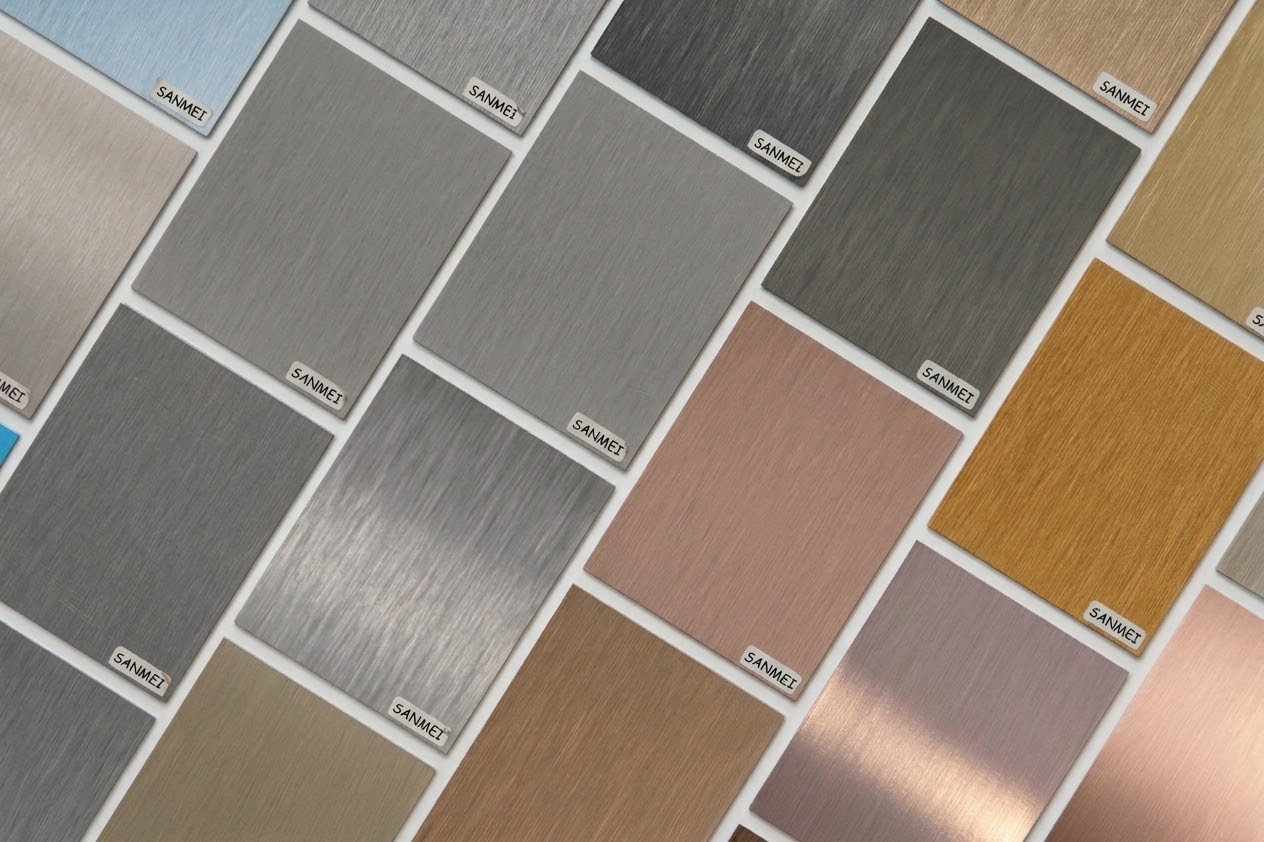
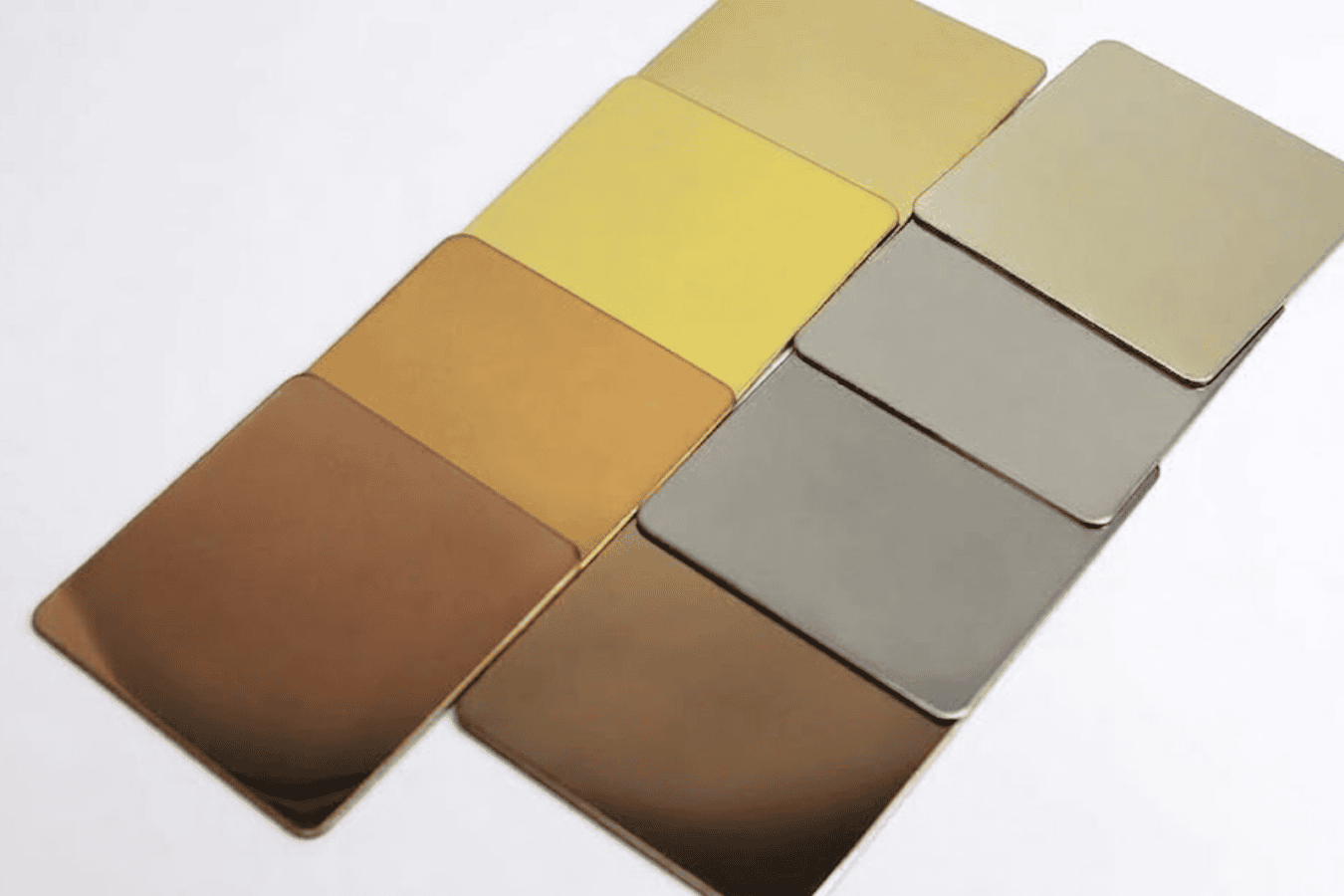
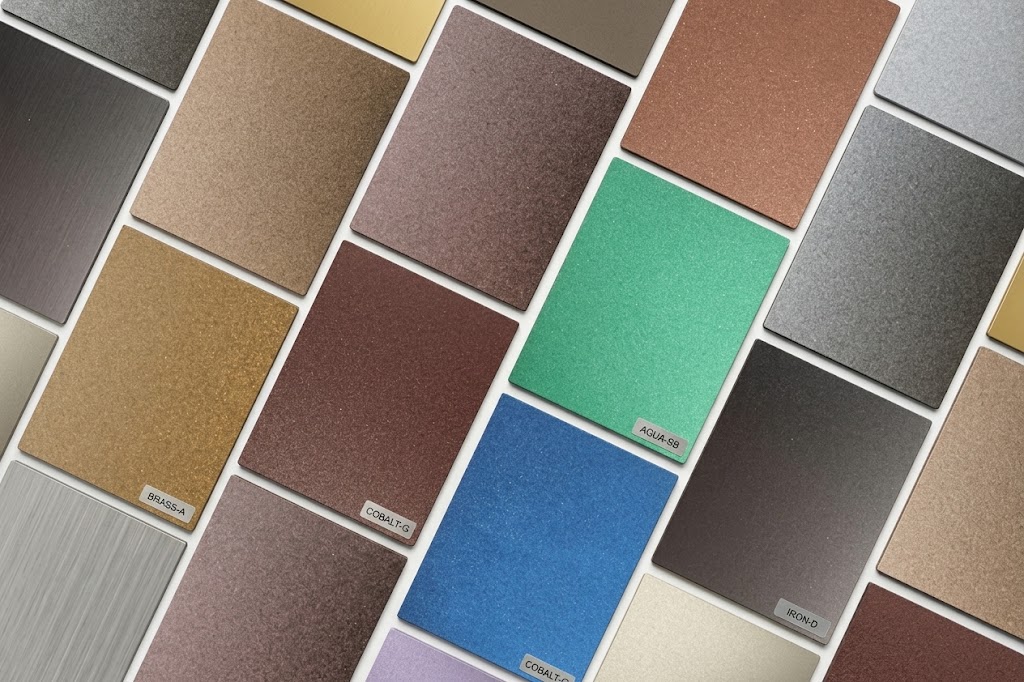
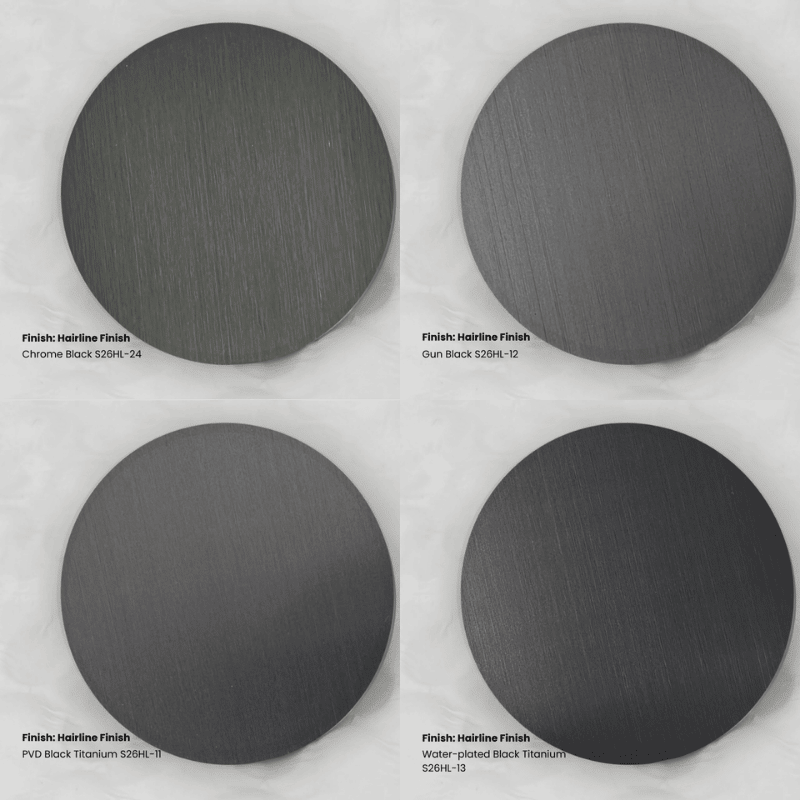
Los acabados negros para acero inoxidable no tienen un solo aspecto; la apariencia real del acero inoxidable negro depende en gran medida del proceso de fabricación. Si solicita a varios proveedores "acero inoxidable con acabado negro", podrá encontrar paneles con apariencias muy diferentes.
- Titanio negro con recubrimiento de agua El negro más profundo y saturado disponible, sin matices visibles: un negro puro y uniforme. El acabado de acero inoxidable negro más común y económico del mercado.
- Titanio negro PVD (Ti-black): Un negro con un sutil matiz púrpura, más visible bajo luz intensa o directa, que ofrece mayor profundidad visual que un negro plano.
- Pistola PVD negra: Un negro grisáceo neutro, más frío y discreto que la profundidad púrpura del negro titanio, y que mantiene su tono de forma consistente en diferentes condiciones de iluminación.
- Cromado PVD negro: Un color negro con un ligero matiz verde amarillento bajo luz brillante, logrado mediante un recubrimiento de carburo de cromo con alta resistencia a la corrosión.
Estas no son solo variaciones estéticas: conllevan diferencias reales en costo, confiabilidad de la coincidencia de color y rendimiento ante la intemperie, que es precisamente la razón por la que "acero inoxidable negro" como término de búsqueda único arroja resultados tan inconsistentes.
El esmalte base que se aplica debajo también cambia el aspecto.
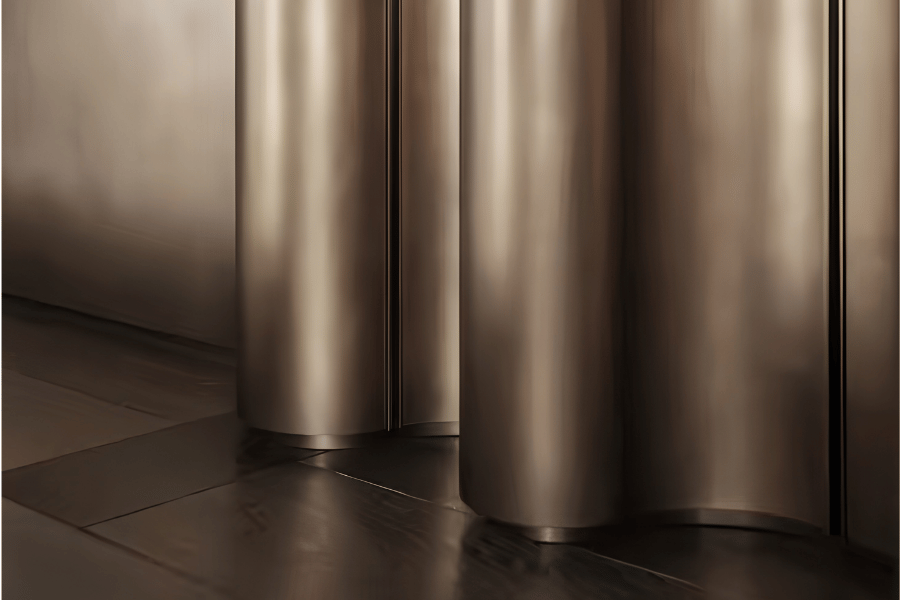
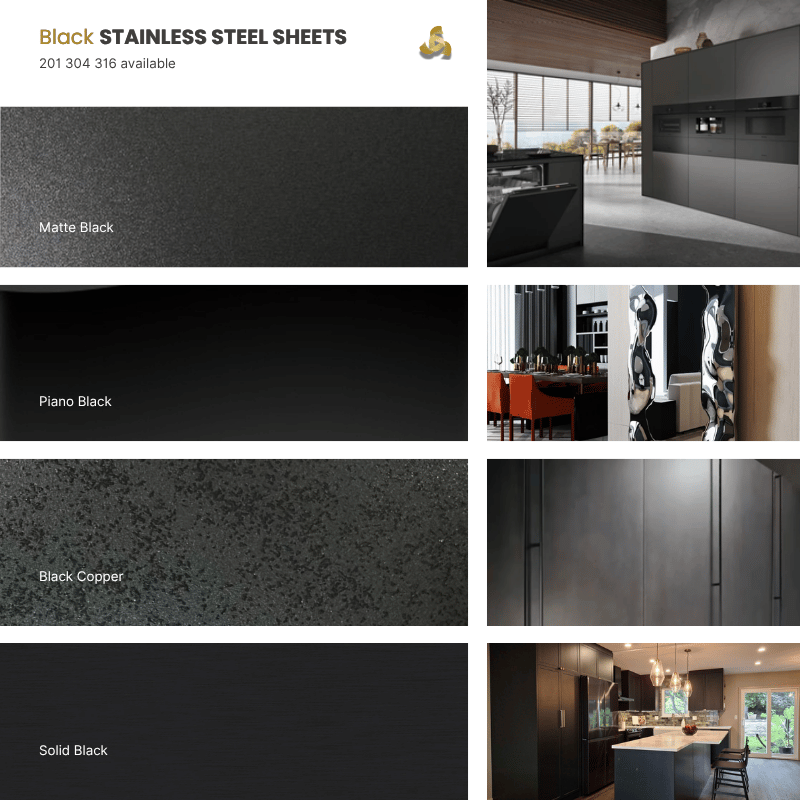
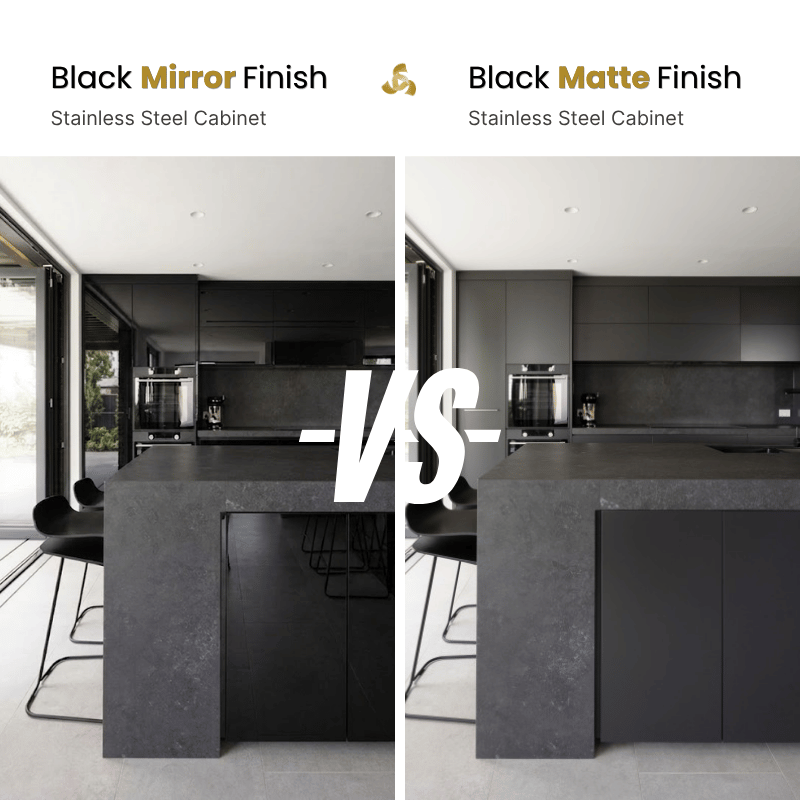
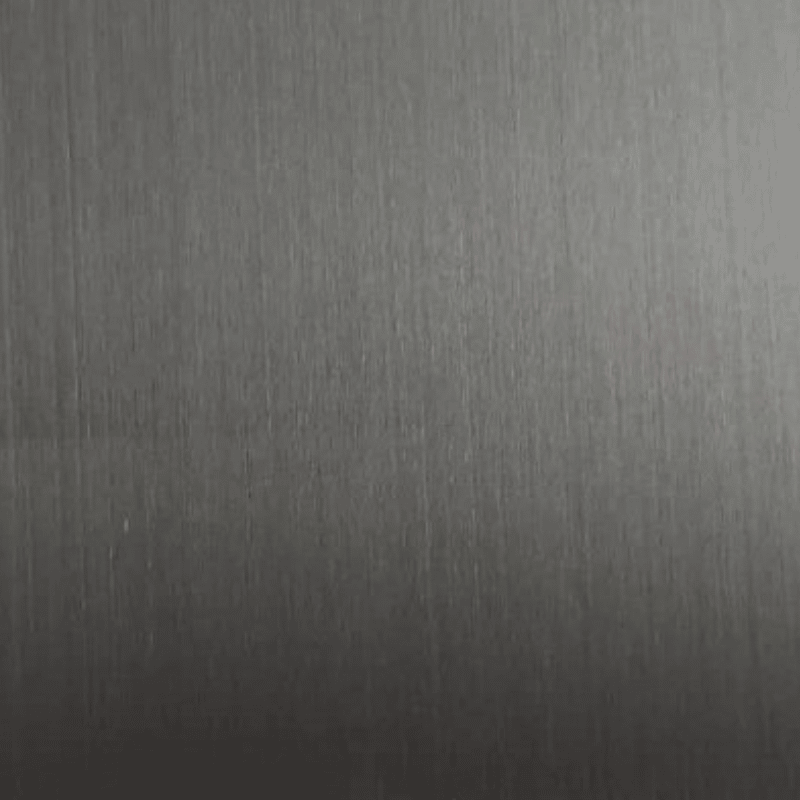
Más allá de los cinco factores anteriores, hay una variable más: el pulido base debajo del recubrimiento. No se trata de dos procesos separados, sino de un único proceso de pulido en un espectro, y el grado de pulido determina el resultado: un menor grado de pulido deja un mate superficie con baja reflectividad, mientras que un pulido progresivamente mayor produce resultados cada vez más reflectantes, hasta un máximo acero inoxidable con acabado espejo negro — con una superficie profunda y de alto brillo. Otras texturas —cepilladas, satinadas, finas y demás— son acabados complementarios que se aplican sobre esta base, no la base en sí. Dos paneles que utilizan el mismo proceso de recubrimiento pueden parecer productos completamente diferentes, dependiendo del grado de pulido previo del metal base.
Lo que parece plano y uniforme en una muestra de chip puede comportarse de manera muy diferente una vez que se aplica a un panel texturizado o dimensional, que es donde entra la siguiente sección.
Acabados relacionados de acero inoxidable negro
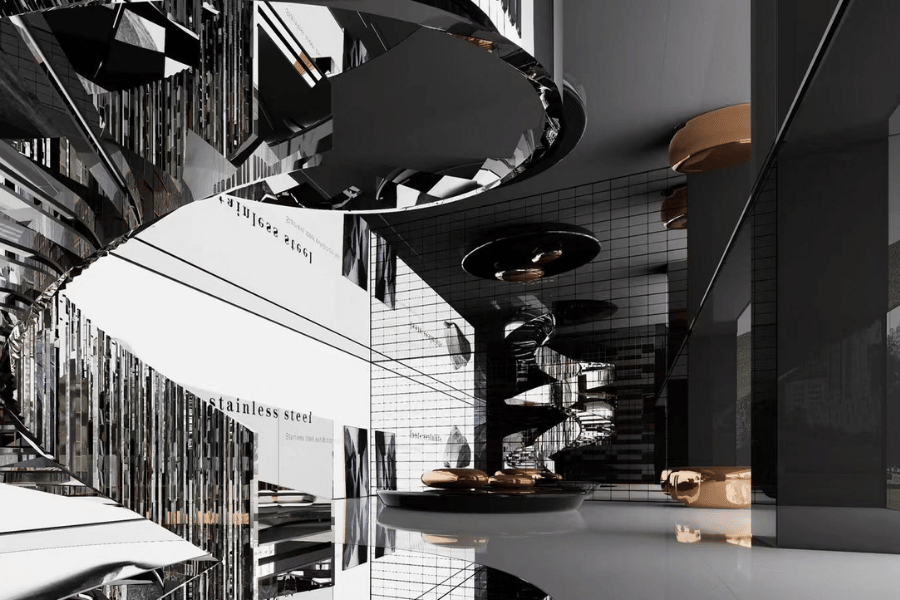
Hoja de espejo negro
Acabado pulido de alta reflectividad combinado con tonos oscuros profundos para acentos arquitectónicos de alta gama, comercios de lujo y revestimientos decorativos.
Hoja negra mate
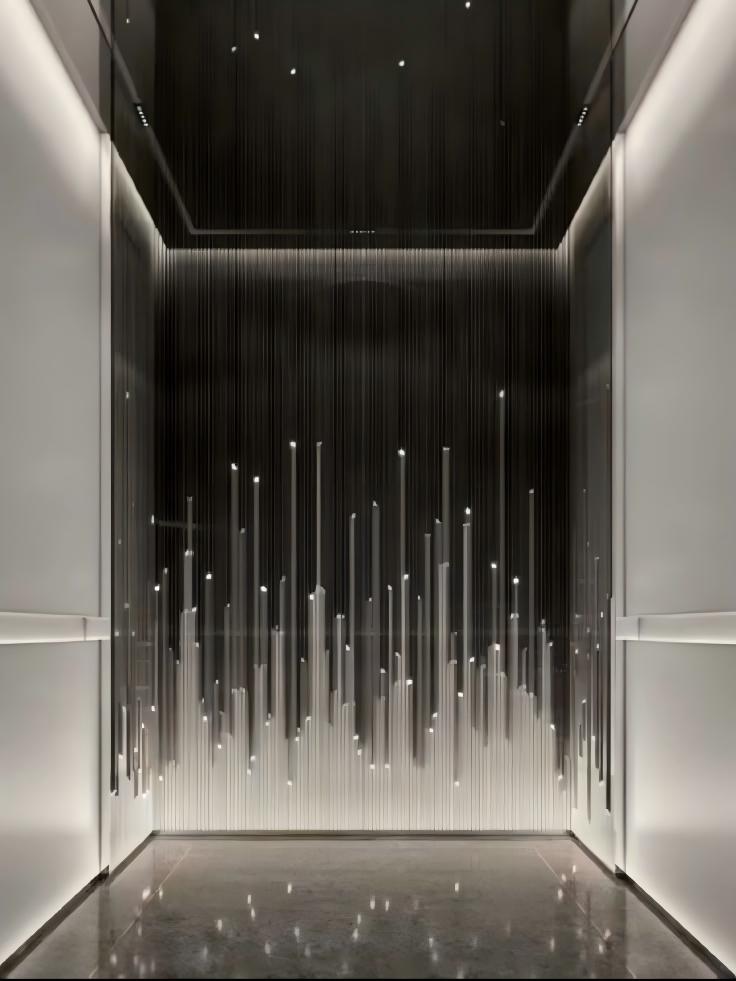
Textura satinada no reflectante que ofrece un brillo sutil y táctil, ideal para revestimientos interiores modernos, interiores de ascensores y electrodomésticos de alta gama.
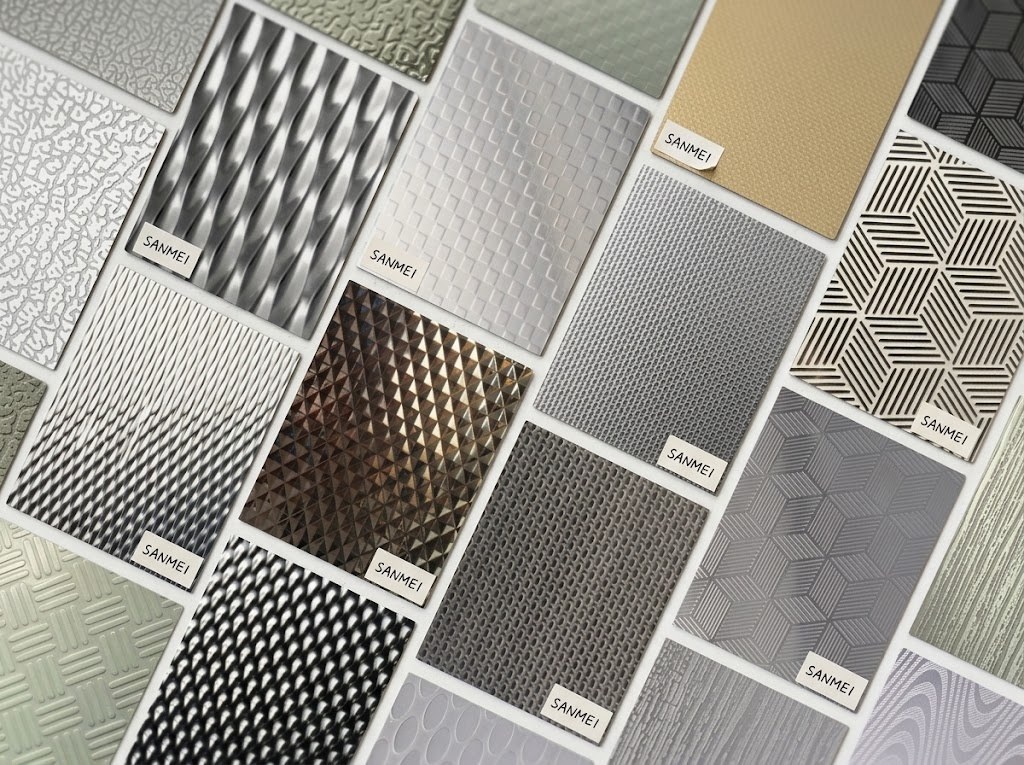
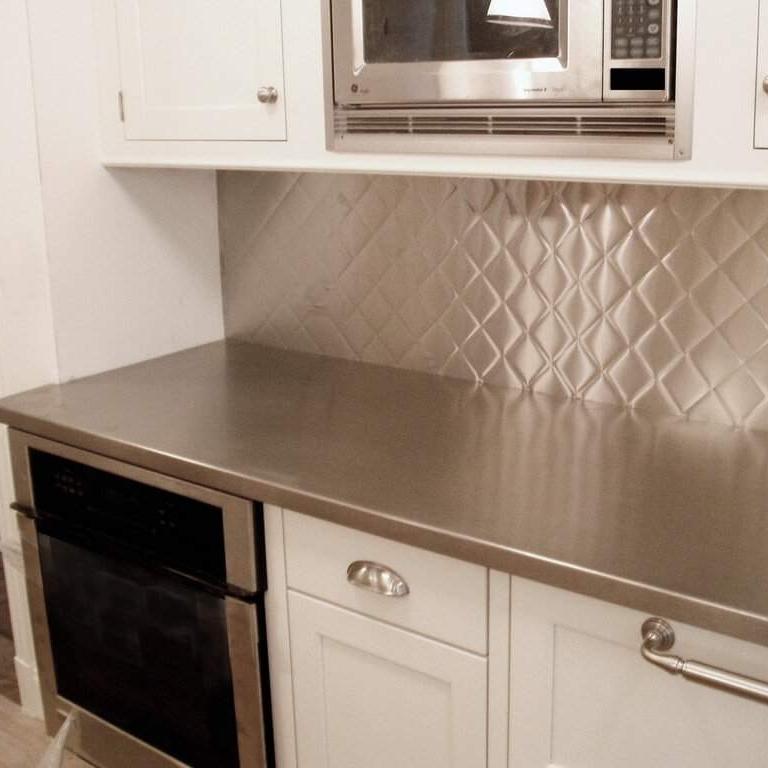
Paneles de Acero Inoxidable Negro Texturizados y Estampados
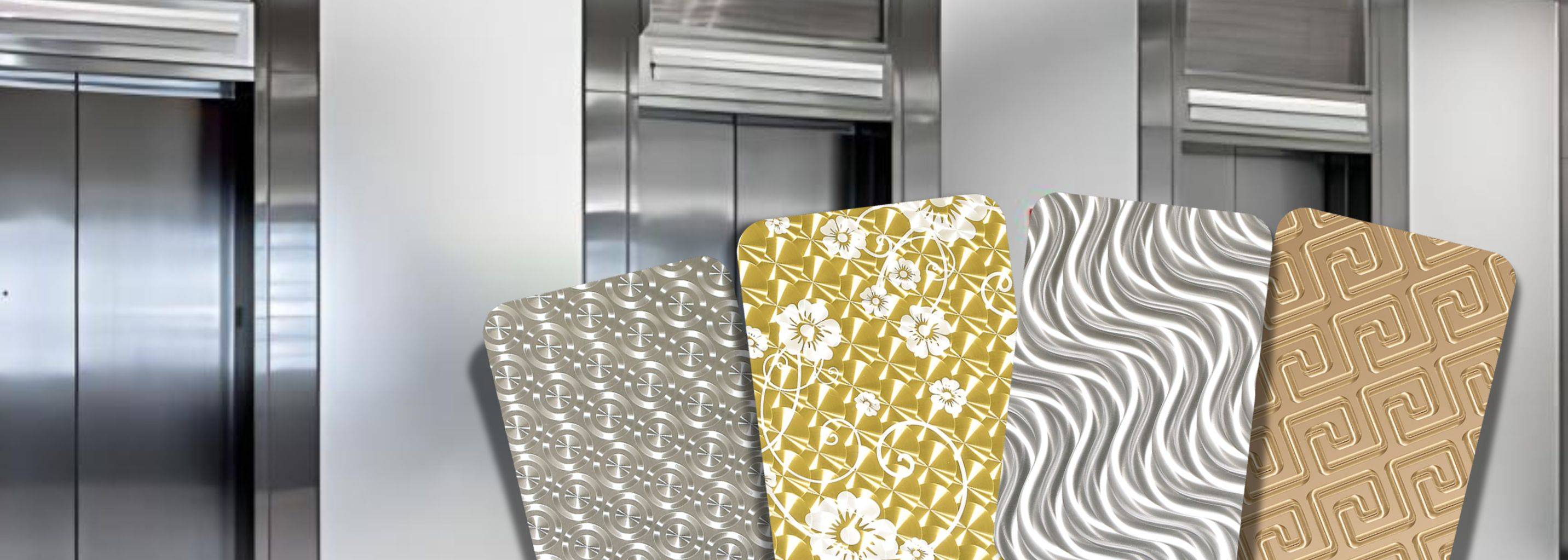
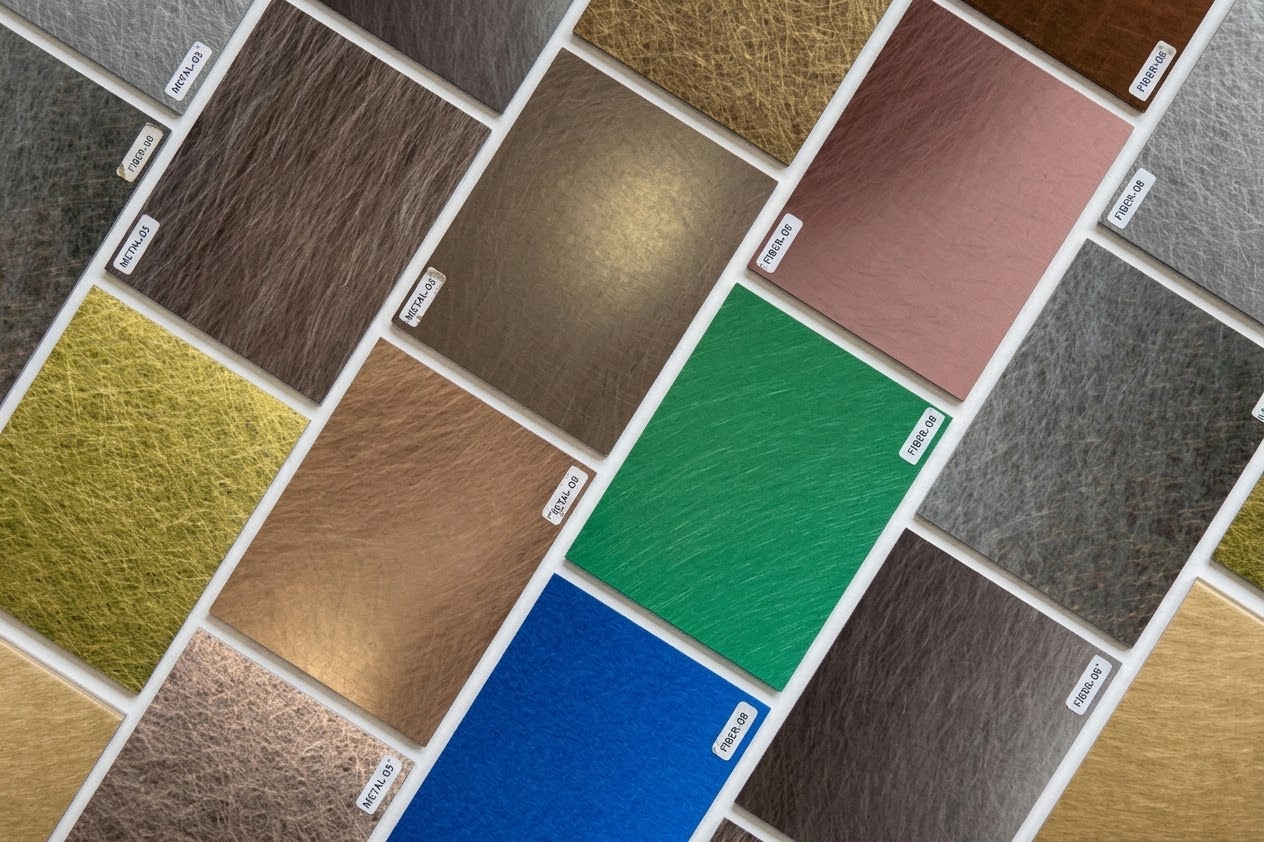
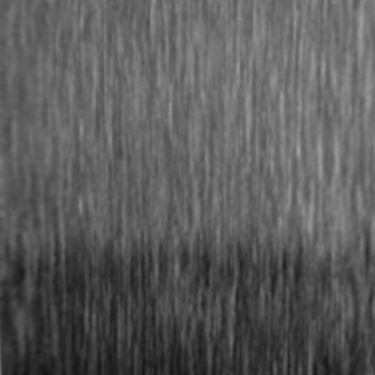
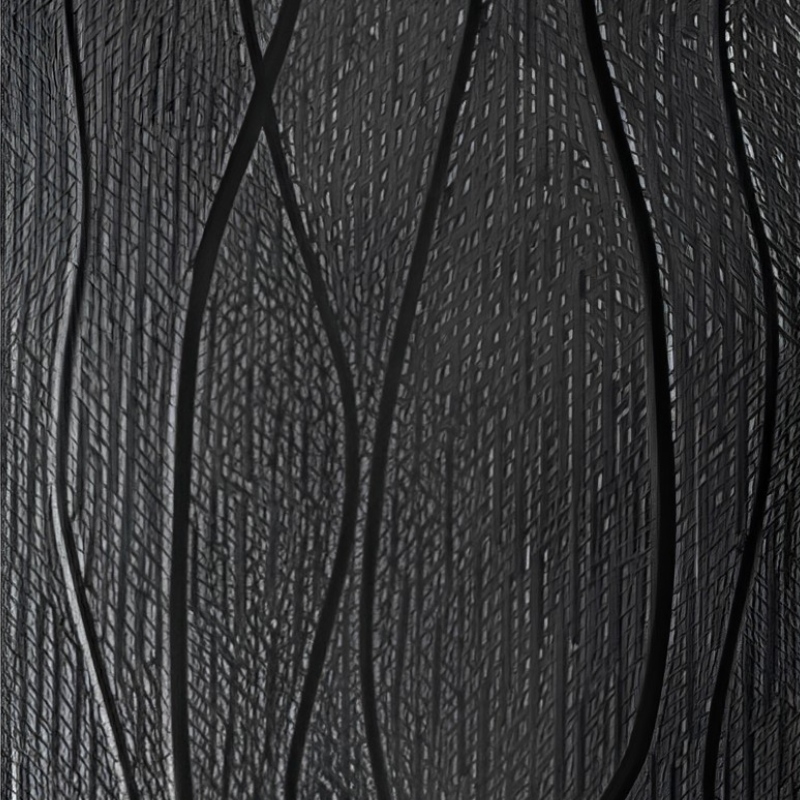
El negro no tiene por qué ser plano, ni tampoco simple. La superficie base debajo del recubrimiento negro puede ser, en sí misma, un acabado liso; N°4 , línea del cabello (LH), o arenado — cada uno le da al negro una textura y reflectividad diferentes antes de agregar cualquier patrón. Además de eso, acero inoxidable negro con patrones: vetas de madera, vetas de piedra y otros impresos, grabados o laminado motivos: aportan un toque visual interesante a un panel negro sin alterar su perfil físico. Estos motivos son planos: con textura a la vista, pero lisos al tacto.
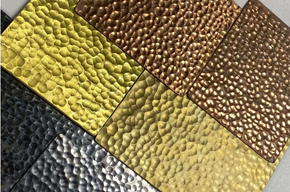
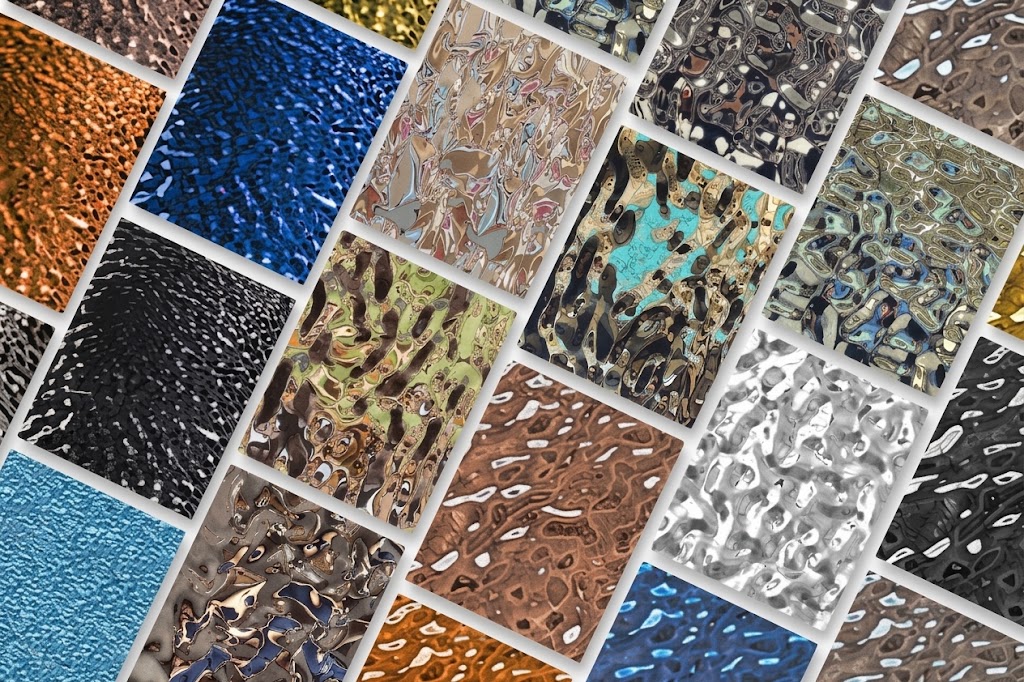
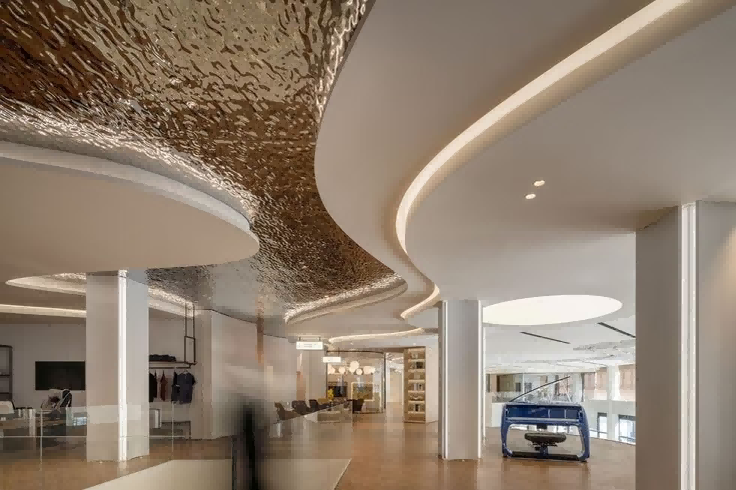
Para obtener una superficie tridimensional auténtica, el metal debe conformarse físicamente, no imprimirse ni grabarse. Ahí es donde repujado, martillando, y onda en el agua Cada pieza se presiona para crear una superficie con una dimensión genuina, que luego se termina en negro mediante los mismos procesos de PVD o de recubrimiento al agua descritos anteriormente. El resultado es un panel de metal negro con profundidad tanto visual como táctil.
También hay una forma más avanzada de usar esa estructura dimensional: dejar que las áreas en relieve y ahuecadas de un panel texturizado capten dos tonos diferentes en lugar de un negro plano. Ese es el efecto "negro colorido" que se explica a continuación.
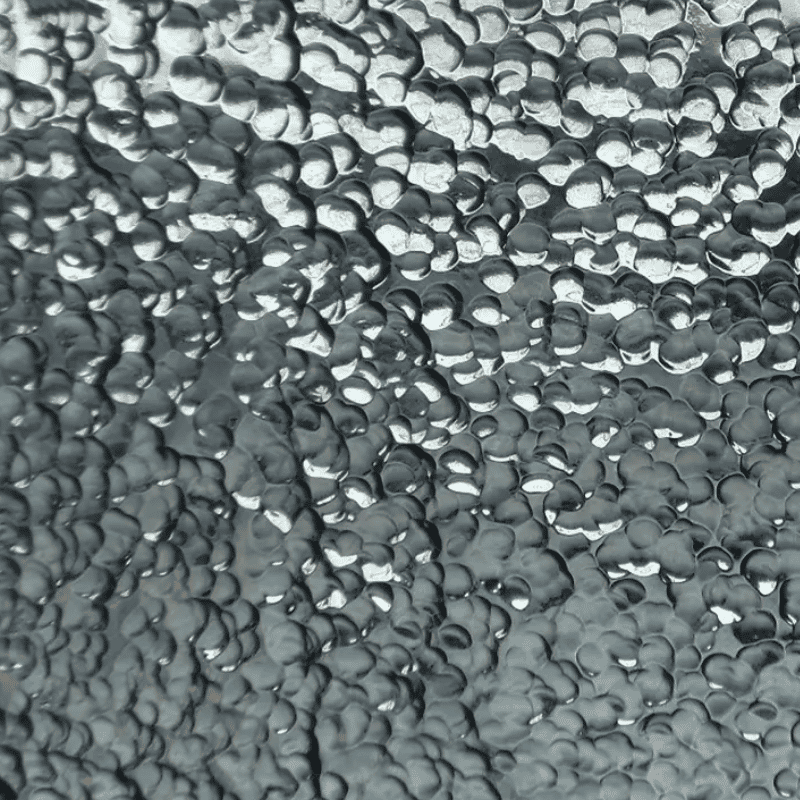
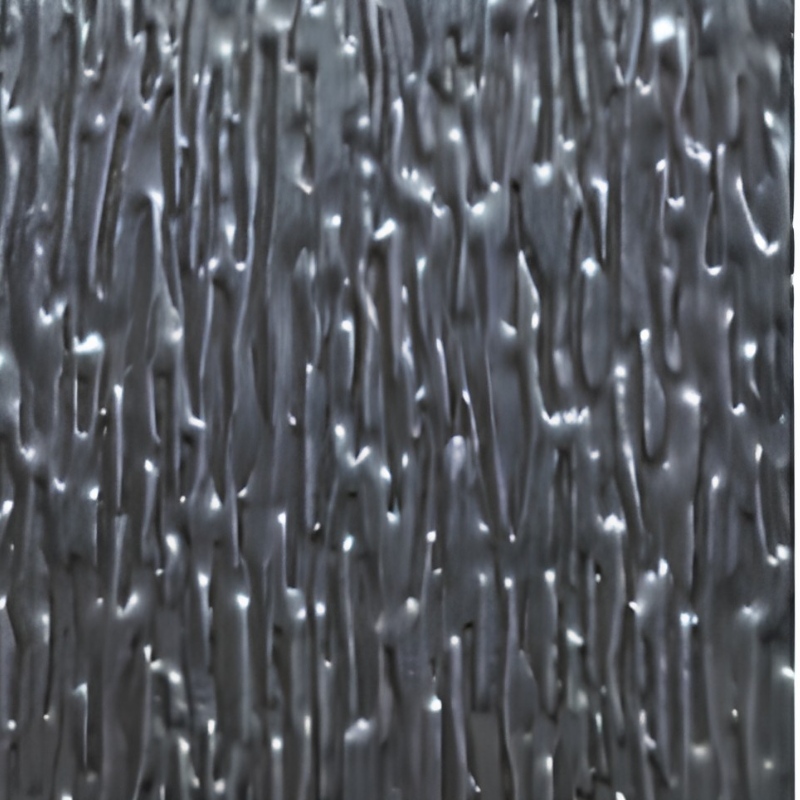
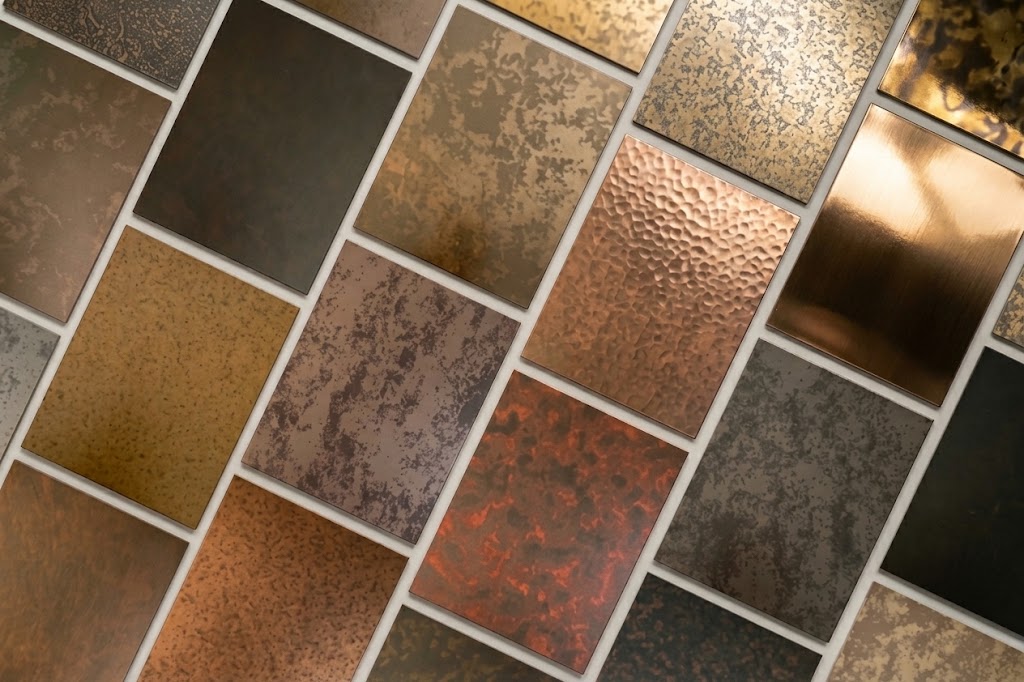
Tono Cálido Negro: Acabados Anticuados y Multitono
Los últimos reportajes sobre tendencias en diseño de interiores y accesorios apuntan a una división interesante: el negro mate sigue siendo el acabado dominante en la arquitectura minimalista, industrial y de influencia «Japandi», pero los tonos cálidos con un toque vintage, como el cobre antiguo, el latón envejecido y el bronce bruñido, están ganando un gran impulso junto a él. En otras palabras, el negro ya no es solo un estilo. Por un lado, está el conocido negro mate frío y, por otro, un «negro con color» más cálido y con más carácter; y los diseñadores recurren cada vez más a ambos, a veces incluso en un mismo proyecto.
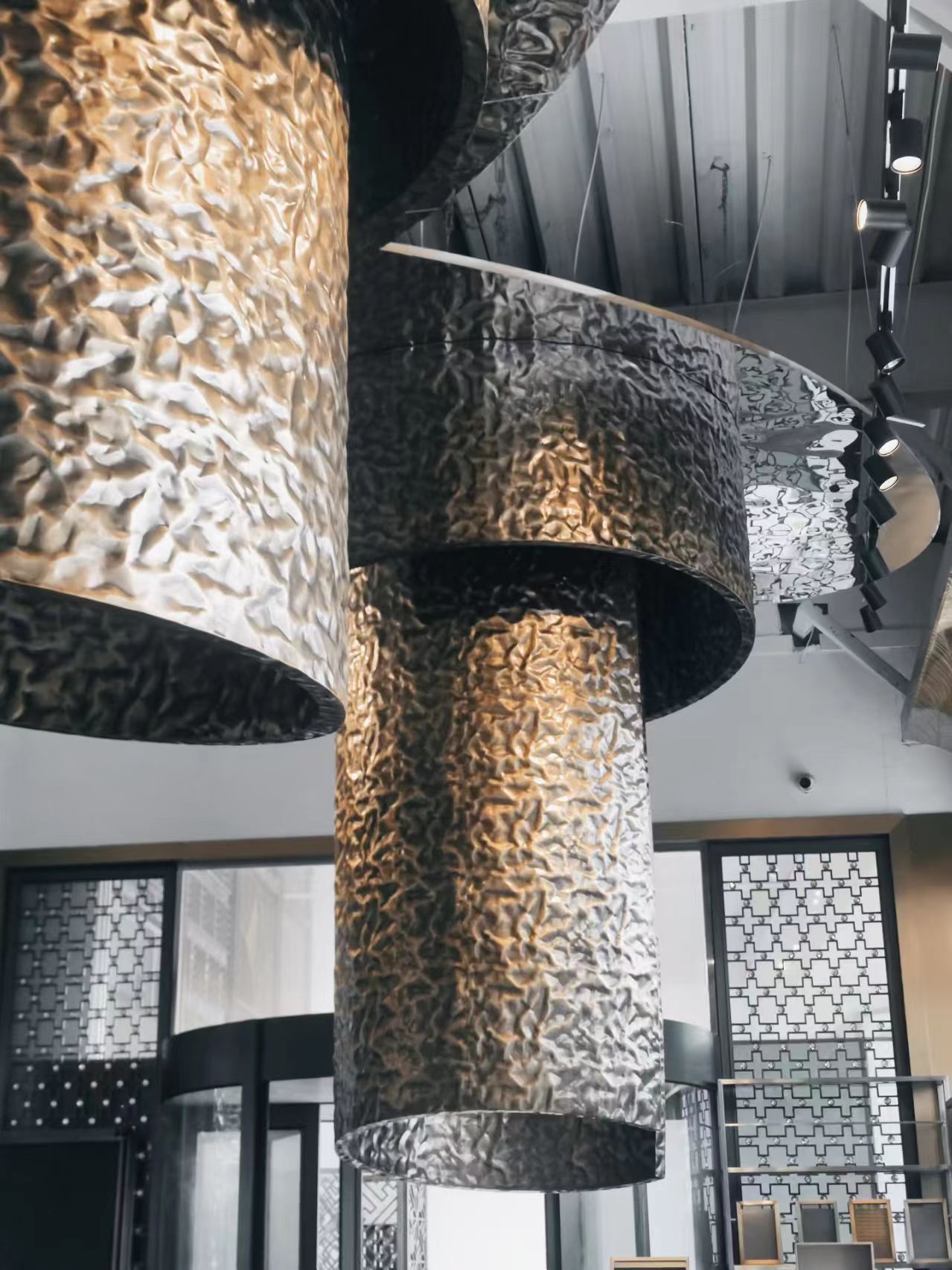
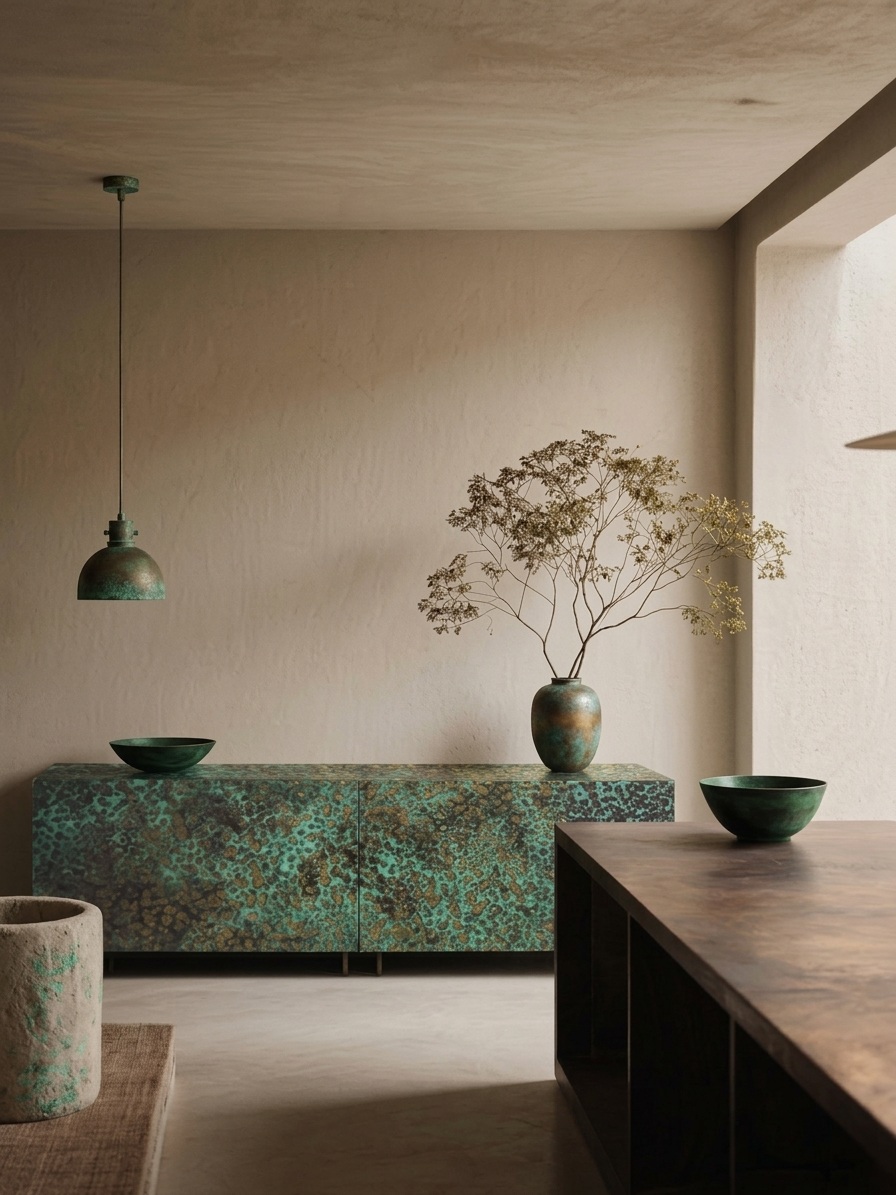
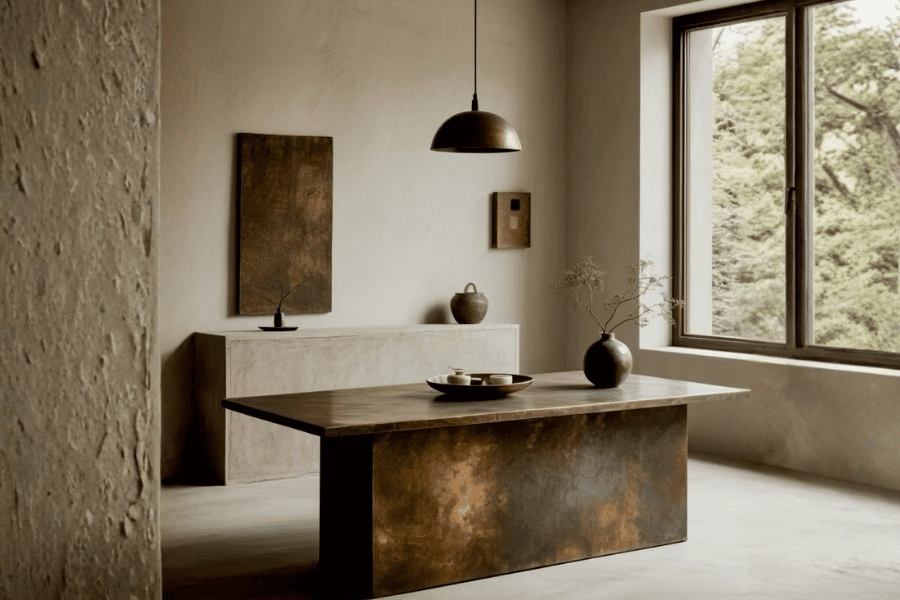
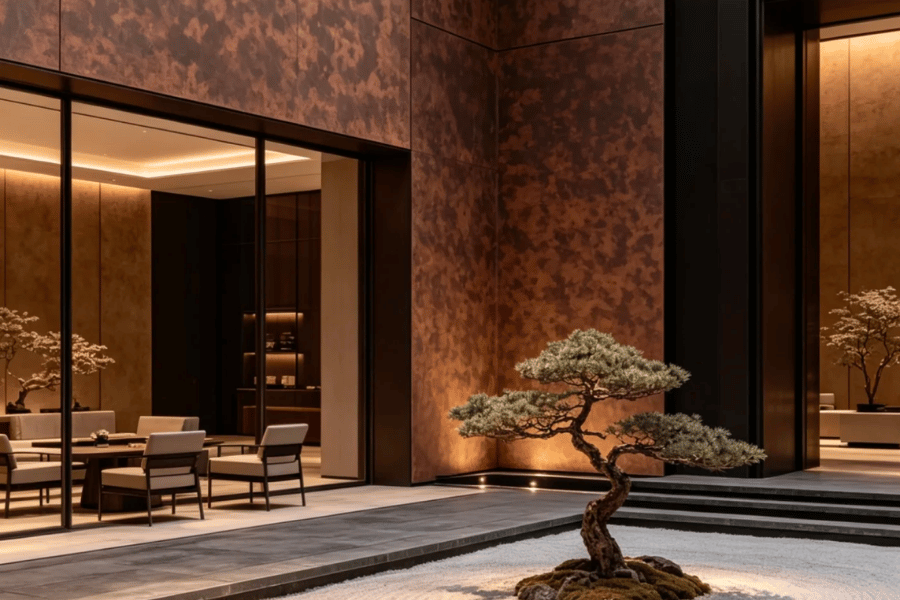
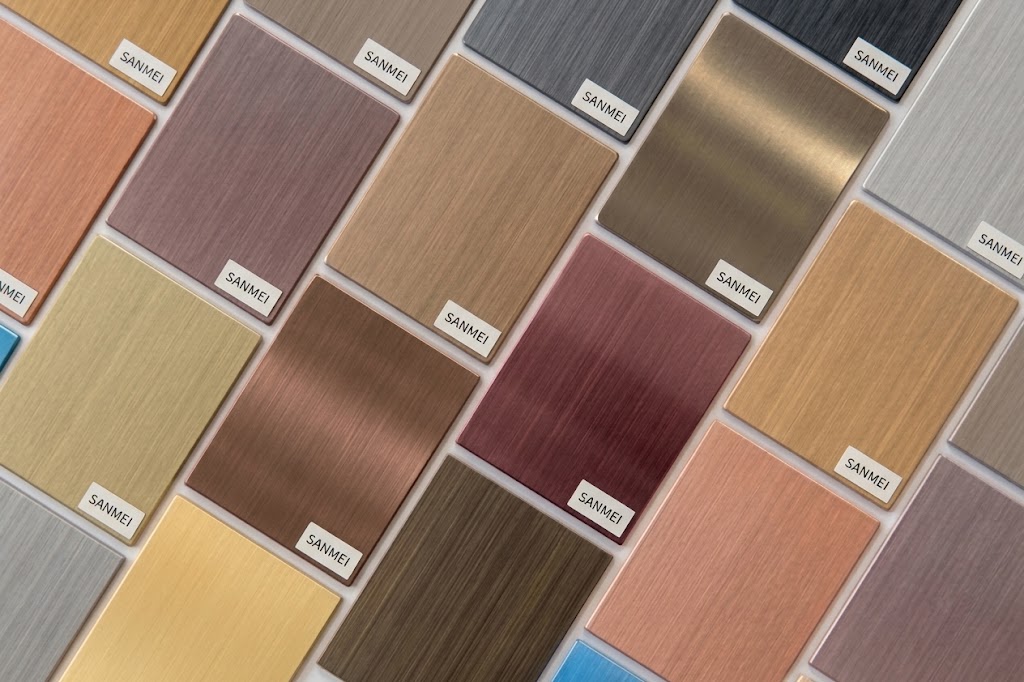
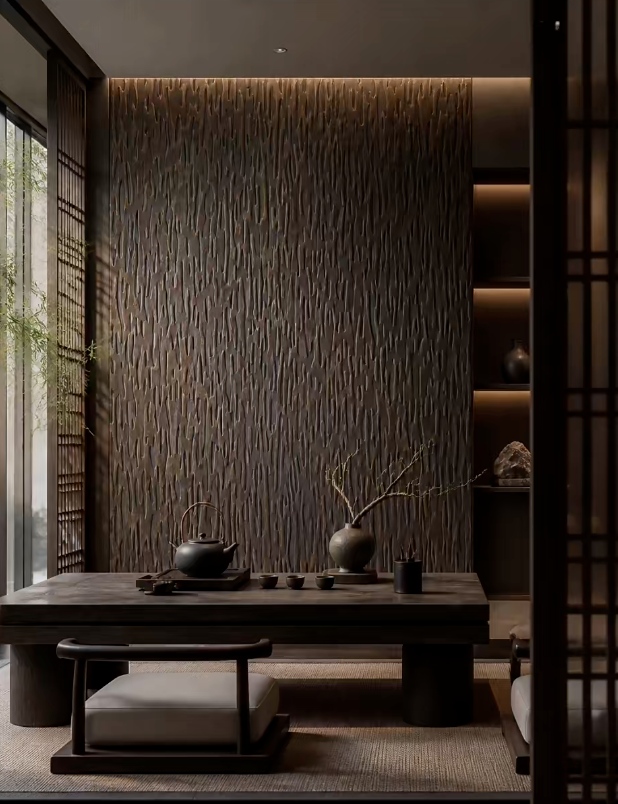
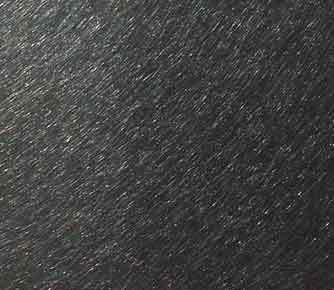
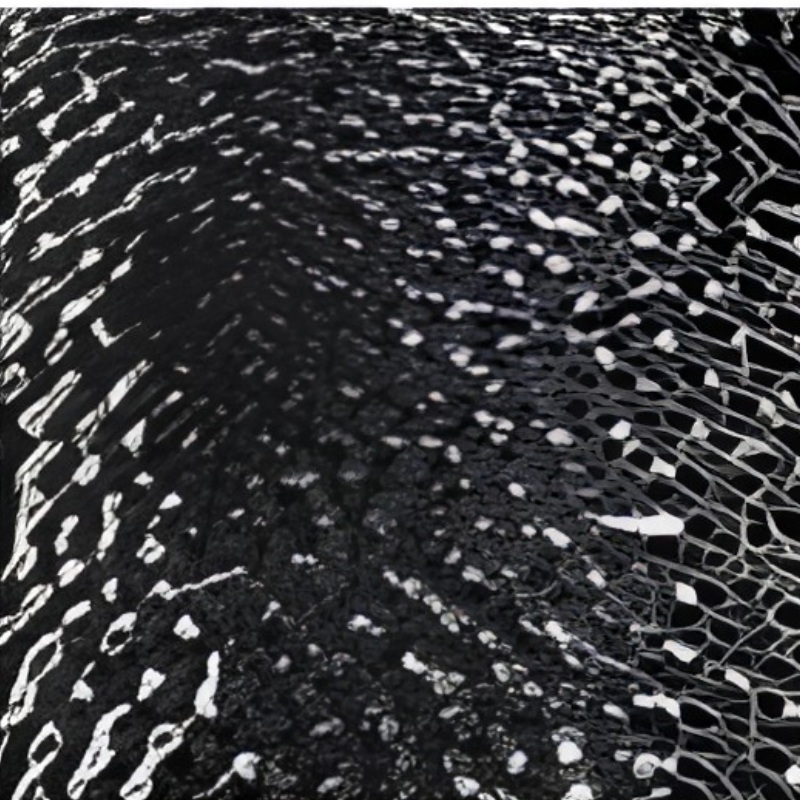
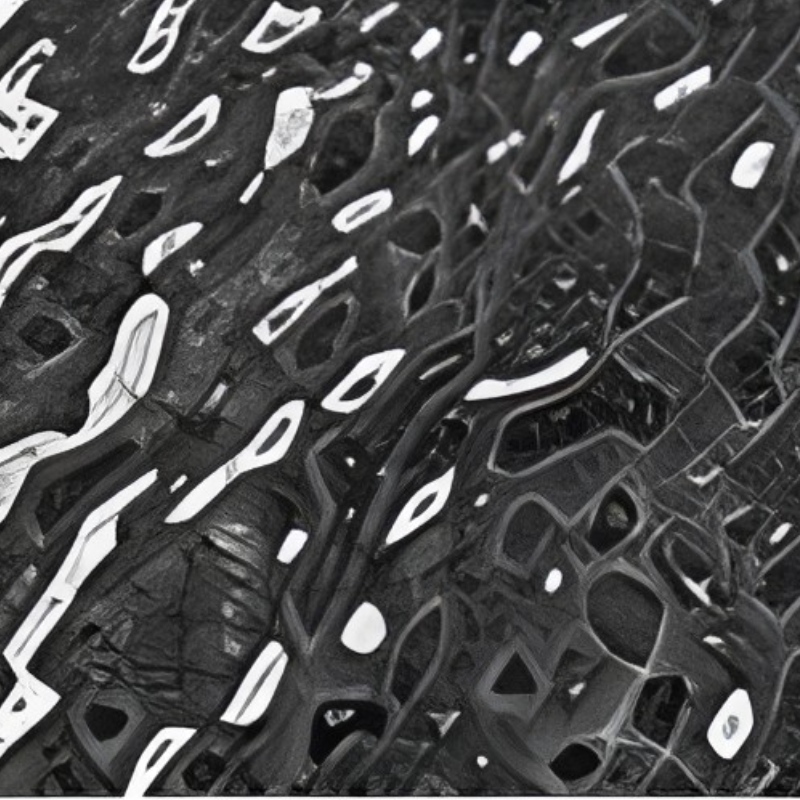
Ese aspecto cálido y envejecido —una base oscura con toques metálicos que se asoman de forma irregular— se consigue mediante un proceso fundamental: el panel se pule, se ennegrece por completo con un tratamiento de oxidación y, a continuación, se le aplica un baño de color de acento (oro, oro champán, cobre o similar). El paso final esencial es el envejecimiento —limpiar, pulir o trabajar la superficie con ácido y una esponja— para desgastar la capa de acento y dejar ver el negro subyacente con un aspecto envejecido. Si se omite este paso, el panel conserva un color plano y uniforme.
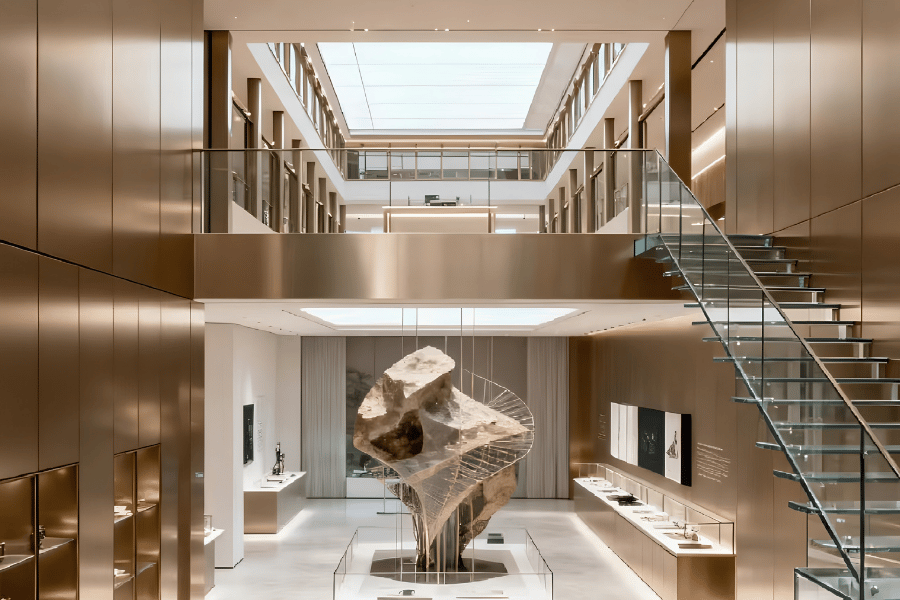
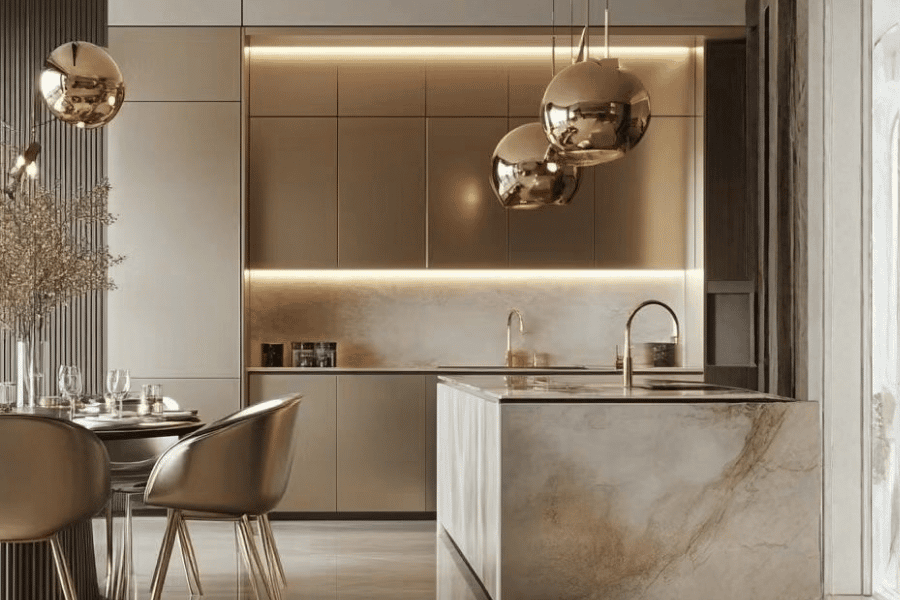
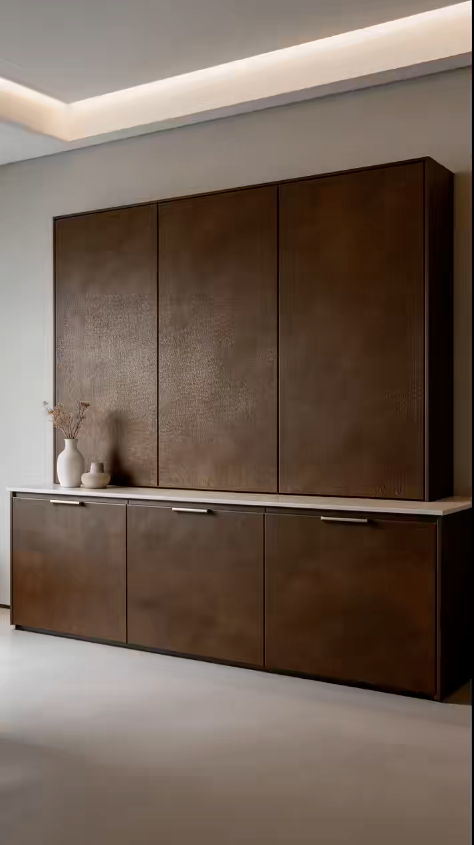
El resultado: un panel negro con cálidos reflejos metálicos que captan la luz a través de su textura; un aspecto envejecido y artesanal que le confiere una apariencia auténticamente antigua, no impresa. Se adapta a los mismos espacios donde la madera recuperada, el latón envejecido o el ladrillo visto ya funcionan: paredes decorativas, interiores de ascensores, bares y restaurantes, vestíbulos de hoteles boutique y cualquier revestimiento o panel que busque calidez e historia en lugar de un negro limpio y uniforme.
¿Por Qué Elegir Acero Inoxidable Negro Para Tus Productos?
Resuelve un problema real de mantenimiento, incluidas las preocupaciones sobre la durabilidad. Los acabados cepillado y satinado —las texturas base más comunes para el acero inoxidable negro— disimulan mejor las huellas dactilares y las manchas que los acabados pulidos o de espejo, ya que la veta direccional dispersa la luz y disimula las marcas de contacto. Los compradores suelen preguntar si el acero inoxidable negro se raya, y los acabados modernos resisten mucho mejor de lo que se espera: los recubrimientos de cromo PVD y los tratamientos de nanorrevestimiento crean una capa superficial densa y dura que resiste el desgaste diario —incluidos los golpes de llaves, monedas y otros impactos— sin que el recubrimiento se levante ni se desgaste hasta dejar el metal al descubierto.
Encaja donde ya reside el diseño minimalista, — y donde los tonos más cálidos están ganando terreno. En los interiores comerciales y arquitectónicos, las paletas en blanco y negro y monocromáticas constituyen un lenguaje de diseño básico, no una moda pasajera, y el acero inoxidable negro ofrece a los diseñadores un material duradero y resistente a la corrosión que encaja en esa paleta sin sacrificar la resistencia ni la vida útil del acero inoxidable. Y el negro ya no es una opción más: junto al conocido negro mate frío, el negro envejecido de tonos cálidos mencionado anteriormente está ganando terreno; poder ofrecer ambas opciones es, en sí mismo, un punto de diferenciación.
Está demostrado, no es experimental. Múltiples opciones de recubrimiento (chapado en agua, PVD, pintura al horno), múltiples tonalidades de negro (titanio negro chapado en agua, negro cromado, negro titanio-aluminio, negro titanio puro, negro pintado), opciones de textura que se pueden superponer (grabado en relieve, martillado, efecto ondulado) y un proceso controlable de óxido negro y pulido para obtener un negro envejecido de tono cálido: cada capa de este proceso tiene una base técnica clara. El acero inoxidable negro ha madurado hasta convertirse en una categoría de material con una verdadera flexibilidad de diseño, no un único acabado con un solo aspecto y un solo proceso.
¿Estás listo para adquirir chapas de acero inoxidable negro?
Desde acabados negros con recubrimiento PVD hasta acabados negros con baño de agua, SANMEI suministra láminas de acero inoxidable negro en 201, 304 y 316 — con conexiones directas de molino, respuesta rápida y trazabilidad completa.
Ponte en contacto con SANMEI ahora →Una cosa más: residuo negro en el reverso de la hoja.
Las láminas de acero inoxidable sometidas a un proceso de recubrimiento de color pueden desarrollar residuos negros en la parte posterior, es decir, en el lado sin recubrimiento, opuesto a la cara acabada. Se trata de un subproducto del proceso de recubrimiento, no de un defecto, y es diferente de las manchas negras en el acero inoxidable causadas por contaminación o manipulación inadecuada. No afecta en absoluto al lado recubierto. Dado que aún puede afectar la sensación al tacto del panel durante su manipulación e instalación, la parte posterior recibe un tratamiento mate o lijado para eliminarlo antes del envío. Si encuentra este tipo de manchas en acero inoxidable de otro proveedor, un limpiador estándar para acero inoxidable las eliminará; se trata de un subproducto de la parte posterior, no de un defecto en el acabado negro.
SANMEI METAL
Si vas a utilizar acero inoxidable negro para un proyecto —ya sea un panel arquitectónico, el interior de un ascensor o la carcasa de un producto—, la combinación adecuada de calidad del sustrato, proceso de recubrimiento y textura de la superficie dependerá de las condiciones de exposición de tu aplicación y de la intención de diseño. Cuéntanos tu proyecto para recomendaciones y muestras de materiales.