



































Edelstahlzölle: Was passiert, wenn Chinas Preisvorteil auf die Kumulierung von Zöllen trifft?
Du hast gewählt Chinesischer Edelstahl aus einem einfachen Grund: dem Preis.
Doch was passiert, wenn sich die Zölle summieren?
Die Vorteile von chinesischem Edelstahl waren noch nie kompliziert:
Preis, Kapazität und Zuverlässigkeit.
Doch bis 2026 werden immer mehr Käufer eine Veränderung bemerken:
Das Angebot sieht immer noch wettbewerbsfähig aus.
Doch das Projektergebnis wird zunehmend unsicher.
Bei einigen Aufträgen sinkt die Marge während der Berechnung schrittweise.
Bei anderen werden die wahren Kosten erst bei der Zollabfertigung deutlich – wenn es dann schon zu spät ist.
Das Problem liegt nicht am Produkt selbst.
Es ist Folgendes:
Der Edelstahltarif ist nicht länger nur eine Zahl —
Es ist zu einem geworden Struktur.
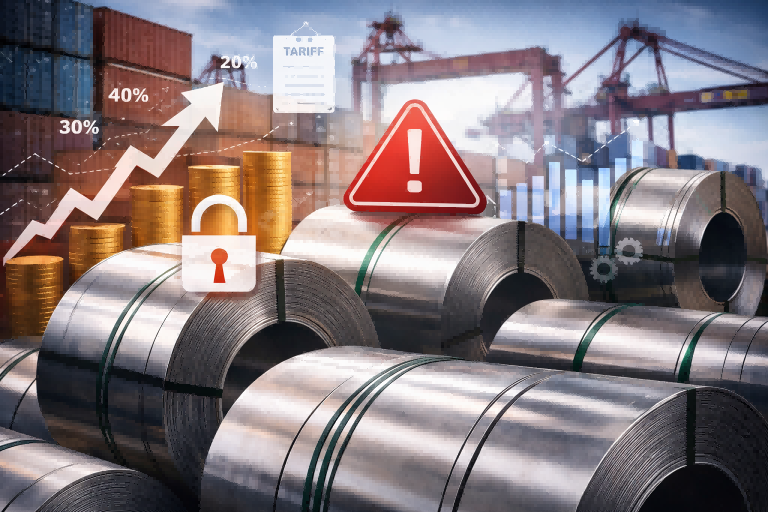
Das eigentliche Problem heute sind nicht hohe Zölle – sondern die Kumulierung von Zöllen.
Früher musste man nur eine einzige Einfuhrsteuer berücksichtigen.
Heute wird chinesischer Edelstahl auf vielen Märkten folgendermaßen behandelt:
- Eine zusätzliche Tarifschicht
- Zuzüglich Antidumpingzölle
- In einigen Fällen kommen sogar noch weitere Gebühren hinzu.
Das Ergebnis:
Der gleiche Charge Chinesischer Edelstahl Die Gesamtkosten können je nach Markt völlig unterschiedlich ausfallen.
Die eigentliche Frage lautet also nicht mehr:
„Hat chinesischer Edelstahl immer noch einen Preisvorteil?“
Sondern vielmehr:
Welcher Zollstruktur unterliegt diese Edelstahllieferung in diesem spezifischen Markt?
Ein entscheidender Ausgangspunkt: Stahlrohstoff vs. Fertigprodukt
Viele Fehlentscheidungen beginnen genau hier.
Wenn Sie exportieren:
Diese werden betrachtet Rohstahlprodukte —
und sie sind in den meisten Ländern die Hauptziele von Zöllen.
Aber wenn Sie exportieren:
- Komponenten
- Strukturteile
- Tiefverarbeitete Produkte
Die Situation ändert sich komplett.
Bei einigen Produkten können stahlbezogene Zölle teilweise vermieden werden.
Andere könnten aufgrund von Klassifizierung oder Materialherkunft wieder Beschränkungen unterliegen.
Sie müssen also zunächst eines klären:
Verkaufen Sie? Rohstoffoder ein fertiges Produkt mit Stahleigenschaften?
Wenn diese Einschätzung falsch ist,
Auch alle Ihre nachfolgenden Kostenberechnungen könnten falsch sein.
Ländervergleich: Wie sich Zölle auf Edelstahl tatsächlich auf die Kosten auswirken
Für Zölle auf Edelstahl gibt es keine allgemeingültige Regelung.
Jedes Land funktioniert nach einem völlig anderen System.
Vereinigte Staaten: Nicht „teurer“ – sondern eine neu gestaltete Kostenstruktur
Der Ansatz der USA ist einfach: Stapeln.
- Juni 2025: Erhöhung des Stahlzolls gemäß Abschnitt 232 von 25% bis 50%
- Darüber hinaus: Abschnitt 301 fügt eine weitere 25%-Bezeichnung für viele chinesische Edelstahlprodukte hinzu.
- Zuzüglich bestehender Antidumpingzölle (für bestimmte Produkte)
In vielen Fällen erhöht sich die gesamte Zollbelastung nicht nur –
im Grunde genommen gestaltet die Preisstruktur neu.
Mit anderen Worten:
Der ursprüngliche Preisvorteil ist bereits aufgebraucht. vor dem Eintritt in den US-Markt.
Auf der Seite des fertigen Produkts:
Die USA setzen die „geschmolzen und gegossen“-Regel, das eine Ursprungsdeklaration der Rohstoffe erfordert.
Das heisst:
Selbst nach der Verarbeitung, wenn das Material aus China stammt,
Zölle lassen sich nicht ohne Weiteres umgehen.
Die eigentliche Frage in den USA lautet also nicht: „Können wir chinesischen Edelstahl noch verkaufen?“
Aber:
Der Rohstoff hat weitgehend an Wert verloren —
Die fertigen Produkte müssen anhand folgender Kriterien bewertet werden: Eintrittsstrategie.
Europäische Union: Keine pauschalen Maßnahmen – sondern gezielte Maßnahmen
Die EU definiert sich nicht durch hohe Zölle, sondern durch Komplexität.
Es wird kein einheitlicher Zollsatz für alle chinesischen Edelstähle angewendet.
Stattdessen zielt es auf bestimmte Produkte ab:
- Edelstahl-Stumpfschweißfittings: ~30%–60% Antidumping
- Nachfüllbare Edelstahlfässer: über 60% Antidumping
- Kaltgewalzter Edelstahl: unterliegen laufenden Maßnahmen oder Überprüfungen? (Da das Produkt nicht spezifiziert ist, muss der anwendbare Zollsatz anhand der tatsächlichen Gegebenheiten ermittelt werden.)
Das heisst:
Man kann nicht mehr einfach sagen: „Die EU hat Antidumpingzölle.“
Sie müssen Folgendes überprüfen:
Ob Ihr spezifisches Produkt in die eingeschränkte Kategorie fällt.
Aus operativer Sicht:
- Rohstahl → hohes Risiko, erfordert präzise Klassifizierung
- Fertigprodukte → flexibler, aber gezielte Kategorien müssen vermieden werden.
Die eigentliche Schwierigkeit in der EU liegt nicht im Zollniveau, sondern:
Ob Ihr Produkt zielgruppenspezifisch ist.
Kanada: Einfache Struktur, direkte Wirkung
Kanadas Logik ist einfach:
A 25% Zuschlag auf gelisteten chinesischen Stahlprodukten.
Keine komplizierte Stapelung.
Keine Grauzone.
Aber:
Dieses 25% allein reicht aus, um den Ausgang von Transaktionen zu verändern.
Viele profitable Projekte verlieren unmittelbar nach Einführung des Zolls ihre Wettbewerbsfähigkeit.
Kanada bietet jedoch eine Remissionsmechanismus,
Ausnahmen für Produkte mit unzureichender lokaler Versorgung zulassen.
Die entscheidende Frage lautet also:
- Ist Ihr Produkt auf der Liste?
- Ist eine Ausnahme möglich?
Mexiko: Nicht teuer – aber verfahrenstechnisch komplex
Mexiko wird oft unterschätzt.
Es geht nicht nur um Zölle, sondern um Folgendes:
Zölle und Einfuhrlizenzen zusammen
- Vorübergehende Zölle (5%–50%) für Nicht-Freihandelsabkommensländer
- Obligatorisch automatische Importlizenzierung für Stahlprodukte
Das heisst:
Man kann nicht einfach Preis und Versand berechnen.
Sie müssen dies im Voraus bestätigen:
- Ob der HS-Code unter den Zollbereich fällt
- Ob die Einfuhrlizenz erlangt werden kann
Mexikos eigentliche Herausforderung sind nicht die Kosten –
Aber Unsicherheit im Ausführungspfad.
Brasilien: Festzölle, die den Preisspielraum einschränken
Brasilien ist ein typisches Preiskompressionsmarkt.
Anstelle von prozentualen Zöllen gilt Folgendes:
Feste Antidumpingzölle pro Tonne (ca. $322–670/Tonne)
Der entscheidende Punkt:
Ganz egal, wie günstig Ihr Produkt ist,
Die Abgabe ist festgelegt.
Beispiel:
$1800/Tonne + $500 Einsatz = $2300/Tonne
Das Ergebnis:
- Billigprodukte → verlieren vollständig ihre Wettbewerbsfähigkeit
- Mittleres Preissegment → Margen unter Druck
- Hochpreisig → weiterhin rentabel
Brasilien beschränkt den Import von chinesischem Edelstahl nicht.
Dadurch wird sein Preisvorteil unmittelbar geschwächt.
Indien: Kein vorübergehendes, sondern ein langfristiges System
Indien ist ein Markt für langfristige Risiken.
Sein Antidumpingsystem für chinesische Edelstahl-Flachprodukte ist:
- Laufend
- Häufig bewertet
- kaltgewalzter Edelstahl
- 300 Reihen (z. B. 304)
Das Hauptmerkmal: Nicht vorübergehend – sondern strukturell.
Für Käufer bedeutet dies:
- Nicht jede Sendung ist betroffen
- Aber jede Sendung muss überprüft werden.
Im Vergleich zu anderen Märkten:
- S. → Stapeln
- Brasilien → feste Abgabe
- Indien → kontinuierliches System
Neben Zöllen können für chinesische Edelstahlprodukte auch weitere Kosten anfallen. obligatorische Zertifizierungen oder Importgenehmigungen für den Zugang zu bestimmten Märkten – wie beispielsweise die BIS-Zertifizierung in Indien.
Möchten Sie mehr über diese Anforderungen erfahren? Lesen Sie weiter. 'Edelstahlzertifizierung: Was jeder Käufer vor dem Import prüfen muss.'
Australien: Gezielte Maßnahmen, keine pauschalen Einschränkungen
Australien gilt:
Gezielte Maßnahmen für bestimmte Produkte
Sobald ein Preis betroffen ist, ändert sich die Preisstruktur sofort.
Beispiel (Februar 2026):
- Stahldeckenlatten: 10% Antidumping
- Zusätzlicher Ausgleichszoll in Höhe von 4,51 TP3T für nicht kooperative Exporteure
Auswirkungen auf chinesischen Edelstahl:
- Rohstoff → steigendes Risiko
- Fertigprodukte → relativ sicherer, aber bestimmte Kategorien müssen vermieden werden
Sobald das Ziel im Visier ist:
Der Preisvorteil verschwindet sofort.
Was sollten Sie also konkret tun?
Wenn Sie sich aus Preisgründen für chinesischen Edelstahl entschieden haben,
Die Lösung besteht nicht darin, sie aufzugeben.
aber zu Ändere deine Bewertungsmethode..
Ein einfacher 3-Schritte-Ansatz:

👉 Rohmaterial oder Fertigprodukt?

👉 Stapeltyp, Strukturtyp oder Zieltyp?

👉 Bei China bleiben oder die Beschaffungsstrategie anpassen?
In vielen Fällen geht es bei der Optimierung nicht um Preissenkung, sondern um die Auswahl eines bessere Kombinationsstrategie.
Was Sie wirklich brauchen, ist nicht billiger – sondern berechenbarer.
Die Herausforderung im Beschaffungswesen hat sich verändert.
Vorher: Lieferantensuche
Nun zur Auswahl des Richtigen Weg
Dieselbe Charge chinesischen Edelstahls:
- Unterschiedliche Länder → enorme Kostenunterschiede
- Unterschiedliche Wege → völlig unterschiedliche Ergebnisse
Entscheidend für das Ergebnis ist nicht das Produkt, sondern:
Edelstahl-Tarifstruktur + Lieferweg
Abschluss
Wenn Sie ein Projekt bewerten und Folgendes feststellen:
- Der Preis erscheint wettbewerbsfähig.
- Doch der Ausgang erscheint ungewiss.
Dann handelt es sich in der Regel nicht um ein Produktproblem.
es ist ein Pfadproblem.
Im heutigen Umfeld ist es wichtig, die Zollstruktur für Edelstahl zu verstehen.
ist nicht länger optional – sie ist der Ausgangspunkt der Entscheidungsfindung.
Wir bieten nicht nur Zugang zu chinesischen Lieferanten.
aber ein Weg, sich in verschiedenen Tarifstrukturen zurechtzufinden
und Ihnen beim Aufbau eines besser kontrollierbare und stabilere Beschaffungsstrategie.
Wenn Sie Lösungen erkunden möchten, mit denen Sie Tausende an Kosten sparen können, unsere Branchenexperten sind hier, um zu helfen.