







Using Water Ripple Stainless Steel Sheet for a Modern Aesthetic Effect
Using water ripple stainless steel sheet for a modern aesthetic effect comes down to more than picking a pattern off a catalog page. The same stainless steel water ripple finish can look completely different depending on ripple depth, installation orientation, lighting setup, and grade selection — and getting those details right is what separates a feature wall that actually reads as intentional from one that just looks like reflective metal.
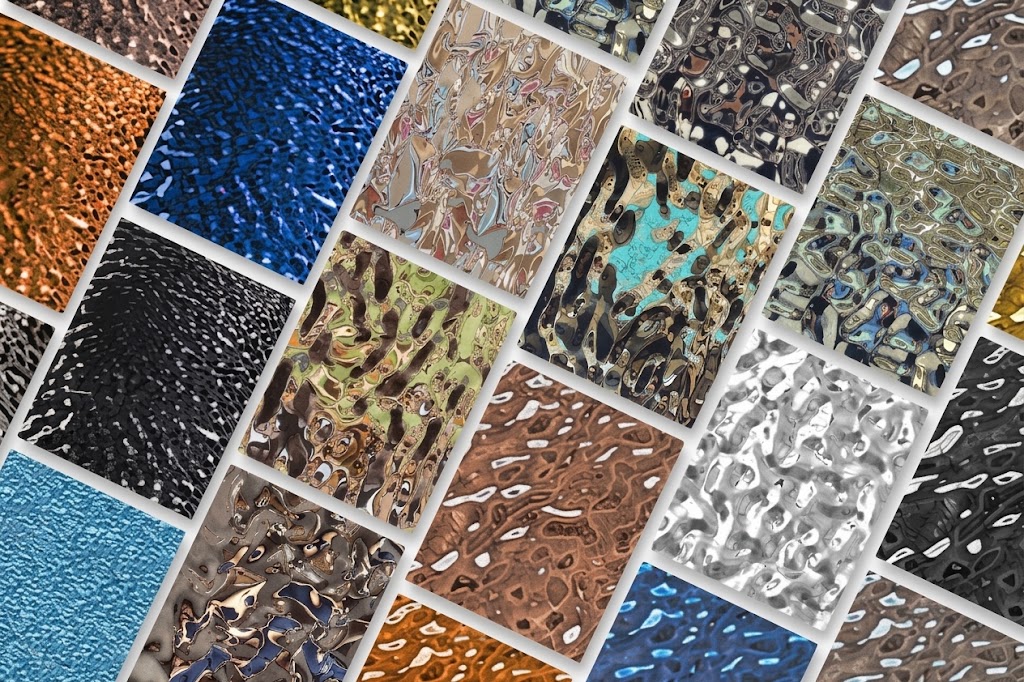
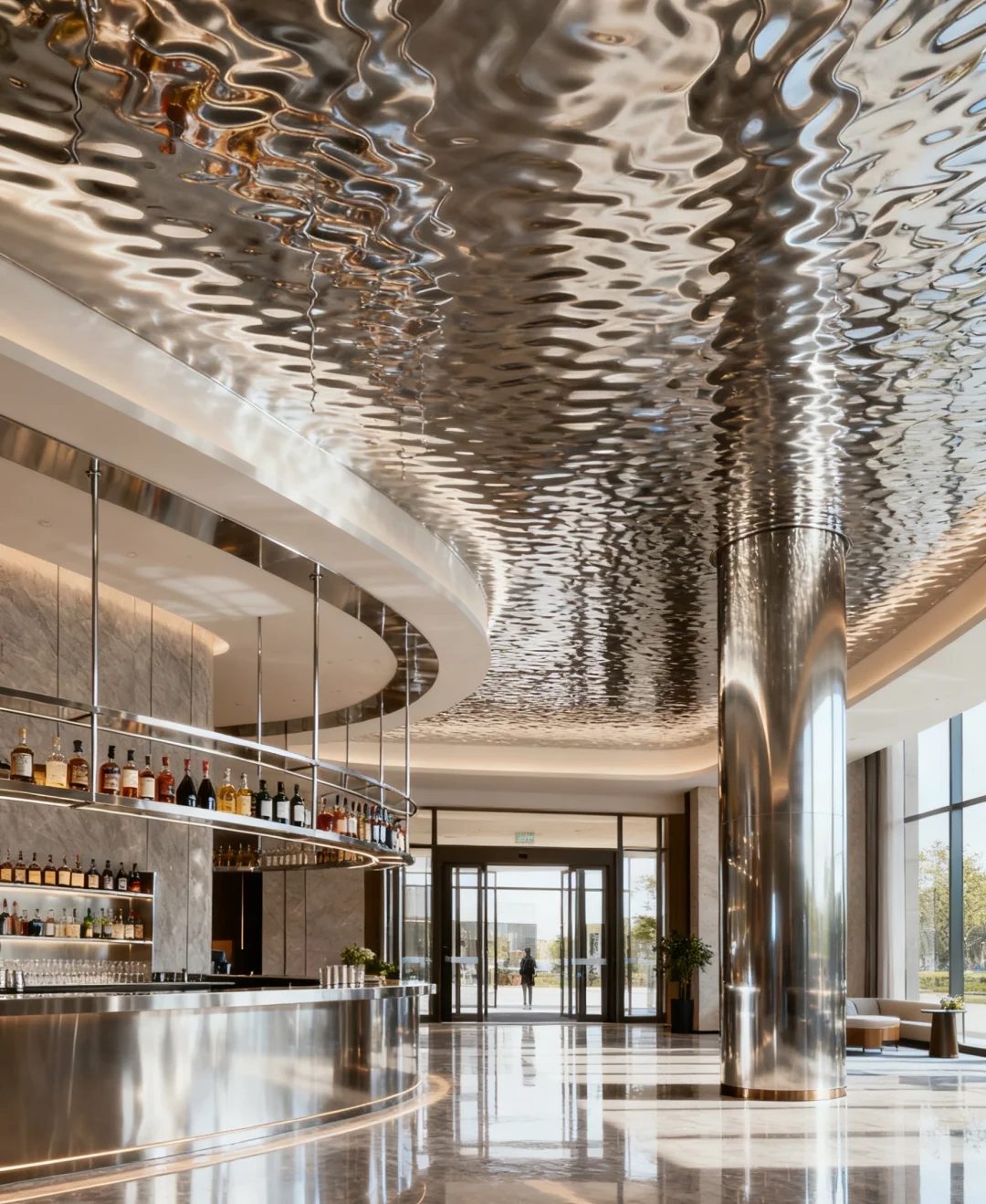
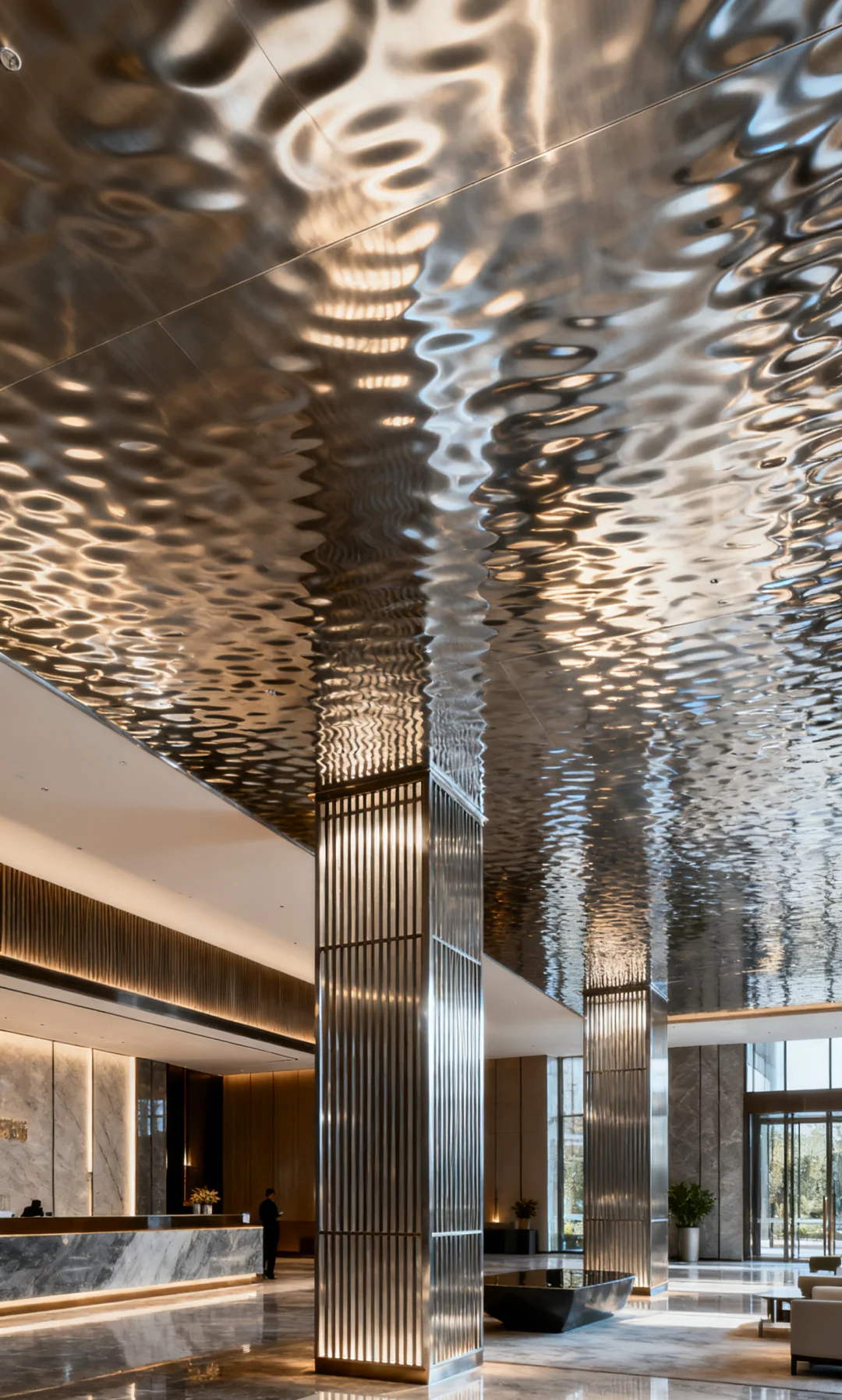
Water ripple stainless steel is a mechanically pressed ripple finish — the same family of cold-forming processes as hammered and embossed stainless steel, but rolled through a wave-patterned die instead of a random or geometric one. The result is a directional, flowing texture that scatters and reflects light along the direction of the wave rather than at random points, which is what gives a water ripple stainless steel sheet its moving-water appearance.
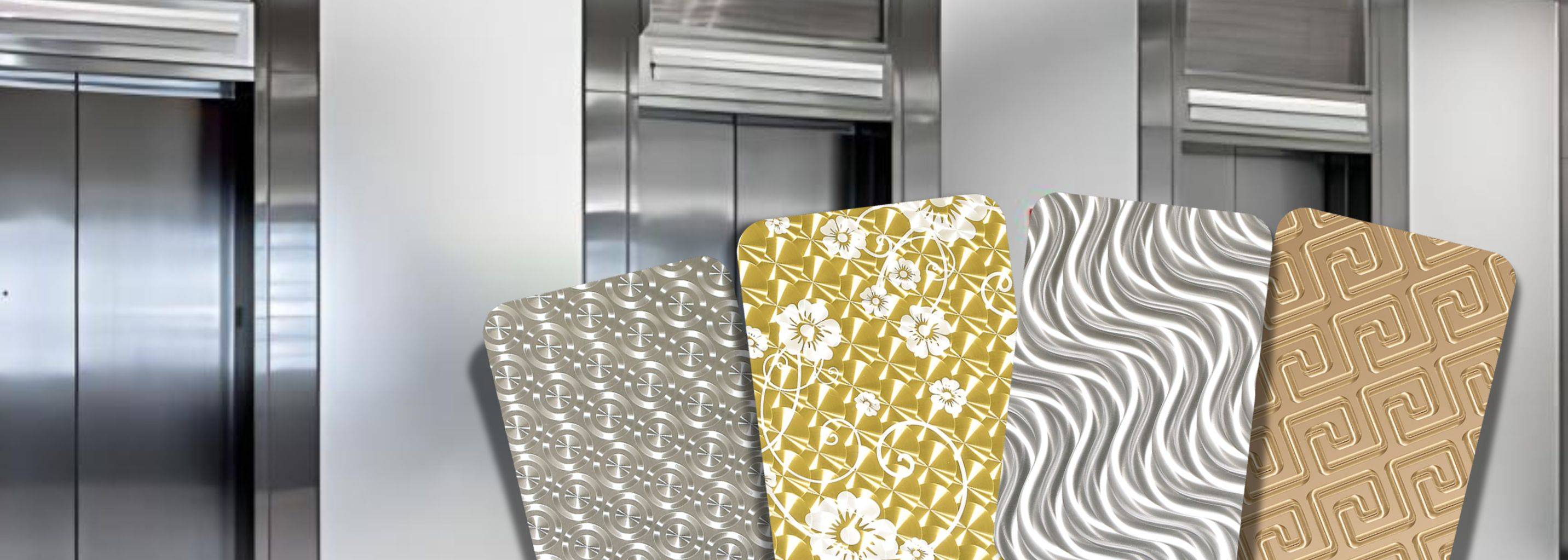
Three Pattern Families
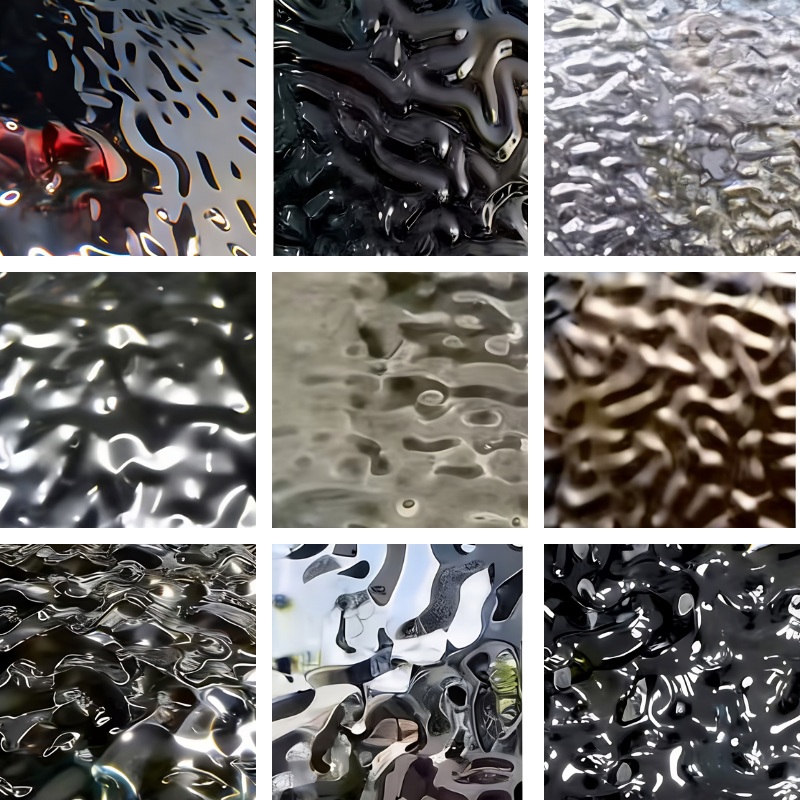
Water ripple isn't a single look — it's three distinct pattern families, each with a different forming process and best-fit application.
Random / Natural Ripple
Irregular, organic, no-repeat texture that mimics real water disturbed by wind or gentle movement — the closest of the three to an actual "moving water" impression. Reflection is soft and diffused across the whole surface rather than focused at a single point.
This family covers two depth grades — Shallow and Deep (more on the depth comparison below) — and is best suited to large feature walls, ceilings, and façades.
Water Drop Ripple
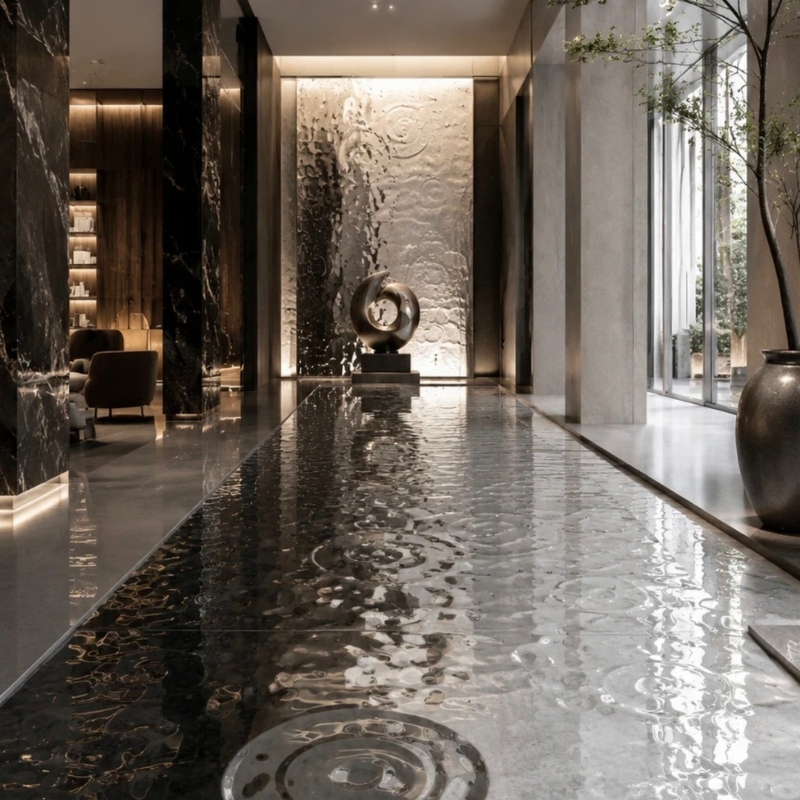
Concentric rings that mimic raindrops hitting still water — a strong focal-point pattern well suited to reception backdrops, art installations, or any single panel meant to draw the eye. It also works well for outdoor flooring, where it reads as a relaxed, rain-on-water atmosphere.
Water Drop ripple is stamp-formed, and the panel surface is actually flat — the 3D appearance comes from how the reflective processing catches light, not from physical depth.
Wave Ripple
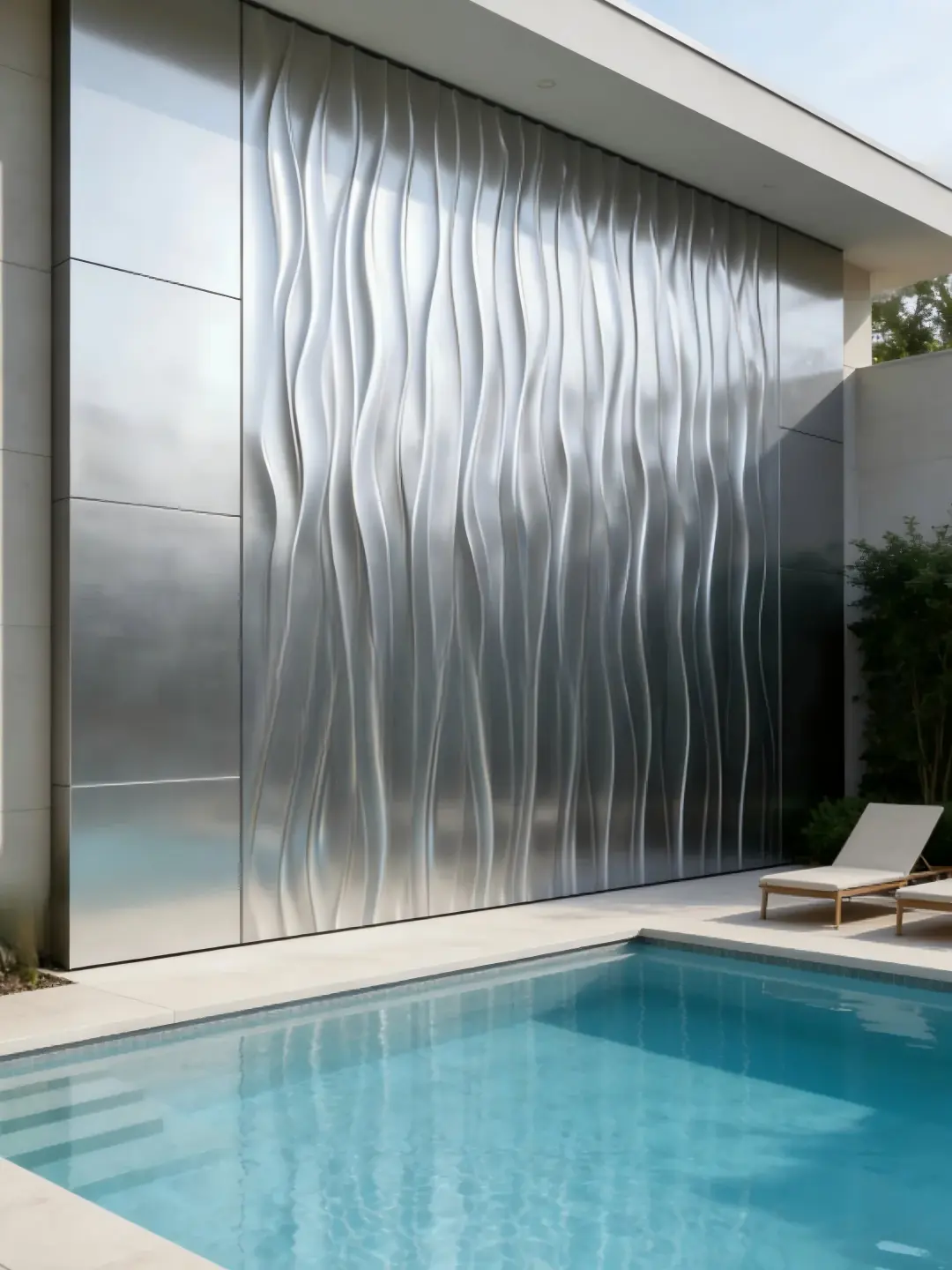
Regular, continuous, directional wave lines with light flowing along the wave rather than scattering randomly — the most directional of the three patterns. Wave Ripple is typically formed with 3D laser engraving combined with stamping, giving it genuine physical relief rather than a purely optical effect. It suits column wraps, partitions, and linear or vertical surfaces.
Unless otherwise noted, the rest of this guide focuses on Random / Natural Ripple — the pattern most commonly meant by the search term "water ripple stainless steel sheet."
Surface Finish Before Texturing
Because the ripple effect depends on how light reflects off the surface, most water ripple stainless steel sheets are polished to a mirror finish first: polish to mirror → apply color coating if needed → apply protective film → press the ripple pattern in last.
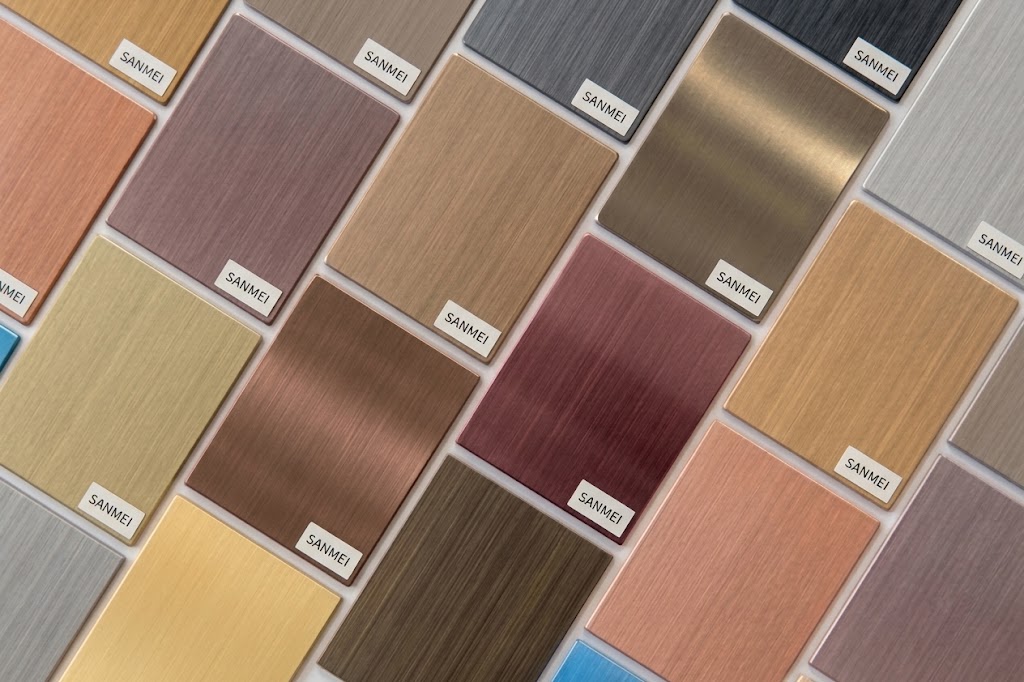
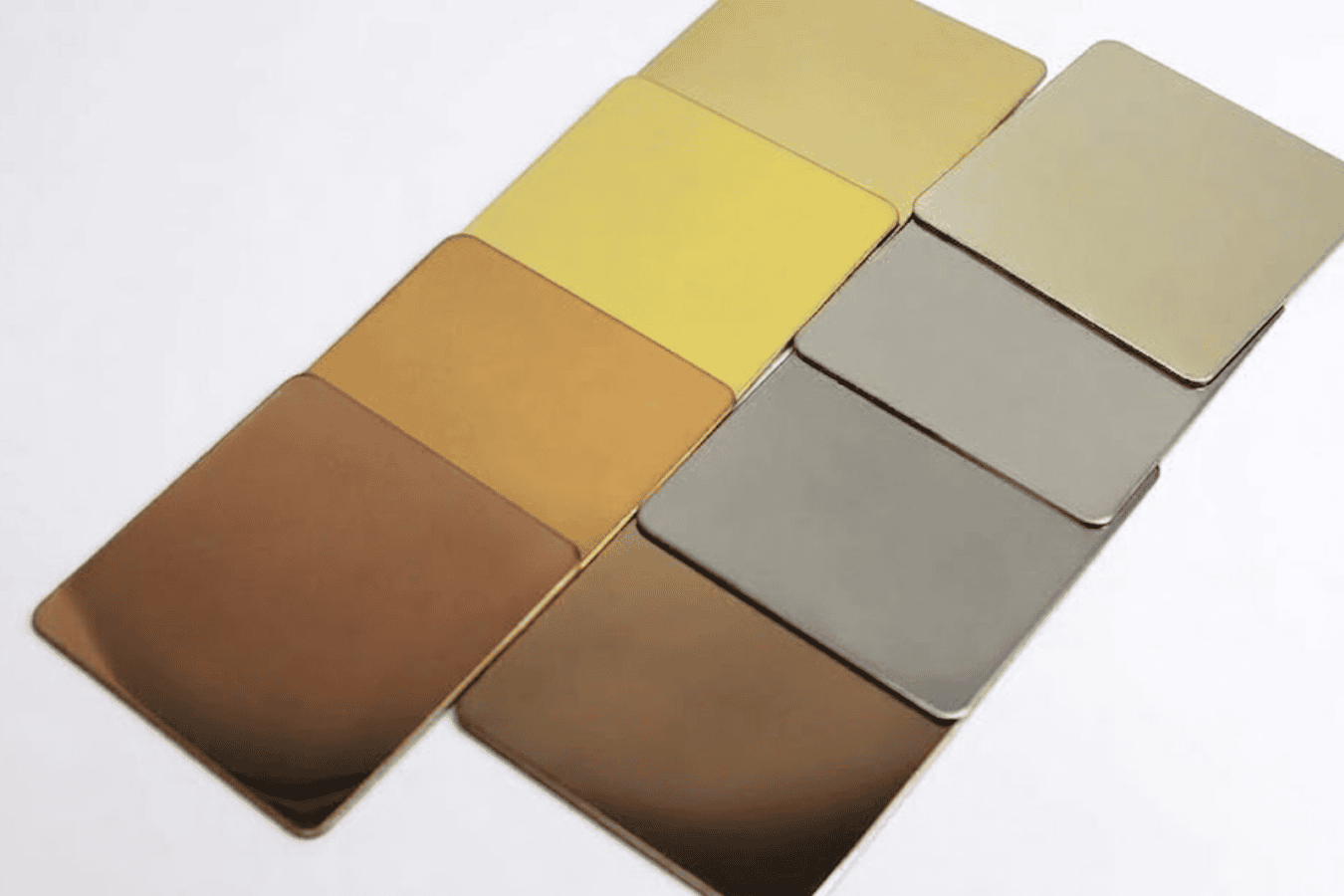
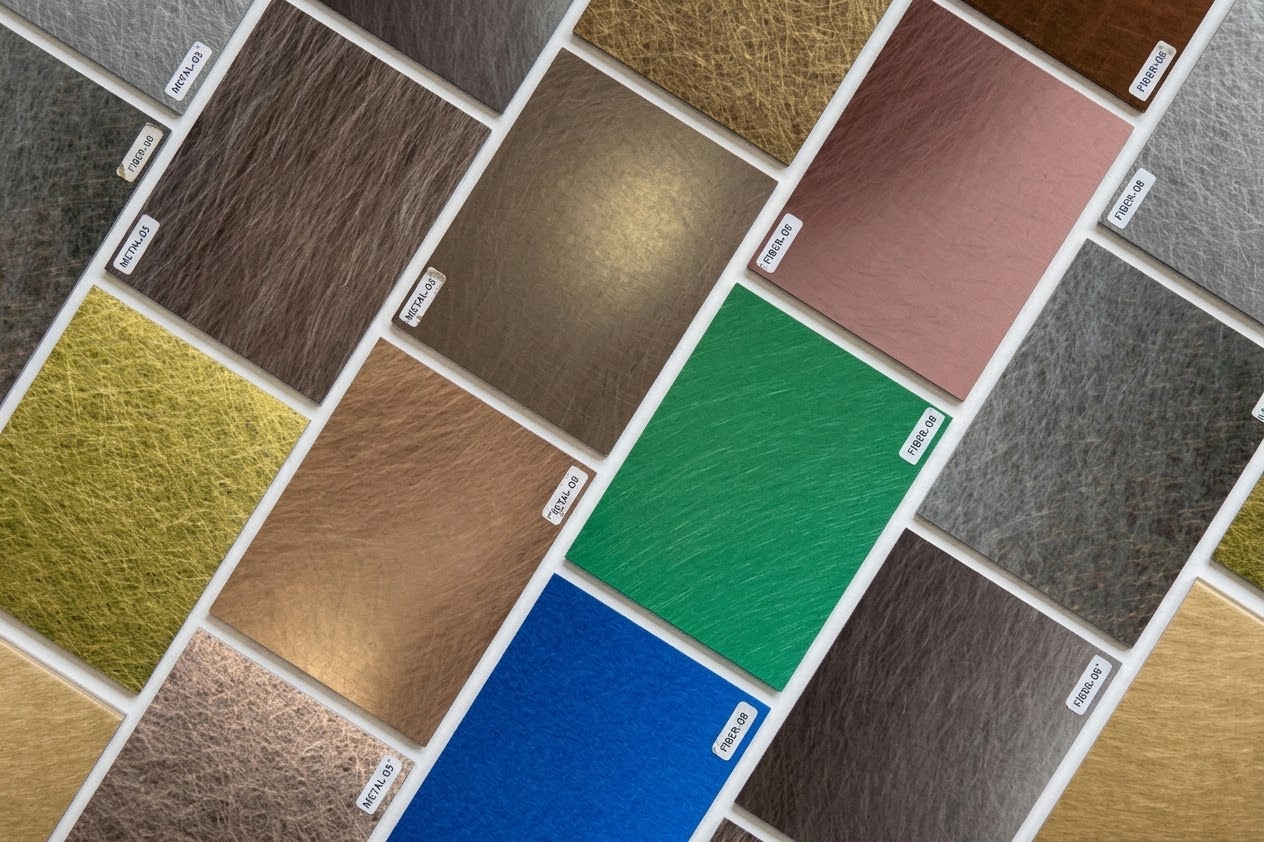
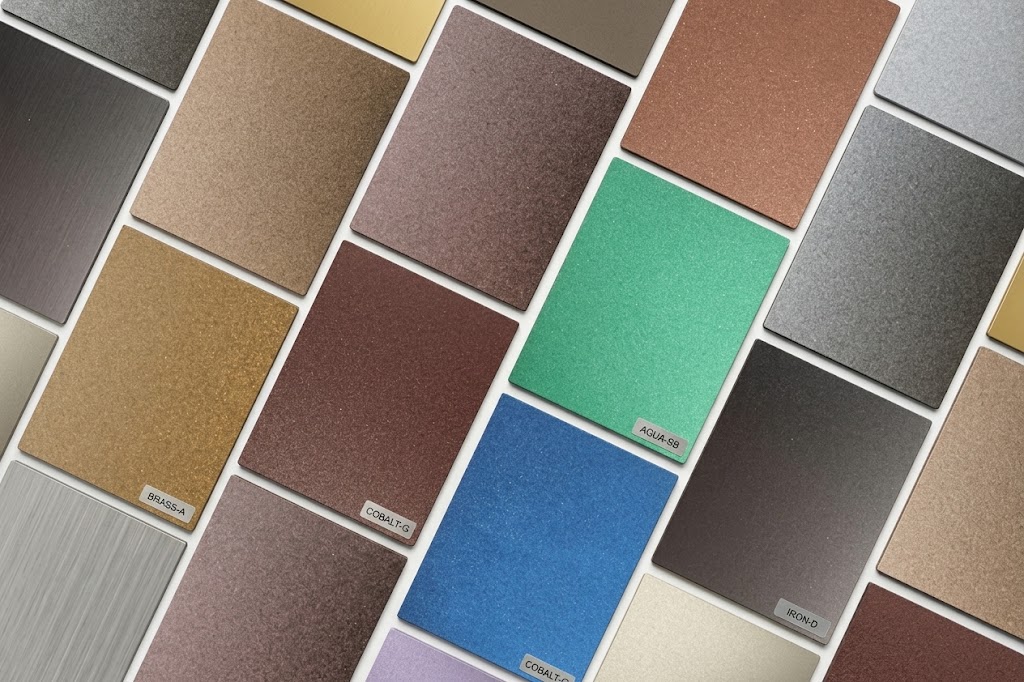
For color, Sanmei offers water ripple panels in PVD gold, black, rose gold, champagne, bronze, and blue, built on a 2B (satin), BA (bright, mirror-like — the base that gives the strongest ripple reflection), or hairline/No.4 finish. Gold and black PVD water ripple are the two most requested looks for lobby and feature-wall projects — the moving light reads most clearly against a colored, high-reflection surface.
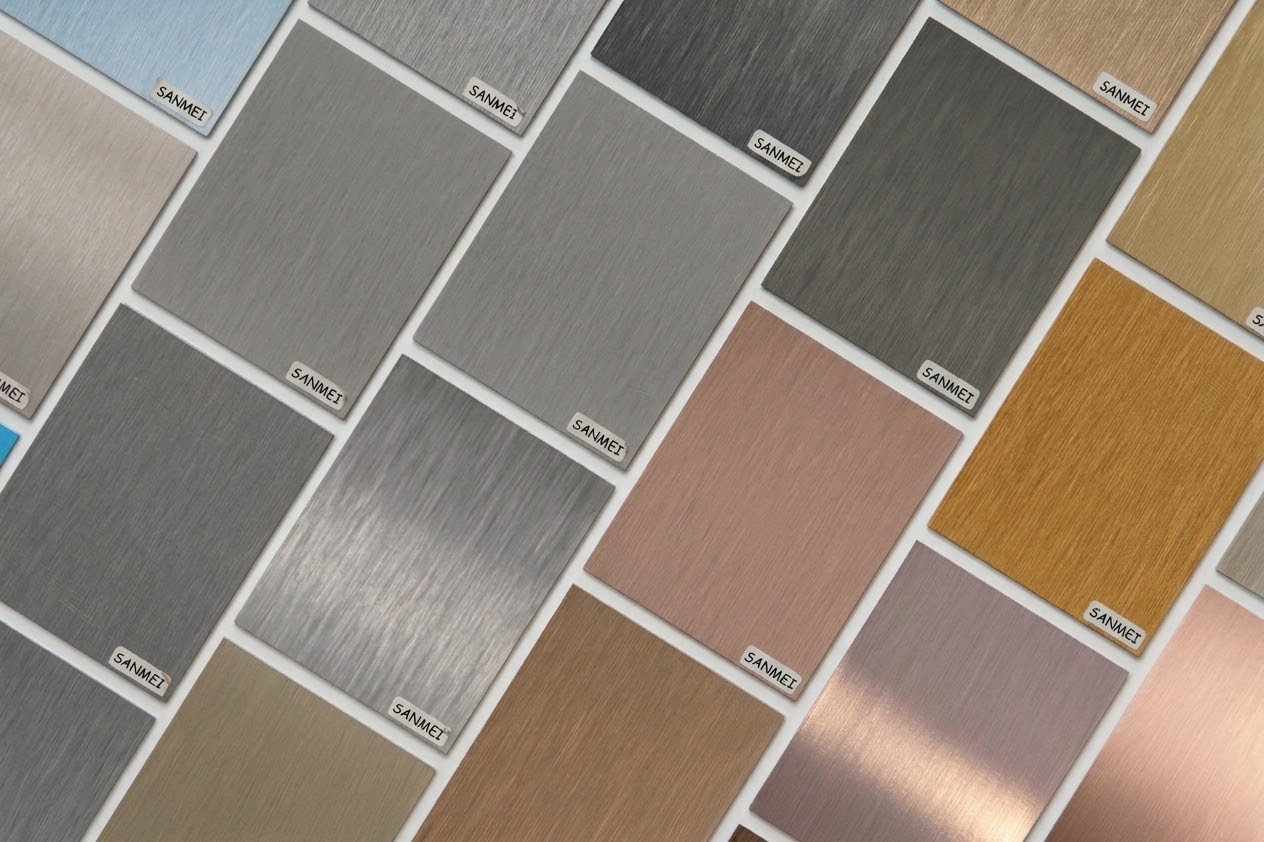
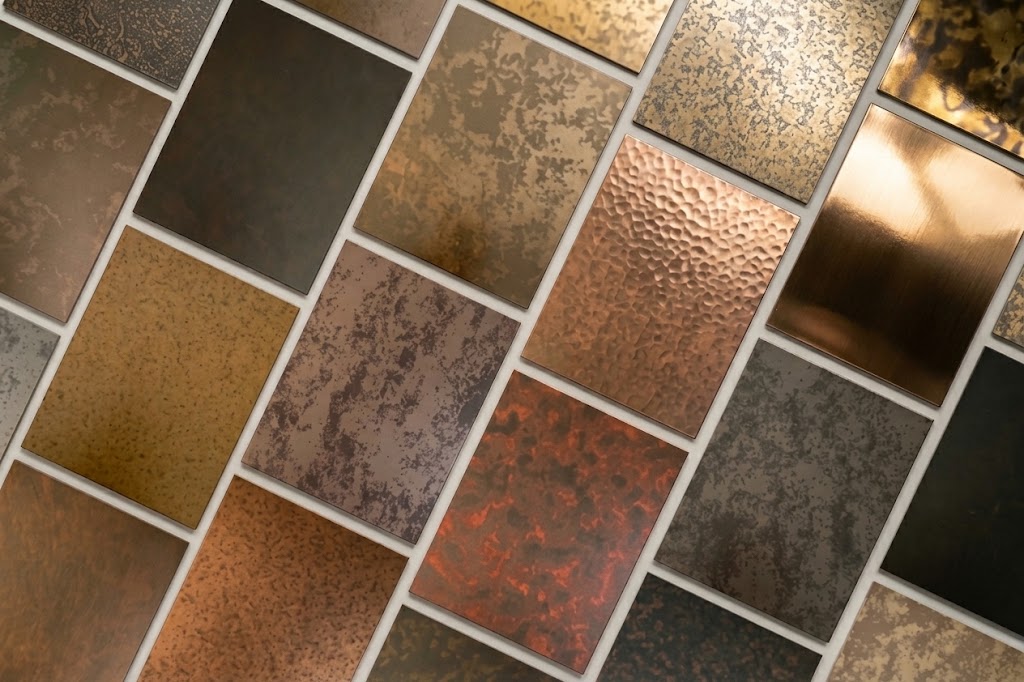
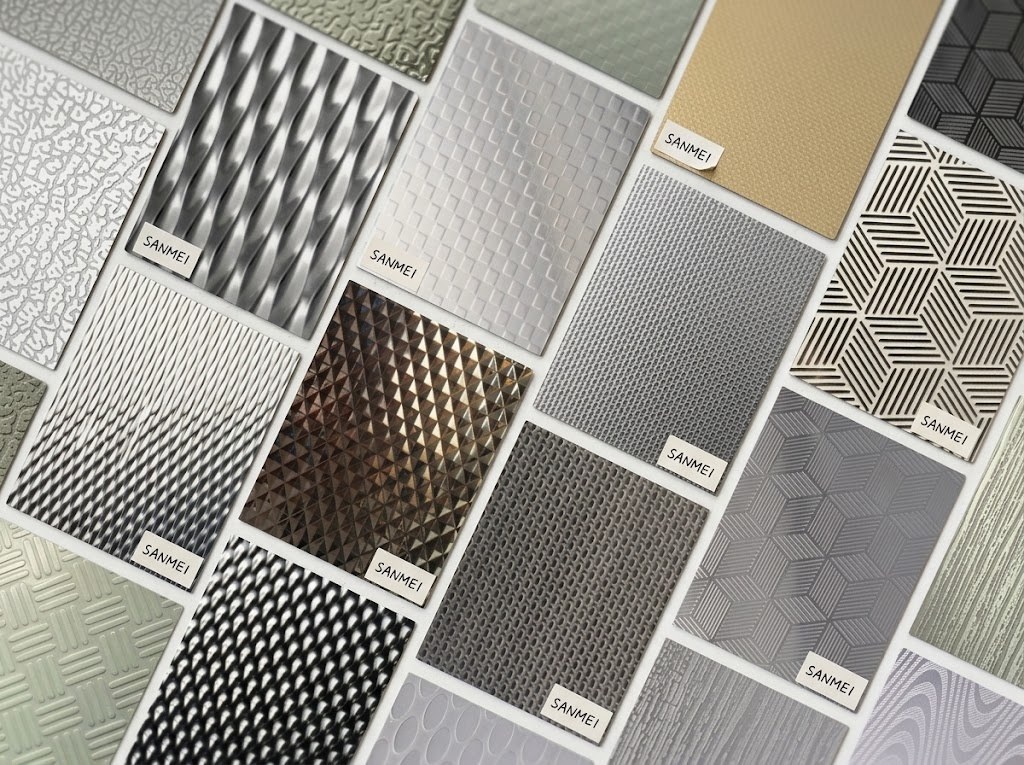
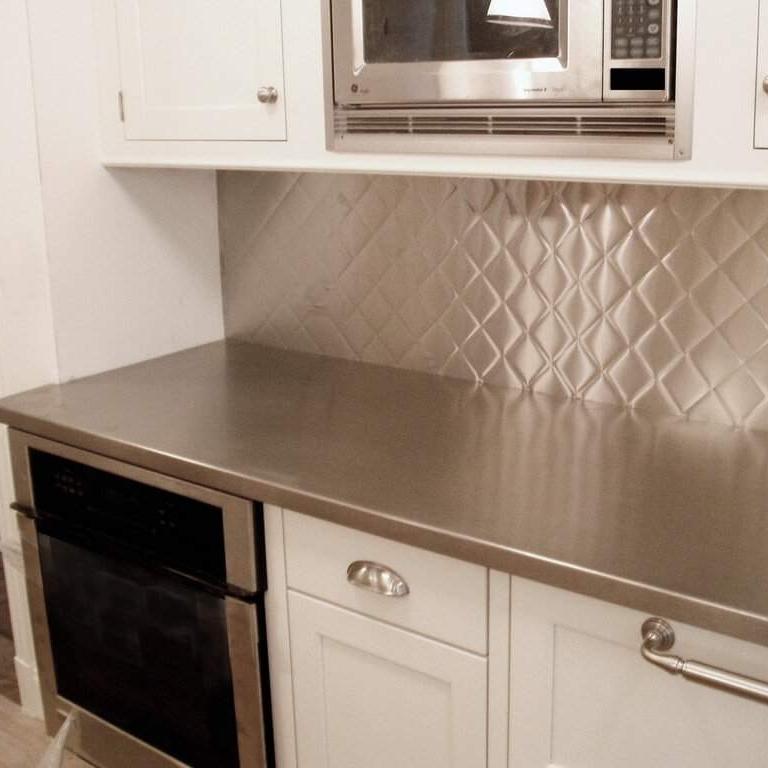
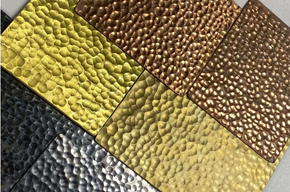
For a more understated, matte-textured look, the base finish can be swapped for bead-blasting, hairline, No.4, or a random-grain finish, then pressed the same way. Hammered and quilted diamond finishes can achieve a similar matte or faceted, textured effect as an alternative to water ripple altogether.
Ripple Depth & Reflection: Shallow, Medium, Deep
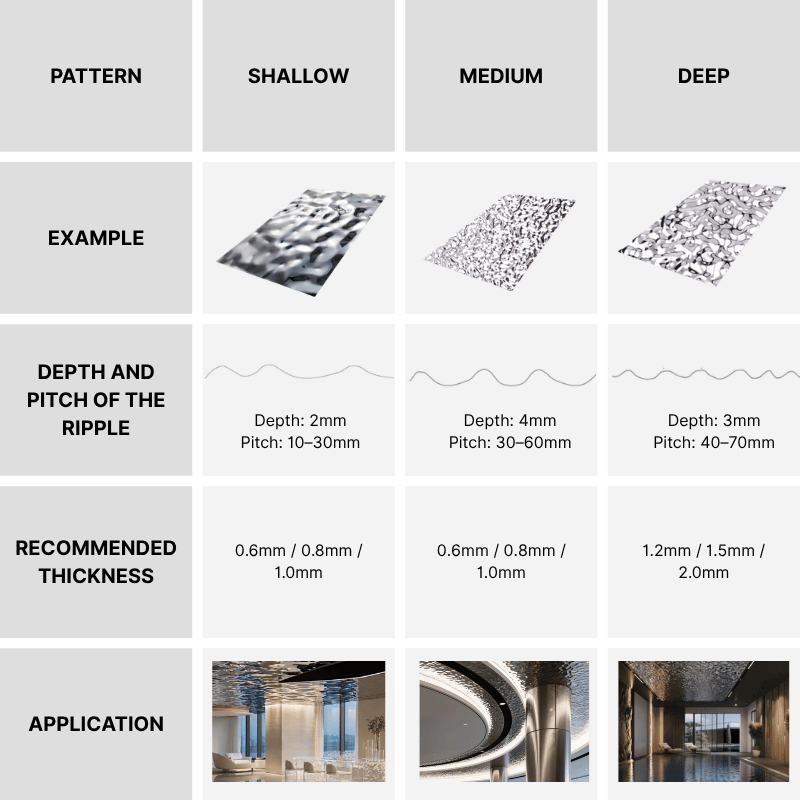
The visual impact of a water ripple stainless steel sheet texture depends as much on ripple depth and pitch (wave spacing) as it does on the pattern itself. Sanmei classifies Random/Natural Ripple into three visual grades — Shallow, Medium, and Deep (also referred to by production spec as Small, Medium, and Big water wave):
| Visual Grade | Spec Name | Depth | Pitch | Recommended Thickness |
|---|---|---|---|---|
| Shallow | Small water wave | 2mm | 10–30mm | 0.6mm / 0.8mm / 1.0mm |
| Medium | Medium water wave | 4mm | 30–60mm | 0.6mm / 0.8mm / 1.0mm |
| Deep | Big water wave | 3mm | 40–70mm | 1.2mm / 1.5mm / 2.0mm |
Worth noting: Deep's measured depth (3mm) isn't actually the largest of the three — Medium measures deeper at 4mm. The visual classification is driven by pitch, not raw depth. A wider pitch means a longer span between peak and trough, which the eye reads as a smoother, more pronounced 3D curve at normal viewing distance. A narrower pitch — even with a deeper individual measurement — packs the peaks and troughs too close together for the eye to resolve real elevation change, so it reads instead as a dense, fine texture rather than "depth."
Difference in Perception Drives Where Each Grade Performs Best
- Shallow — the tightest pitch. Surface orientation changes sharply over a short distance, scattering light densely enough to read well under ordinary diffused indoor lighting, without depending on a specific light angle. Well suited to surfaces viewed and touched up close: elevator interiors, reception counters, handrail areas.
- Deep — the widest pitch. Needs directional light — low-angle daylight or angled accent lighting — to read clearly; under flat overhead lighting it can look comparatively muted. Better suited to large-scale façades and feature walls viewed from a distance, where the thicker gauge also supports wider panel spans.
- Medium — sits between the two and is the safest general-purpose choice for standard interior walls and ceilings.
Installation orientation relative to the light source also matters: when the ripple's ridge line runs perpendicular to the dominant light direction, contrast is strongest; when it runs parallel, the surface reads smoother and more even.
On thickness: standard water ripple sheet thickness generally falls between 0.5mm and 2.0mm. The right thickness depends on the ripple grade above, plus load-bearing requirements and other on-site factors such as span and fixing method — thicker isn't automatically better. Sheets thinner than 0.5mm are too fragile to handle and process reliably; sheets thicker than 2.0mm become difficult to process and impractical for most decorative applications.
Want to Know More about Water Ripple Sheets?
Explore MoreHow to Pair Your Water Ripple Panel
Lighting Setup
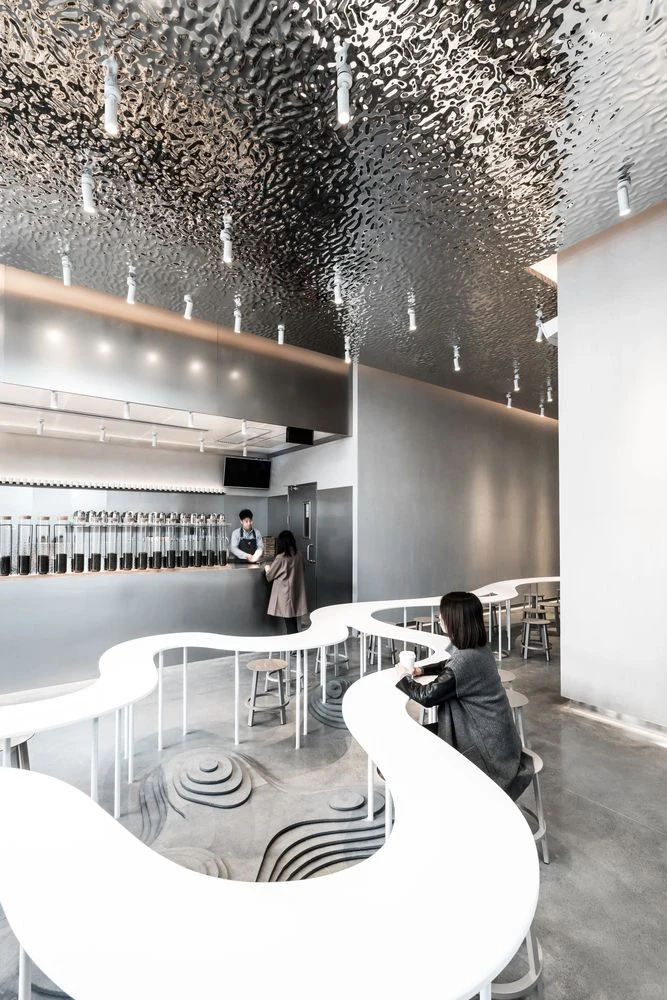
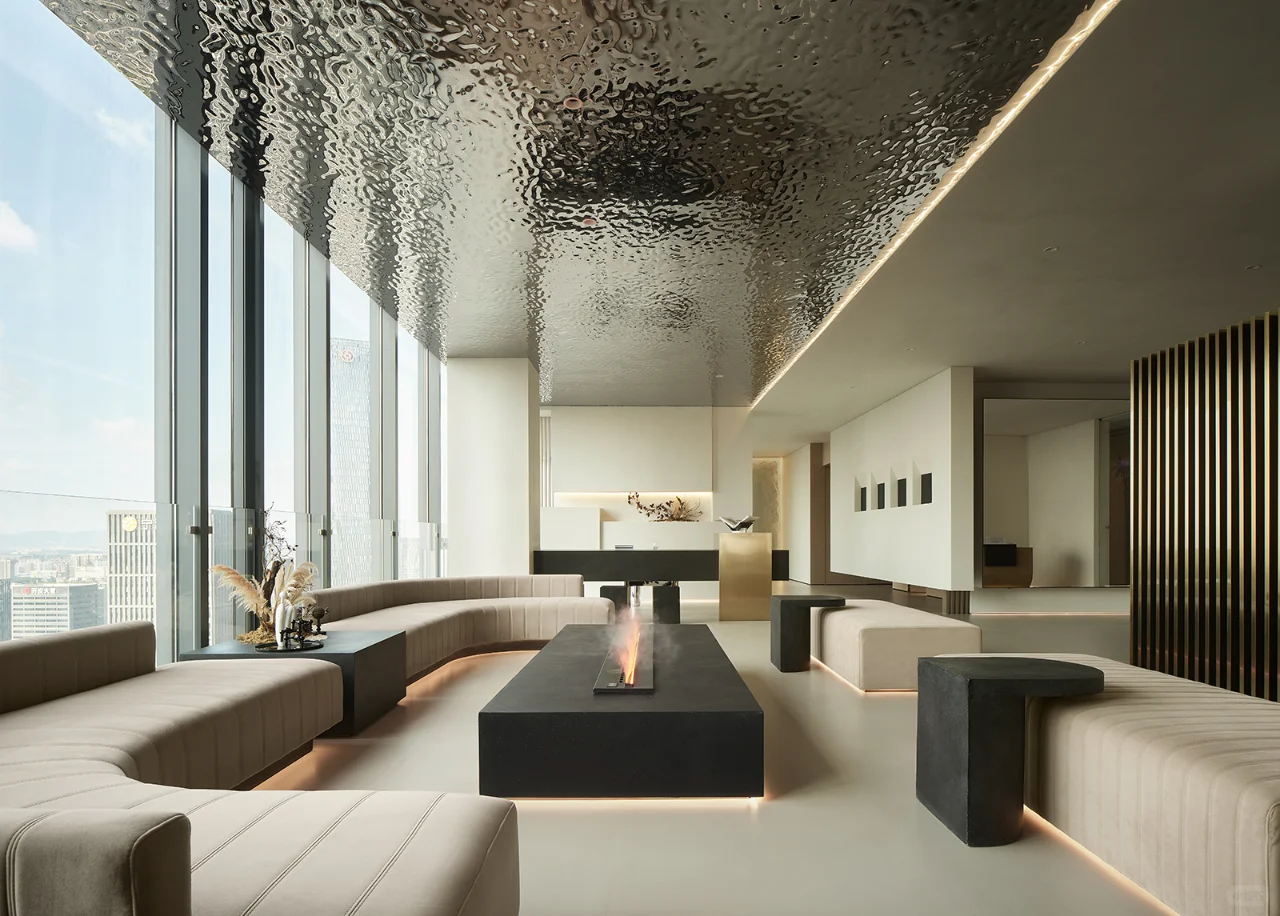
The underlying rule: let light diffuse or reflect once before it reaches the panel, rather than hitting it directly from a point source.
- Avoid direct spotlighting — a highly reflective ripple surface lit directly by a point source at close range can produce sharp glare at certain viewing angles.
- Avoid recessed ceiling fixtures cut directly into the panel — a fixture mounted close overhead and aimed straight down creates a steep angle of incidence, producing localized overexposed hotspots rather than even diffuse reflection, and the cutout itself breaks the continuity of the ripple pattern.
- Recommended approaches:
- Surface-mounted fixtures — light reflects softly across the panel and fills the space rather than creating a hotspot
- Seam-integrated LED strips — light hidden in the panel joints keeps the ceiling surface uninterrupted while still illuminating walls and floor
- Diffused decorative fixtures — light is refracted through the fixture itself before it reaches the panel
Color & Finish Coordination
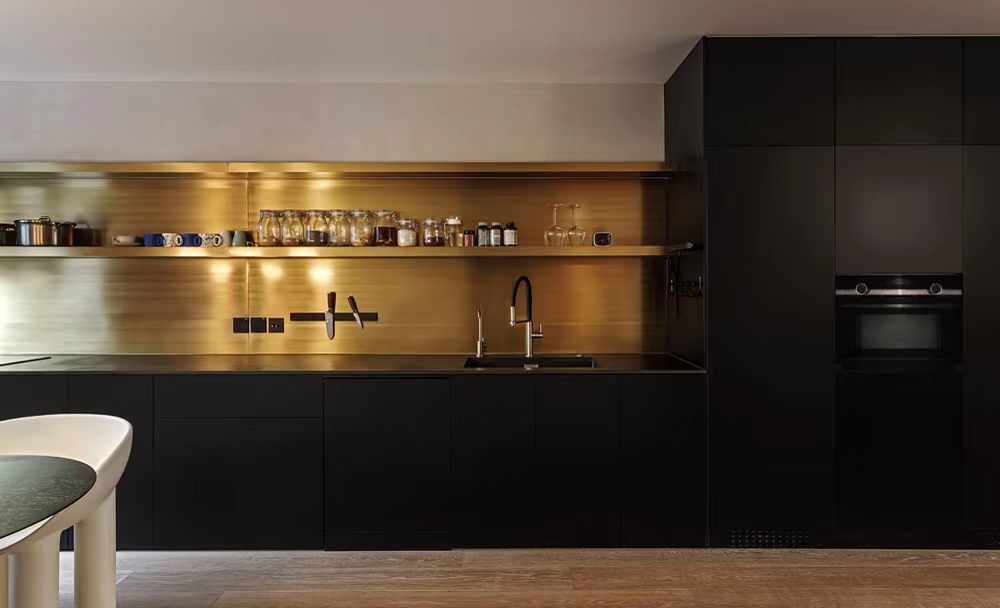
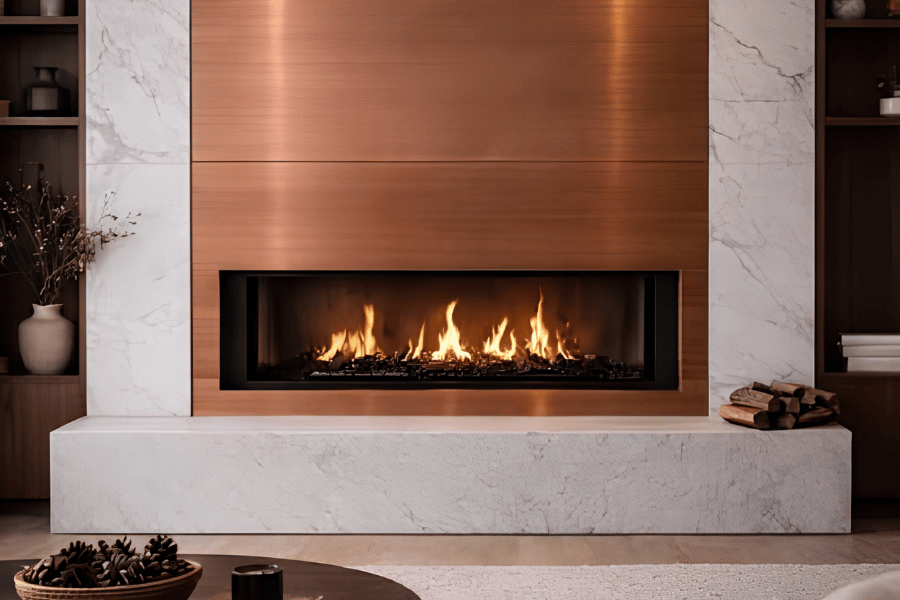
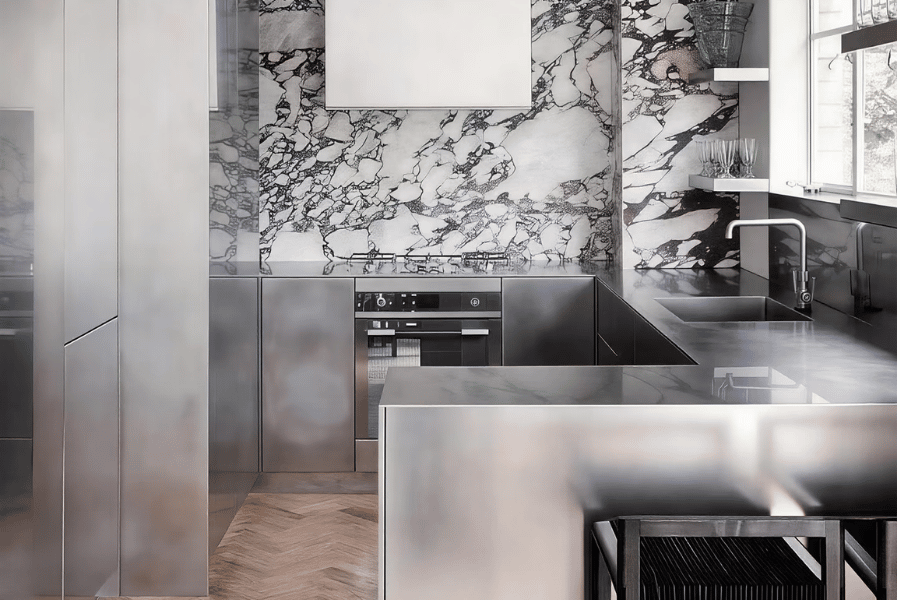
Pair single-tone or mirror-finish water ripple panels with neutral tones — soft grey, black, or white — to keep the space modern and uncluttered. Metallic tones pair well with wood, glass, or stone. For a more restrained stainless steel look, a bead-blasted or hairline matte finish elsewhere in the space can balance out the visual intensity of the ripple panel.
Grade Selection
Grade selection for water ripple stainless steel comes down to two practical factors: how corrosive the environment is, and whether the panels will be welded on site.
- 304 — the standard choice for most interior applications and non-high-chloride outdoor use.
- 304L — the same corrosion resistance as 304, but its lower carbon content resists carbide precipitation at weld seams. The deciding factor is field welding, not climate: for example, wrapping a large column or curved surface where the ripple pattern needs to run continuous with no exposed fasteners, and the seams are welded and re-finished on site — that's where 304L earns its place over standard 304.
- 316 / 316L — for high-chloride environments: beachfront bars and restaurants, coastal stages, outdoor event structures, or any installation that needs 10+ years of service life without recoating or panel replacement. The added molybdenum resists the pitting corrosion that 304 can't hold up against long-term in salt air.
Multi-Color / PVD Water Ripple
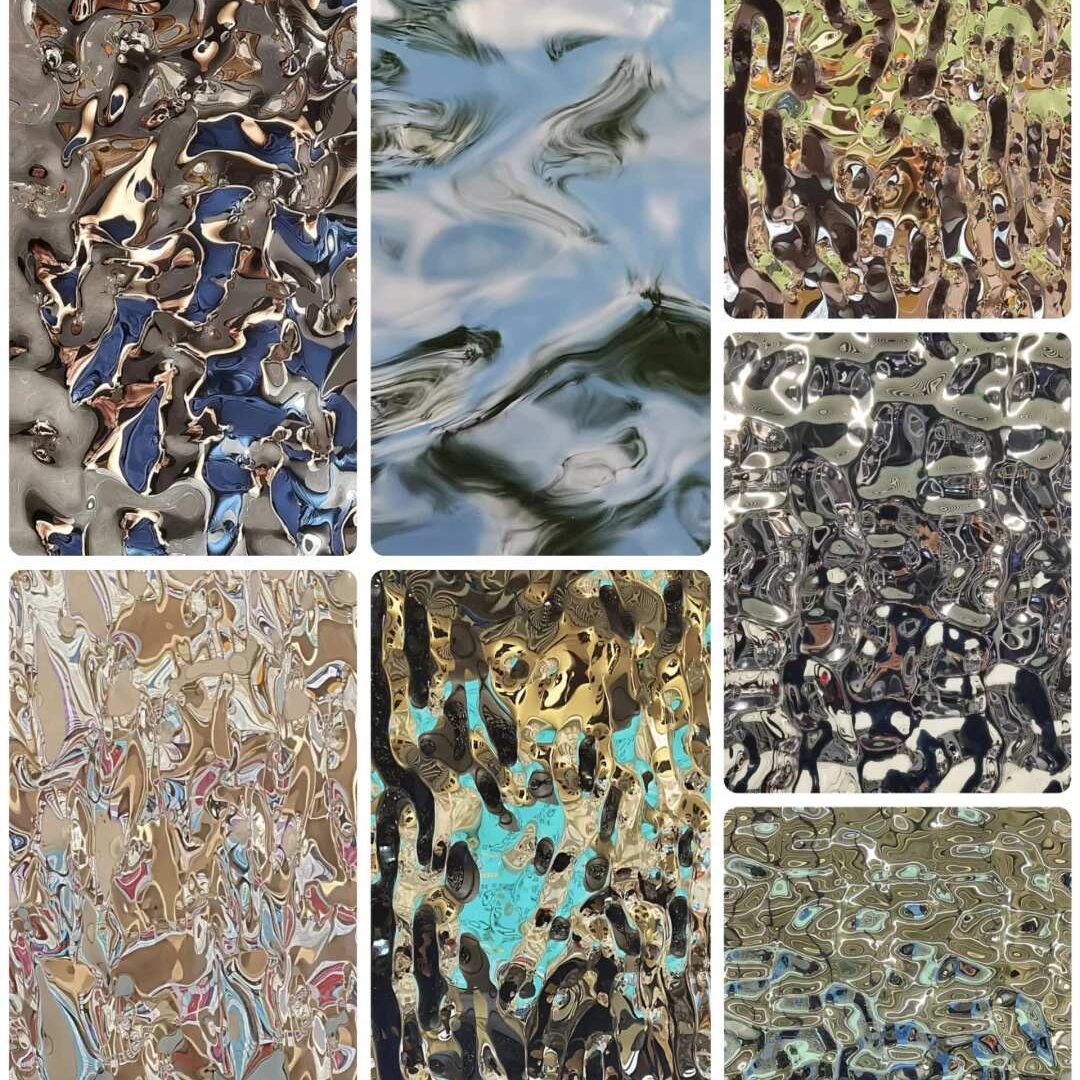
Standard silver or single-tone water ripple stainless steel sheets don't always meet the visual demands of high-impact commercial spaces — bars, nightclubs, and art installations often call for multi-color ripple panels instead.
Multi-color panels are finished in a different sequence than standard sheets: the surface is first polished to an 8K mirror finish, then color is applied through multiple individual layers of PVD (physical vapor deposition) coating, then a protective film is applied, and only after that is the ripple pattern pressed in with the forming roller. Coloring before texturing — rather than after — is what lets the color layer sit evenly across both the raised and recessed surface once the ripple is formed.
A Material Suited to Green Building Requirements
Water ripple stainless steel is a practical fit for commercial buildings, especially projects with sustainability requirements, for two reasons:
- The material itself is non-hazardous. Stainless steel qualifies as a non-hazardous material, and Sanmei can supply an SDS (Safety Data Sheet) and EPD (Environmental Product Declaration) for projects pursuing green building certification.
- Reflectivity supports energy efficiency. The high reflectivity of a water ripple finish helps distribute ambient light more evenly across a space, which can reduce reliance on additional light fixtures and lower energy use — a meaningful advantage for projects with sustainability or energy targets.
- Stainless steel is also inherently non-combustible, a baseline material property rather than a certified rating.
Applications & Fabrication
Unlike standard decorative panel suppliers, Sanmei fabricates water ripple stainless steel sheets to project dimensions — including elevator cabin panels, architectural screens, and column cladding — so the material and the finished component ship as one order instead of two.
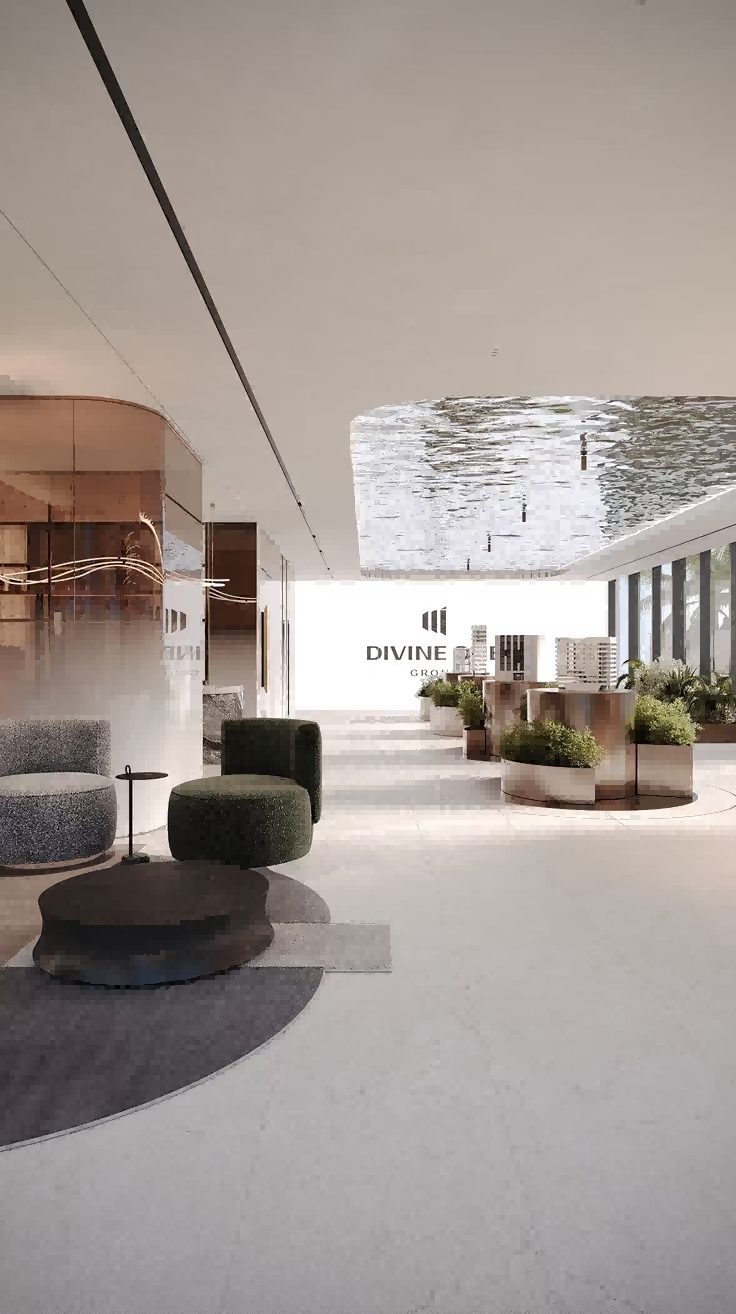
Elevator interiors / reception backgrounds (close viewing distance, typically mixed artificial lighting) → Shallow or Medium (Small/Medium water wave), orientation determined by the on-site light layout
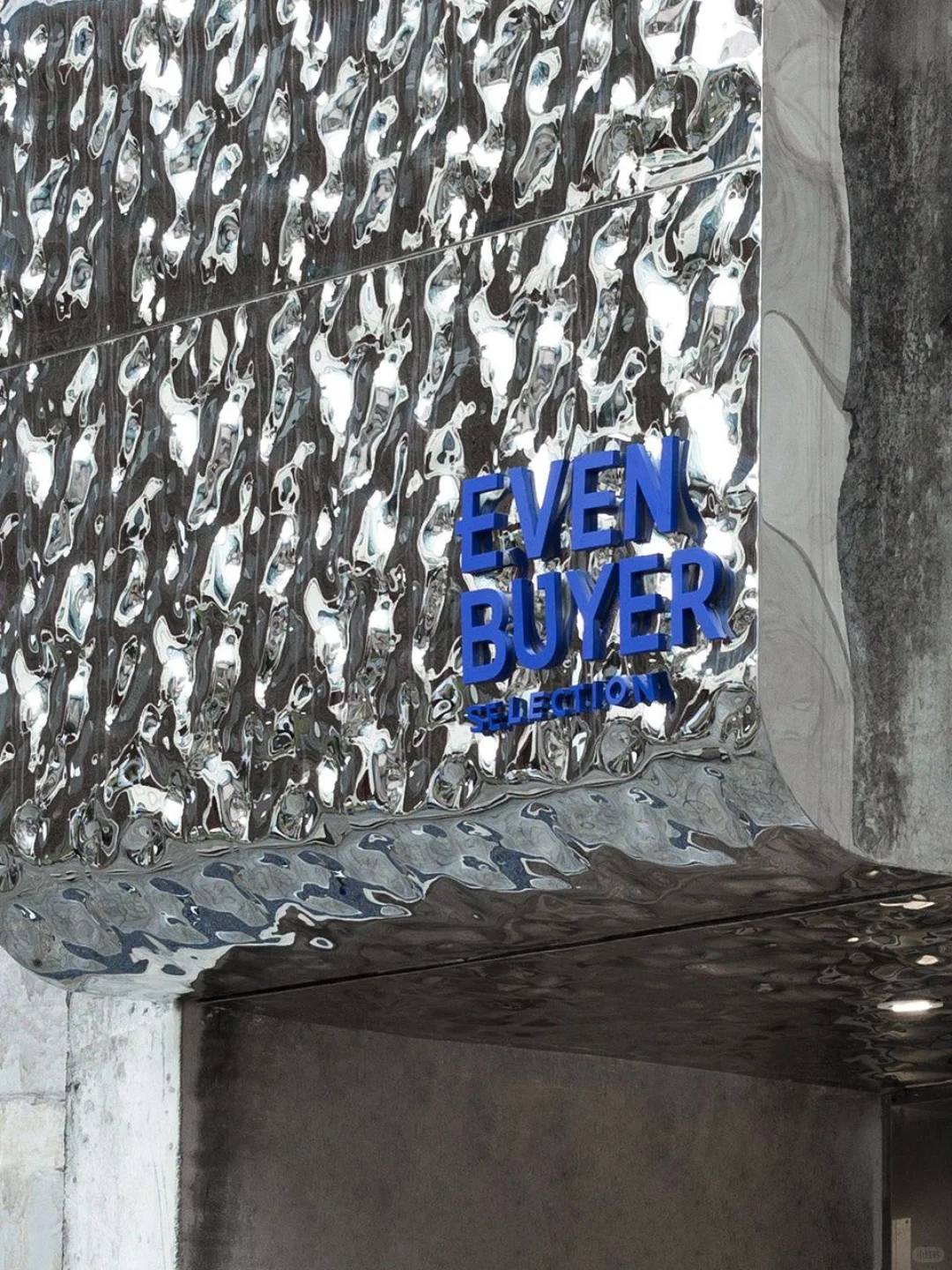
Large façades / feature walls (viewed from a distance, relies on natural light) → Deep (Big water wave), installed vertically to catch low-angle daylight where possible
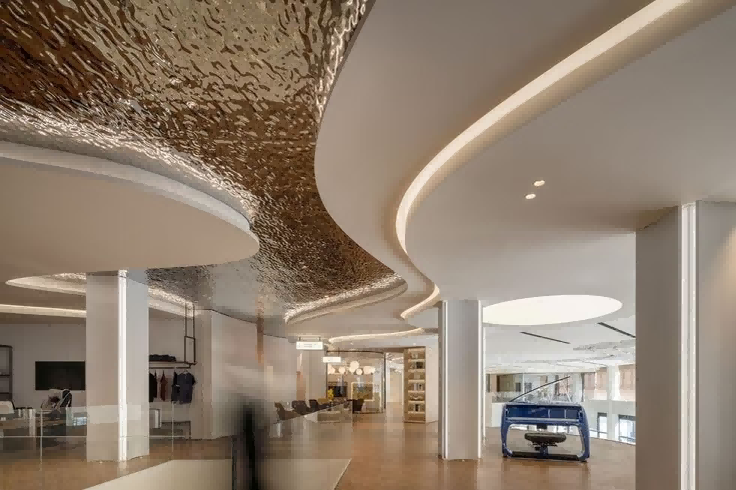
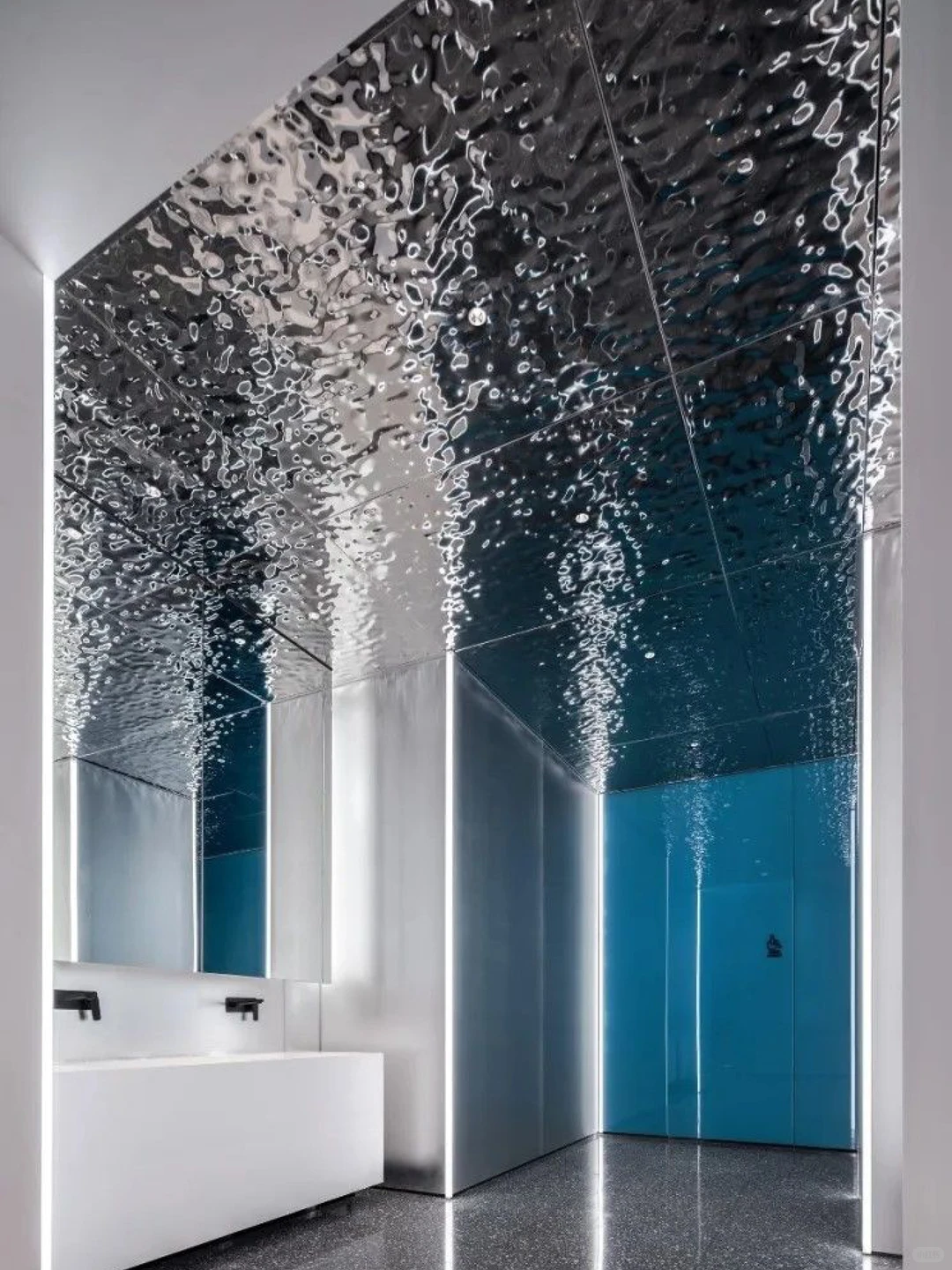
Water ripple stainless steel ceiling applications (dominated by overhead diffused light) → horizontal installation; this is also where the water ripple effect stainless steel ceiling look tends to read most evenly, since diffused overhead light suits Medium-grade ripple better than a Deep pattern that depends on directional light.
Know more about ceiling panel details →
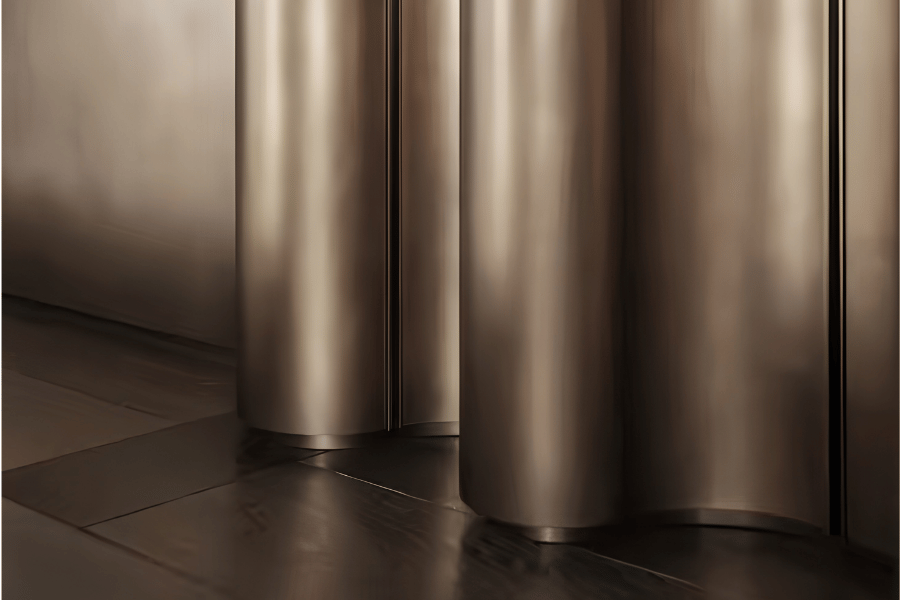
Column wraps / partition screens → Wave Ripple, paired with the 3D laser + stamping process for genuine light-shadow refraction
Outdoor flooring / leisure-oriented spaces → Water Drop Ripple
A stainless steel water ripple panel used this way — sourced, fabricated, and delivered to project dimensions from one supplier — removes the coordination gap that comes from sourcing raw sheet and fabrication from two separate vendors.
Tell US What is Your Ideas?
Share the basics and get a clear answer.Installation Overview
- Fabricate water ripple panels with folded edges matched exactly to the base board size
- Apply structural adhesive to the back of the panel in a dot-and-line pattern
- Press the panel onto the base board; for ceiling installation, support with wood battens for approximately 24 hours until the adhesive cures, then remove the battens and peel the protective film
- Fabricate panels with folded edges and pre-fitted corner brackets, sized to the base board
- Fold the corner bracket into the back of the adjoining panel to connect adjacent sheets
- Fix the connected panels to the base board with self-tapping screws — this method allows the installation to be removable for maintenance, unlike adhesive bonding
A different product form from the two methods above — not a raw sheet installed on site, but a factory-assembled composite: water ripple stainless steel sheet + adhesive layer + aluminum honeycomb core + galvanized steel backing plate, bonded into a single rigid unit at the factory. On site, the composite panel mounts onto a structural framing/track system. This suits large façades and curtain walls where panel rigidity matters more than it does for standard wall or ceiling work.
Adhesive is applied to the panel back, then the panel is nailed directly to the wall — the simplest, lowest-cost method, suitable only for thinner-gauge panels. Additional edge screws can be added for extra holding strength where needed.
Seam Treatment
Manufacturers generally recommend folded edges over tight-butt seams. Without folding, the gap between the panel back and the substrate is larger, which reduces the adhesive's bonding surface and holding strength. A folded edge lets the panel sit flush against the substrate, so the structural adhesive bonds evenly and securely.
Recommended approach:
- Fabricate panels with folded edges sized to the base board, keeping the seam gap under 1mm
- Apply structural adhesive evenly to the panel back, with extra coverage near the edges
- The folded edge also conceals the raw ripple cross-section along the panel side, giving a cleaner finished edge
- Where extra mechanical fixing is needed, screw heads can be concealed with a rust-inhibiting primer followed by a mirror-finish touch-up coat — largely invisible at normal ceiling viewing distance
General Precautions
Before ordering: because the ripple pattern is mechanically formed, natural variation in depth and reflection exists panel to panel, and large installations need a consistent ripple direction and seam layout across the full run. It's worth confirming the specific ripple pattern with Sanmei before ordering and having the panel layout mapped to actual site dimensions to keep the finished installation visually consistent.
During installation:
- Keep the protective film on until installation is fully complete
- Wear gloves throughout handling and installation
- Plan the panel layout before installation to keep ripple direction consistent
- Keep seam gaps within 1mm for a clean finished look
- For inside/outside corners, window and door edges, and transitions to cabinetry or stone, factory-folded edges or matching edge trim avoid the rough look — and safety risk — of on-site cutting and welding
- Minor scratches can be touched up with color-matched repair wax
- Clean the site promptly after installation to preserve the metallic finish
Ongoing care:
- Wipe with a soft cloth and mild, non-abrasive cleaner, following the direction of the ripple texture for a more even result
- Avoid steel wool or abrasive scouring pads — they scratch the surface and can embed particles that lead to rust
- Avoid chlorine-based bleach or strong acid/alkaline cleaners, which corrode the surface
FAQ
304 is sufficient for most outdoor settings without direct salt exposure. For coastal or high-chloride environments, 316/316L offers better long-term corrosion resistance.
The sheet is passed through a textured forming roller or stamping die under controlled pressure. Random/Natural Ripple and Water Drop are pure stamping processes; Wave Ripple typically combines 3D laser engraving with stamping.
Yes — a water ripple stainless steel ceiling is one of the most common applications for this finish, particularly Medium-grade ripple, since ceilings are usually lit by diffused overhead light rather than strong directional light.
Depth can be customized to project requirements — contact Sanmei to confirm the available range for a specific project.
Yes, panels can be fabricated to on-site project dimensions — contact Sanmei to confirm specifications.
Get the Ripple Right for Your Project
Using water ripple stainless steel sheet for a modern aesthetic effect isn't just about choosing a nice-looking pattern — it's about matching ripple depth, grade, and lighting to how the space will actually be seen and used. Get those decisions right and the panel does the work; get them wrong and even the best-looking sheet falls flat once it's installed.
Sanmei supplies water ripple stainless steel as both material and finished component — panels fabricated to your project dimensions, with the grade, pattern, and finish matched to the application, backed by full MTR/SGS documentation. Tell us about your project and we'll help you work out which ripple grade, thickness, and installation method fits it best.